Ana Megawati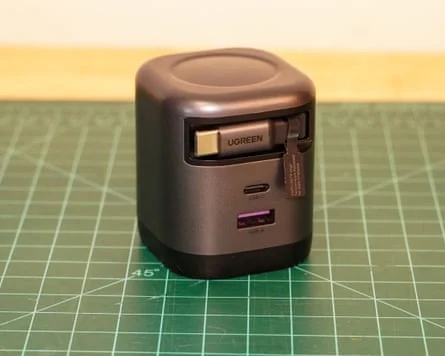
USB chargers have become an indispensable cornerstone of modern life, powering an ever-growing array of devices from smartphones and laptops to specialized gadgets like bike lights. In an increasingly interconnected world, the ability to quickly and safely power these tools is paramount. However, despite the "universal" in its name, the USB charging ecosystem is far from uniform, presenting consumers with a complex landscape of varying speeds, protocols, and port types. This necessitates a thoughtful approach to selecting the right charging solutions, moving beyond outdated "bricks" to high-quality, efficient, and safe alternatives.

The Evolving Landscape of USB Charging
The journey of Universal Serial Bus (USB) began in the mid-1990s as a means to standardize peripheral connections for personal computers, primarily focusing on data transfer. Its initial power delivery capabilities were modest, typically providing 2.5 watts (5V at 500mA). Over the decades, USB standards have undergone significant evolution, driven by the proliferation of portable electronics and the demand for faster charging and higher power outputs.
The introduction of USB-C and the Power Delivery (PD) standard marked a pivotal shift, allowing for bidirectional power flow and significantly increased wattage, reaching up to 100W with PD 3.0 and an impressive 240W with the newer PD 3.1 specification. This advancement has enabled USB-C to power not just phones and tablets, but also demanding devices like laptops, monitors, and even some specialized industrial equipment. Concurrently, the adoption of Gallium Nitride (GaN) technology in charger components has revolutionized charger design, allowing for much smaller, lighter, and more efficient power bricks capable of handling high wattages with less heat generation. This technological leap addresses the consumer need for compact yet powerful charging solutions, particularly for travel and cluttered workspaces.
Despite these advancements, the market remains fragmented. Older USB-A ports still exist on many devices and chargers, while various proprietary fast-charging protocols (e.g., Qualcomm Quick Charge, Samsung Adaptive Fast Charging, SuperVOOC) coexist alongside the universal PD standard. This diversity means that a "universal" charger is often one that supports a range of these protocols and voltages, ensuring broad compatibility rather than a single, all-encompassing solution. For consumers, this translates into a crucial need for informed choices to avoid underpowered charging or, worse, potential safety hazards.
Rigorous Testing Methodology: Ensuring Performance and Reliability
To demystify the complexities of the USB charger market and guide consumers toward optimal choices, a comprehensive testing regimen was undertaken. The evaluation involved 22 distinct chargers from established brands, innovative startups, and value-oriented manufacturers, encompassing a wide spectrum of power outputs from compact phone chargers to robust units capable of powering gaming laptops.
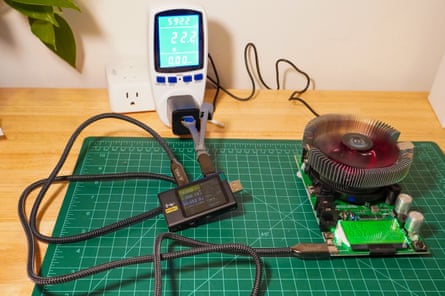
The testing protocol was designed to push these chargers to their operational limits, going beyond the variable power demands of typical consumer electronics like phones and laptops. A sophisticated setup featuring a programmable dummy load, essentially a controlled heater, allowed for precise regulation of electrical draw. This, alongside a 100W USB-C studio light, enabled verification of each charger’s advertised peak wattage.
Efficiency, a key metric for both performance and heat generation, was meticulously calculated by measuring both input and output power. Each charger underwent a sustained 20W test for one hour, mimicking common phone and tablet charging scenarios. During this period, an infrared thermometer was used to detect and record hotspots at 30 and 60-minute intervals. Furthermore, all chargers rated 30W and above were subjected to a high-wattage stress test, powering the 100W studio light for 30 minutes to assess their ability to maintain maximum output without overheating.
Beyond technical performance, safety was a paramount concern. Consultations with UL Solutions, a leading independent testing and certification body, provided critical insights into safe operational parameters and certification standards for these devices. The reviewer, Mark Knapp, brought a decade of consumer electronics testing experience to the process, understanding firsthand the frustrations of incompatible chargers and the importance of reliable power solutions. At the conclusion of the testing phase, the majority of the chargers were ethically donated to La Casa Norte, a Chicago community center supporting youth and families experiencing homelessness, with a select few top performers retained for ongoing long-term reliability assessments.
Top Picks for Every Charging Need
Based on this rigorous evaluation, several USB chargers distinguished themselves across various categories, offering a blend of performance, portability, and value.
Best Overall USB Charger: Baseus PicoGo AE11
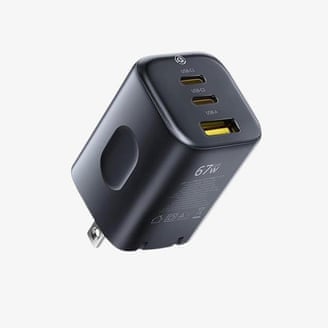
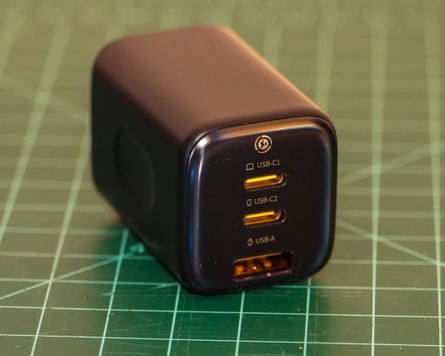
The Baseus PicoGo AE11 emerges as the top all-around choice, striking an impressive balance between compact design, affordability, and versatile power delivery. Despite its diminutive size, comparable to many 20W chargers, it boasts a substantial 67W peak output across two USB-C ports and a single USB-A port. Its folding wall prongs and a mere 0.26lbs (0.12kg) weight make it an ideal travel companion, easily disappearing into a backpack or luggage. The PicoGo AE11’s support for a mix of charging protocols and voltages ensures broad compatibility, allowing users to efficiently charge multiple devices simultaneously or direct its full power to a single, more demanding gadget like a laptop. During testing, it consistently delivered 20W for an hour without excessive heat and maintained its peak wattage for half an hour, demonstrating robust performance. Its TUV Rheinland certification further underscores its quality and safety. While it did exhibit a noticeable hotspot of 152F (67C) under full, sustained load, this is a common characteristic of compact, high-wattage chargers and remained within acceptable safety thresholds.
- Single-port peak: 67W
- Ports: 2x USB-C, 1x USB-A
- Weight: 0.26lbs
- Certified: TÜV Rheinland
- Price: From $29.99
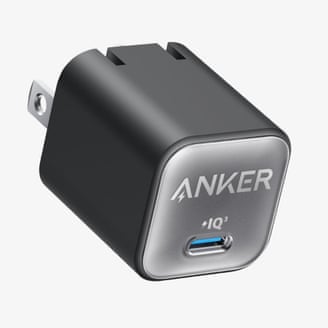
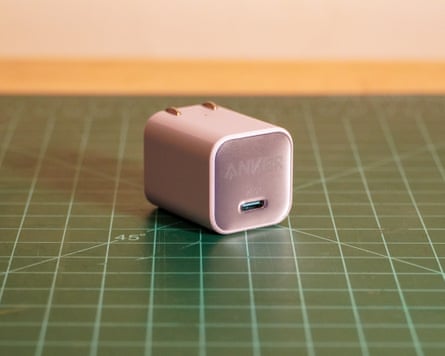
Best Budget USB Charger: Anker 511 Nano 3
For consumers primarily needing to charge a single device, the Anker 511 Nano 3 stands out as an exceptionally small, lightweight, and cost-effective solution. Its single USB-C port provides up to 30W of power, ample for most modern smartphones and tablets. Weighing a mere 0.08lbs, it surpasses many 20W chargers in power-to-weight ratio and features convenient folding wall prongs. The Nano 3 proved its mettle in testing, sustaining 30W output for half an hour and remaining below 130F during a one-hour 20W test. Its compatibility with a broader range of voltages than similarly sized chargers enhances its versatility. The presence of TÜV Rheinland certification provides assurance of its safety. Its primary limitation is the single port, which may not suffice for users with multiple devices requiring simultaneous charging.
- Single-port peak: 30W
- Ports: 1x USB-C
- Weight: 0.08lbs
- Certified: TÜV Rheinland
- Price: From $15.99
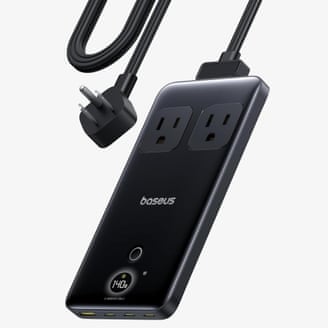
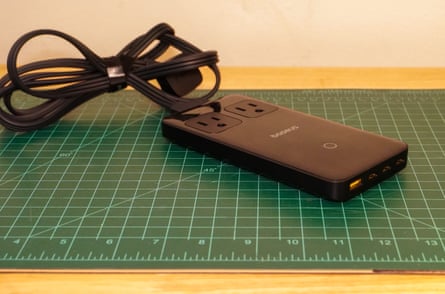
Best High-Capacity USB Charger: Baseus Blade Power Strip
The Baseus Blade Power Strip is an all-encompassing charging hub designed to bring power wherever it’s needed. It integrates three USB-C ports, one USB-A port, and two conventional pop-up AC outlets, all connected by a generous 5ft power cord. This allows users to extend power access from distant outlets and charge a wide array of devices, including high-wattage electronics. With a single-port peak of 140W, it can comfortably power most laptops while also providing headroom for other devices. A small integrated display offers real-time power output readings. In tests, the Blade Power Strip maintained a cool temperature at 20W and reached a manageable 145F at approximately 100W, indicating efficient heat dissipation. Its pass-through AC outlets are particularly useful in public spaces or hotels, effectively creating additional power points. Its slim design also makes it surprisingly travel-friendly. The main drawback is its proprietary AC cable, which could be inconvenient to replace if lost.
- Single-port peak: 140W
- Ports: 3x USB-C, 1x USB-A, 2x AC
- Weight: 1.01lbs
- Certified: TÜV Rheinland
- Price: From $89.99
Best Laptop USB Charger: Ugreen Nexode X606
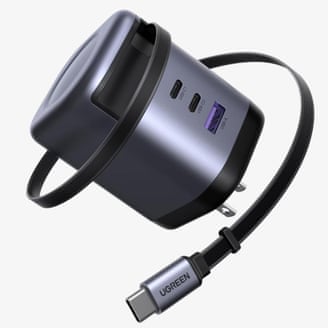
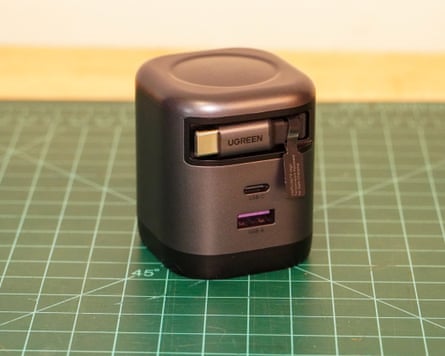
Addressing the common frustration of tangled cables, the Ugreen Nexode X606 offers a powerful and convenient solution for laptop users. This charger features a built-in, retractable 2.5ft USB-C cable, eliminating the need to carry a separate power cord. Additionally, it includes two extra USB-C ports and one USB-A port for charging other peripherals, and its power prongs fold away for portability. The Nexode X606 excelled in performance, delivering a sustained 100W for half an hour with a maximum hotspot of only 134F and remaining very cool (93F) during the 20W sustained test. Its robust construction allows it to maintain high wattages where some lighter alternatives might throttle. While heavier at 0.66lbs compared to some competitors, its superior thermal management and integrated cable convenience justify the extra bulk for many users. It carries a TÜV SÜD certification for safety.
- Single-port peak: 100W
- Ports: 2x USB-C, 1x USB-A, 1x retractable USB-C cable
- Weight: 0.66lbs
- Certified: TÜV SÜD
- Price: From $54.95
Best Desktop USB Charging Station: Anker Nano 7-in-1 Charging Station
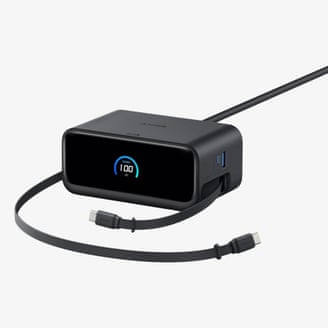
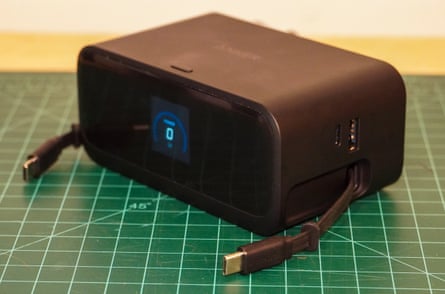
For those who primarily charge devices at a fixed location, the Anker Nano 7-in-1 Charging Station (100W) provides an elegant and highly functional desktop solution. This unit, tethered by a 5ft power cord, offers dual 2.3ft retractable USB-C cables, three grounded AC outlets, and a clear display indicating charging rates. Its design prioritizes organization and aesthetics, with the display facing forward and AC outlets discreetly placed at the rear. The retractable cables ensure a tidy workspace, disappearing when not in use. Its larger form factor contributes to excellent thermal performance, maintaining 100W output for half an hour without significant heat build-up and remaining temperate during prolonged 20W charging. While not designed for extreme portability, it’s compact enough for occasional travel. At $79, it represents a strong value for a comprehensive desktop charging solution, albeit with a maximum output of 100W, which may be insufficient for the most power-hungry laptops requiring 140W or more.
- Single-port peak: 65W (total output 100W shared)
- Ports: 1x USB-C, 1x USB-A, 2x Retractable USB-C cables, 3x AC outlets
- Weight: 1.33lbs
- Certified: TÜV Rheinland
- Price: From $79.99
Beyond the Top Performers: Other Noteworthy Contenders
Several other chargers demonstrated commendable qualities during the testing, each excelling in specific niches but ultimately not making the top selections due to minor trade-offs.
-
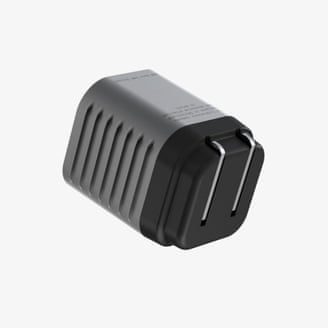
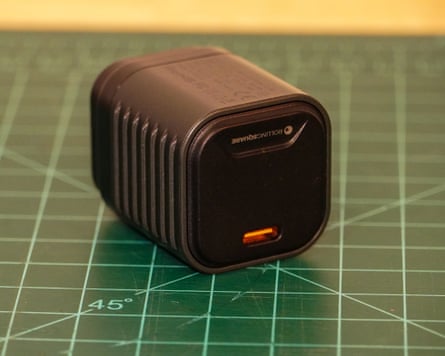
Rolling Square Supertiny (Most Watts Per Pound): This remarkably compact charger, weighing just 0.17lbs, delivers an impressive 65W through a single USB-C port. It achieved the highest efficiency (94.35%) in 20W testing, remaining cool. However, its single port and a 168F hotspot under peak load limited its versatility and overall appeal compared to multi-port options. (Certified: CE, Price: From $49.90)
-
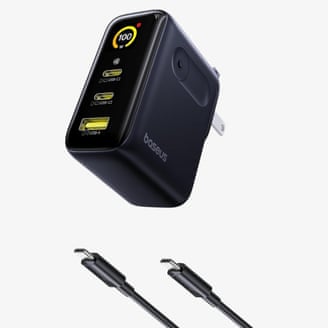
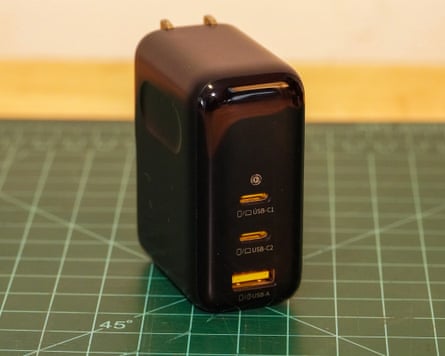
Baseus PicoGo AE21 (Highly Portable, 100W Charging): The larger sibling to the AE11, this model offers 100W across two USB-C and one USB-A port, with a real-time power display and a portable 0.37lbs weight. It provides ample headroom for multiple devices but was observed to down-regulate its output during sustained 100W loads, indicating a built-in safety mechanism but potentially inconsistent full power for demanding applications. (Certified: TÜV Rheinland, Price: From $59.99)
-
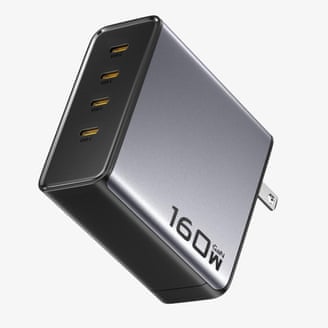
Pisen Bolt Pro TP-C81 (Higher-Wattage Applications): A no-nonsense charger offering four USB-C ports and a 140W single-port peak (160W total). It includes a high-wattage USB-C cable, providing serious power flexibility. However, its bulk, lack of a USB-A port, lower efficiency (84%) in 20W tests, and absence of third-party safety certification were notable downsides. (Certified: N/A, Price: $57.70)
-
Ugreen Nexode 500W Desktop Charger (Bulk, Stationary Charging): This behemoth offers extreme power with five USB-C ports and one USB-A port, capable of an unparalleled 240W on a single port and a total output of 500W. It remained exceptionally cool even under 100W sustained loads. While technically superior, its large size and premium price ($199.99) make it a niche product, suitable primarily for environments requiring simultaneous charging of numerous high-power devices. (Certified: TÜV SÜD, Price: From $199.99)
Navigating the Charging Maze: Essential Consumer Information
Understanding the nuances of USB chargers is crucial for both performance and safety. Here are key considerations for consumers:
What to Look For in a USB-C Charger
Consumers should exercise caution with chargers promising exceptionally high wattage and numerous ports at suspiciously low prices. Such products may cut corners on internal components or rigorous safety testing, leading to underperformance or, more critically, safety risks. Always verify that a charger can deliver its advertised wattage reliably across its ports.
How to Tell if a Charger is Safe
According to Ibrahim Jilani, Consumer Technology Director at UL Solutions, USB chargers should adhere to the IEC 62368-1 standard, a comprehensive safety protocol. Consumers should actively look for certifications from Nationally Recognized Testing Laboratories (NRTLs) such as UL, SGS, Intertek, or TÜV clearly displayed on the product itself. These certifications indicate that the product has undergone stringent safety evaluations.
Signs of a Malfunctioning USB Charger
Vigilance for signs of malfunction is critical for user safety. Jilani advises consumers to watch out for physical indicators such as discoloration, scorching marks, or looseness in the charger’s housing. Auditory cues like hissing sounds or olfactory warnings such as a burning smell are immediate red flags. Erratic behavior, including sudden power shutdowns or inconsistent charging, also indicates a potential problem. Importantly, a USB charger should never exceed 170F (77C) at any point during operation; excessive heat is a clear sign of trouble.
Preventing Safety Issues
Even well-engineered products require proper usage to prevent safety incidents. Jilani recommends several best practices:
- Ventilation: Ensure chargers are not covered or confined in spaces that restrict airflow, which can lead to overheating.
- Appropriate Cables: Always pair a charger with a cable rated to handle its output wattage. Using an under-spec cable can cause overheating and damage.
- Unplug When Not in Use: Disconnecting chargers from outlets when not actively charging devices helps prevent unnecessary power draw and reduces potential risks.
- Keep Away from Hazards: Chargers should be kept out of reach of water, pets, and small children to prevent accidents and damage.
Why a USB-C Charger Might Not Work with a USB-C Device
The primary reason for incompatibility, despite matching ports, is often a mismatch in power requirements. While a charger might advertise a high wattage (e.g., 45W), a device may have specific voltage demands. Wattage is the product of voltage and amperage. If a device requires 20V at 3 amps (60W), a charger supplying 15V at 3 amps (45W) will not work, even if the device itself "needs" 45W in theory. It’s crucial to check the specific voltage and amperage specifications required by your device and ensure the charger can supply them. The voltage must match, but a charger can safely supply more amperage than a device needs, as the device will only draw what it requires.
Cable Compatibility
The adage "any cable will do" is dangerously false in modern USB charging. Cables vary significantly in their power handling capabilities. To achieve full charging speed and ensure safety, the cable must be rated for at least the peak wattage of the charger. Generic or thin cables claiming high wattage should be viewed with suspicion, as inadequate wiring can lead to excessive heat generation and fire hazards. Always invest in quality, certified cables that explicitly state their maximum power delivery.
Understanding Charging Protocols
Modern chargers often list various charging protocols such as PD 3.1, QC 3.0, and SuperVOOC. These protocols dictate how the charger communicates with and delivers power to compatible devices. While many chargers support a range of standards for broad compatibility, Power Delivery (PD) is the most crucial, as it is part of the official USB standard and widely adopted. PD 3.1, for example, supports up to 240W, making it essential for high-power devices. Understanding which protocols your devices support can help optimize charging speed and efficiency.
The Future of Universal Charging
The ongoing push for greater standardization, exemplified by regulatory efforts like the European Union’s mandate for USB-C as a common charging port, signals a future where charging convenience and reduced electronic waste are prioritized. While complexities remain, informed consumer choices, guided by rigorous testing and a focus on certified, high-quality products, are key to navigating the current landscape. Investing in a reliable, versatile, and safe USB charger is no longer just about convenience; it’s about ensuring the longevity of our devices and the safety of our charging habits in an increasingly electrified world.
Mark Knapp is a freelance writer and longtime reviewer of consumer electronics. He has spent the last decade writing about, reading about, and testing just about anything that relies on a steady stream of electrons to function. He has extensively tested phones, desktop computers, laptops, projectors, speakers, headphones, monitors, keyboards, mice, scooters, e-bikes and more. His interest in consumer electronics is only matched by his determination to get the best value when making almost any purchase, and that motivates his efforts to share great products and deals with readers.