Jono Maryono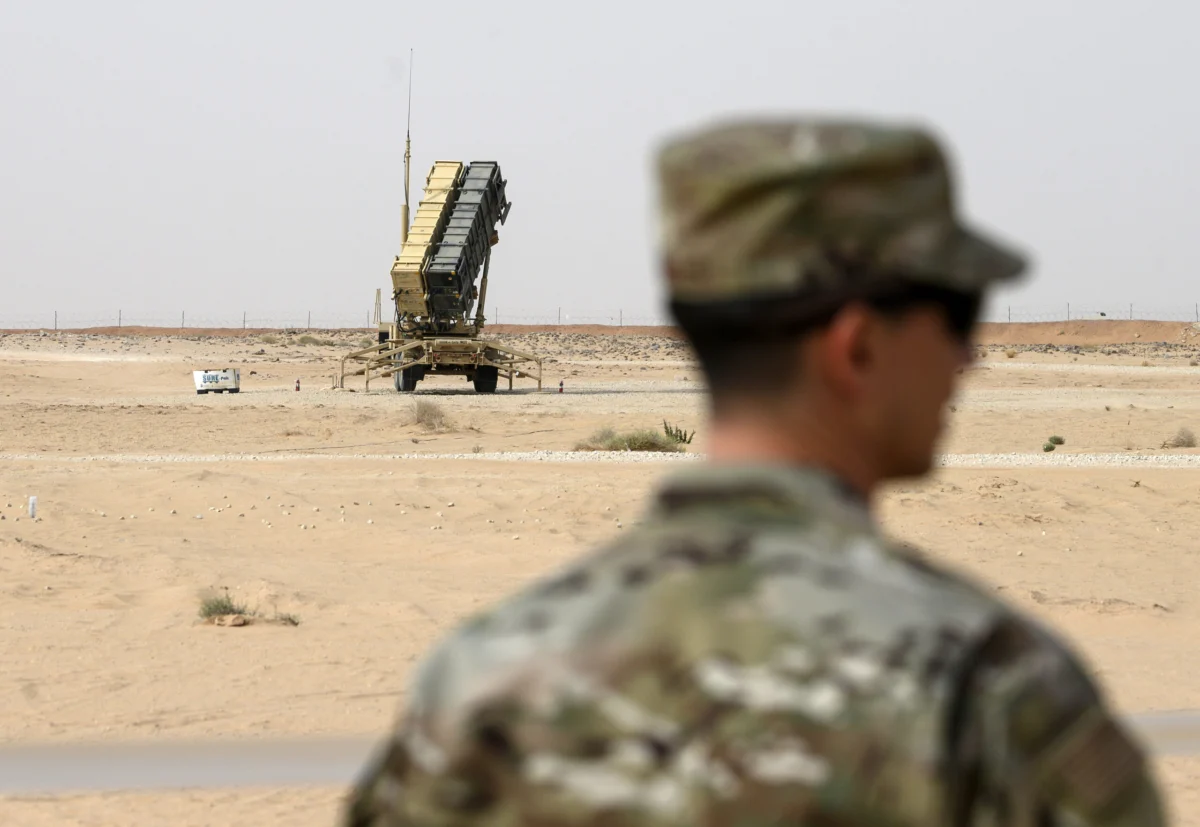
At least five soldiers are reportedly in serious condition following Iran missile and drone attack that damaged refuelling aircraft.
In a significant escalation of the ongoing conflict that began with a joint US-Israeli assault on Iran on February 28, Iran launched a coordinated missile and drone attack on Prince Sultan Air Base in Saudi Arabia on Friday, resulting in numerous American casualties and substantial damage to military assets. Reports indicate that at least 15 American soldiers sustained injuries, with five of them in serious condition, according to unnamed sources briefed on the strikes and cited by The Associated Press. The Wall Street Journal reported that the wounded soldiers were inside a building at the base when it was hit, while Reuters quoted an unidentified US official who stated that at least 12 troops were wounded, two seriously.
The assault, which unfolded on Friday, involved a complex barrage of at least six ballistic missiles and 29 drones, according to details released by The Associated Press. This attack marks a substantial escalation in the retaliatory actions taken by Iran against Gulf nations it accuses of facilitating US strikes on its territory. The Prince Sultan Air Base, located approximately 96 kilometers (60 miles) south of the Saudi capital, Riyadh, is a key operational hub. While operated by the Royal Saudi Air Force, it also hosts a significant contingent of American forces, underscoring its strategic importance in regional security operations.
Ebrahim Zolfaghari, spokesperson for Iran’s central military headquarters, confirmed in a video statement on Saturday that the Iranian offensive had resulted in the complete destruction of one refuelling aircraft and damage rendering three others inoperable. Satellite imagery released by Iran’s English-language news channel, Press TV, purportedly showed the destruction of several aircraft at the base following the Iranian strikes. This incident is not the first time the base has come under fire this week. The facility was attacked twice earlier in the week, with one prior incident reportedly wounding 14 US soldiers, highlighting a pattern of increased targeting.
Chronology of Escalation and Retaliation
The current hostilities trace their origins to a joint US-Israeli assault on Iran that commenced on February 28. Since that initial operation, the conflict has seen a tit-for-tat exchange of strikes and retaliatory actions, with Iran specifically targeting Gulf nations perceived as enabling these operations.
February 28: The conflict begins with a reported joint US-Israeli assault on Iranian territory. Details surrounding the initial objectives and scope of this operation remain limited, but it is widely understood to have triggered the subsequent retaliatory cycle.
Early March (Specific Dates Unspecified): Iran begins a series of retaliatory attacks, primarily targeting military installations and infrastructure in Gulf nations. These actions are framed by Tehran as responses to the initial US-Israeli strikes.
This Week (Prior to Friday’s Attack): Prince Sultan Air Base in Saudi Arabia experiences two prior attacks. One of these incidents results in the wounding of 14 US soldiers, signaling a growing threat to American personnel stationed in the region.
Friday: A major coordinated missile and drone attack is launched against Prince Sultan Air Base. The assault includes at least six ballistic missiles and 29 drones. Reports emerge of significant damage to aircraft, including the destruction of one refuelling aircraft and the incapacitation of three others. Crucially, American personnel sustain injuries, with initial reports indicating at least 15 wounded, including five in serious condition. Concurrently, a US-Israeli strike reportedly targets the Bushehr nuclear power plant in Iran, though Iranian authorities state no material damage or casualties occurred.
Saturday: Iran’s military announces its forces also targeted a US support vessel near the port of Salalah in Oman, though specific details of this incident are not provided.
The Strategic Significance of Prince Sultan Air Base
Prince Sultan Air Base is more than just a military installation; it represents a critical node in the United States’ and its allies’ regional security architecture. Its proximity to Riyadh, the Saudi capital, and its dual-use nature—serving both Saudi and American forces—make it a high-value target. The base typically hosts between 2,000 and 3,000 US soldiers, many of whom are involved in crucial operations such as missile defense systems and logistical support for wider regional deployments.
The nature of the attack, involving ballistic missiles and drones, suggests a deliberate attempt to overwhelm air defenses and inflict maximum damage. The targeting of refuelling aircraft is particularly significant, as these assets are vital for sustaining air operations across the vast expanse of the Middle East. Their destruction or incapacitation directly impacts the ability of coalition forces to conduct sustained missions.
Al Jazeera’s Zein Basrawi, reporting from Dubai, highlighted the lack of transparency surrounding the Iranian strikes but emphasized that the scale of injuries indicated the seriousness of the attack. He noted the base’s consistent targeting since the war began, suggesting a strategic imperative for Iran to disrupt American operational capabilities in the region.
Broader Context: The War on Iran and Regional Tensions
The conflict, now entering its second month, has created a volatile security environment in the Middle East. The initial US-Israeli strikes on Iran are widely viewed as a significant turning point, prompting a sustained campaign of retaliation from Tehran. Iran has explicitly stated its intention to target nations that provide a "launchpad" for these attacks, leading to increased pressure and risk for countries like Saudi Arabia.
Saudi Arabia has previously been on the receiving end of missile and drone attacks, with its air defenses intercepting several projectiles near its military installations. The current attack on Prince Sultan Air Base underscores the growing reach and sophistication of Iran’s retaliatory capabilities.
Casualties and Human Cost
The human cost of this escalating conflict is becoming increasingly apparent. Beyond the immediate injuries sustained at Prince Sultan Air Base, reports indicate a significant number of US military casualties since the war began. At least 13 US military service members have been killed, with seven casualties in the Gulf and six in Iraq. More than 300 American troops have been wounded in total.
While Iran’s government has not released an updated official casualty toll, the US-based activist group HRANA reported on March 23 that 1,167 Iranian soldiers had been killed, with the status of 658 troops unknown. These figures, though potentially incomplete, paint a grim picture of the human toll on both sides.
International Reactions and Implications
The Pentagon and US Central Command had not immediately commented on the latest attack as of Saturday, leaving a void in official US statements regarding the incident. However, the nature and scale of the attack are likely to prompt significant diplomatic and military responses.
The targeting of a major US-supported air base in a key regional ally like Saudi Arabia carries substantial implications. It not only challenges the security posture of the United States and its allies but also raises questions about the effectiveness of existing defense mechanisms. The incident is likely to intensify calls for a reassessment of US strategy in the region and could lead to increased pressure on the US administration to take more decisive action.
Furthermore, the reported strike on the Bushehr nuclear power plant, even if it caused no material damage, highlights the potential for escalation into more sensitive and dangerous domains. While Iran’s Atomic Energy Organization stated there were no technical disruptions, the proximity of military operations to nuclear facilities remains a grave concern for international security.
The ongoing cycle of retaliation and counter-retaliation risks further destabilizing an already volatile region. The sustained targeting of Prince Sultan Air Base suggests a strategic intent by Iran to degrade US operational capacity and deter further offensive actions. The coming days and weeks will likely see further diplomatic maneuvering, military posturing, and potentially more direct confrontations as the conflict continues to unfold. The international community will be closely watching for de-escalation efforts and the potential for a wider regional conflagration.