Ronny Sianturi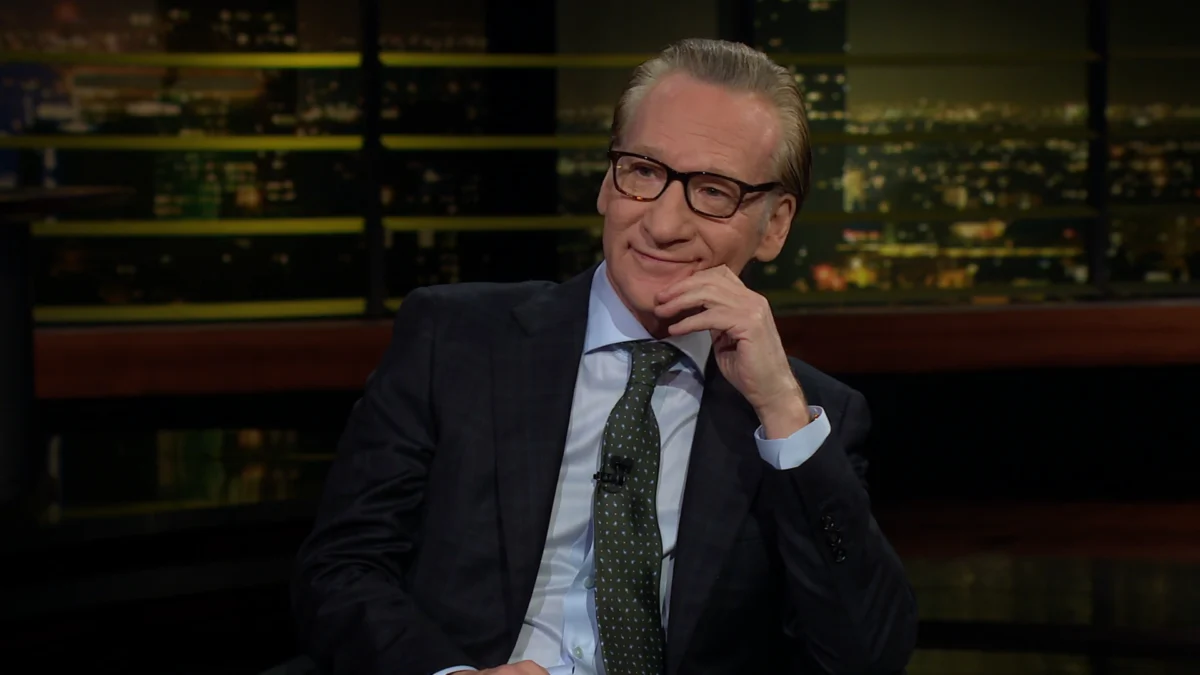
After a period of public confusion marked by denials from the White House communications team, comedian and television host Bill Maher has officially been confirmed as the recipient of the 27th Mark Twain Prize for American Humor, presented by the Kennedy Center. The veteran satirist addressed the preceding ambiguity directly on Friday night’s episode of his HBO Max program, Real Time With Bill Maher, acknowledging the "back and forth" surrounding his selection. Maher humorously proposed a "compromise" where he would accept the award only to then present it to President Donald Trump, adding, "Everybody’s happy. I just want things to work out." This lighthearted resolution comes as the Kennedy Center formally announced Maher as the honoree, with a ceremony slated for June 28, and the award set to stream on Netflix at a later date.
A Coveted Honor with a Complicated Path
The Mark Twain Prize for American Humor is a prestigious accolade that recognizes individuals who have profoundly impacted American society through their comedic contributions, mirroring the enduring influence of the celebrated author Mark Twain. Roma Daravi, the Kennedy Center’s Vice President of Public Relations, lauded Maher for his role in "influencing American discourse – one politically incorrect joke at a time," underscoring the prize’s intent to honor those who engage with and shape public conversation through humor.
The official confirmation arrived approximately one week after The Atlantic published a report, citing multiple unnamed sources, indicating that Maher had been selected for the award. The report suggested that the honor’s final approval faced potential complications due to Maher’s contentious history with President Trump, who, as a prominent figure, holds a degree of influence over the Kennedy Center’s purview. This history includes a public spat that escalated when President Trump, in a Truth Social post in February, disparaged Maher as a "highly overrated LIGHTWEIGHT" and described a past White House dinner with the comedian as "a complete waste of time."
Following the publication of The Atlantic’s story, President Trump’s communications deputies moved swiftly to publicly refute the report. White House Press Secretary Karoline Leavitt declared the news to be "fake news," stating unequivocally, "Bill Maher will NOT be getting this award." Similarly, White House Communications Director Steven Cheung echoed this sentiment, adding, "Literally FAKE NEWS." The swiftness and vehemence of these denials created a notable disconnect with the subsequent official confirmation from the Kennedy Center, leaving the precise circumstances of the award’s approval and any potential presidential endorsement unclear.
Maher’s Response: Humor, History, and Engagement
During his monologue on Friday night, Bill Maher directly addressed the White House spokespersons’ denials, framing his situation with his characteristic blend of wit and self-deprecation. He emphasized his desire to express gratitude for the honor and stated he was "not looking for a fight," nor did he harbor any animosity towards President Trump for the preceding public back-and-forth. Maher alluded to his long and often contentious relationship with the President, referencing a 2013 incident where Trump sued Maher over comments made on The Tonight Show With Jay Leno. In that instance, Maher had offered $5 million for Trump to produce his birth certificate, challenging the veracity of his origins and joking about his parentage. Trump eventually withdrew the lawsuit.
Maher articulated a philosophy of engagement, stating, "This has been going on a long time, so him trying to block me from getting it – I respect the move. I respect the move. Keep the game going, baby, OK, I’m all about engagement. Disengagement gets you nothing. You got to engage." He then turned his attention to more recent public criticisms from Trump on Truth Social, where he was called a "jerk" and a "lightweight ratings loser." Maher responded with apparent nonchalance, inviting the President to express himself freely: "Get it off your chest, big man, OK, I’m totally fine with that."
Demonstrating his unique approach to criticism, Maher declared he was "proud of these last insults" and presented them as additions to an extensive list of criticisms he has accumulated over the years. A visual segment during his show displayed a document bearing a White House logo, filled with a lengthy compilation of insults. Reading from this list, Maher accepted the Mark Twain Prize with mock humility: "So I would just like to say as a low ratings lightweight and a rather dumb guy and a pathetic, bloated sleaze bag, a dummy, a terrible student, a nervous, failing comedian and someone who was sick, insane, very sad, totally shot in, a crazy maniac, I am honored to accept the Mark Twain Prize. Thank you very much." He extended an invitation to President Trump to attend the ceremony, humorously suggesting the venue might as well be renamed in his honor and that he should "show up" and "thank me in person for being one of the few people on the lunatic left who’s glad you hit Iran and is hoping we win that one."
The Mark Twain Prize: A Legacy of American Humor
The Mark Twain Prize for American Humor, established in 1998, is the Kennedy Center’s highest honor for excellence in comedy. It is awarded annually to individuals who have had a significant impact on American society through their comedic endeavors, embodying the spirit of Mark Twain’s groundbreaking work. Twain, a prolific writer, humorist, satirist, and social critic, remains one of America’s most influential literary figures, known for his sharp wit and insightful commentary on the human condition and the nation’s evolving identity.
Past recipients of the Mark Twain Prize represent a pantheon of comedic giants, including Richard Pryor, Whoopi Goldberg, Jon Stewart, Carol Burnett, Dave Chappelle, and Julia Louis-Dreyfus, among others. The selection committee typically seeks individuals whose work has not only entertained but also challenged societal norms, sparked dialogue, and reflected the complexities of American life. Bill Maher, with his long-running satirical news program Real Time, has consistently engaged with current events, political discourse, and cultural trends, often through a lens of sharp critique and provocative questioning. His willingness to tackle controversial topics and engage in unvarnished commentary has cemented his reputation as a significant voice in contemporary American humor and public debate.
Chronology of Events
- February [Year]: President Donald Trump publicly criticizes Bill Maher on Truth Social, calling him a "highly overrated LIGHTWEIGHT" and deeming a past White House dinner with the comedian a "complete waste of time."
- [Approximately One Week Before Kennedy Center Confirmation]: The Atlantic publishes a report citing sources that Bill Maher has been selected to receive the 27th Mark Twain Prize for American Humor, but notes potential complications due to his history with President Trump.
- Following The Atlantic Report: White House Press Secretary Karoline Leavitt and Communications Director Steven Cheung issue strong denials, labeling the report "fake news" and asserting Maher would not receive the award.
- [Thursday, Before Maher’s Show]: The Kennedy Center officially confirms Bill Maher as the recipient of the 27th Mark Twain Prize for American Humor, with a ceremony scheduled for June 28.
- [Friday Night, During Maher’s Show]: Bill Maher addresses the award and the preceding controversy on Real Time With Bill Maher, offering humorous commentary and accepting the honor.
Broader Implications and Context
The saga surrounding Bill Maher’s Mark Twain Prize nomination and confirmation highlights the intricate interplay between celebrity, politics, and cultural institutions in the current media landscape. The swift and forceful "fake news" denials from the White House communications team, followed by the Kennedy Center’s official confirmation, underscore the challenges of navigating public perception and official pronouncements in an era of rapid information dissemination and partisan divides.
Maher’s consistent engagement with political figures and policies on Real Time has often placed him at the center of public discourse, eliciting strong reactions from across the political spectrum. His selection for the Mark Twain Prize, an award that celebrates humor’s power to influence American society, acknowledges his enduring role as a commentator and satirist. The controversy surrounding the award’s approval, however, also serves as a reminder of the heightened political sensitivities that can impact even cultural honors.
The inclusion of figures like Maher, who is known for his often unflinching and politically charged humor, in prestigious awards ceremonies reflects a broader trend of recognizing comedians and satirists for their significant contributions to public discourse. The Mark Twain Prize, by its very nature, honors those who, like Twain himself, use wit and satire to probe the nation’s foibles and aspirations. Maher’s acceptance speech, a masterclass in deflecting criticism with humor and reclaiming narratives, further exemplifies his unique brand of comedic engagement.
The participation of U.S. Senator Elissa Slotkin, a former CIA analyst and Pentagon official, in Maher’s latest episode, alongside a panel featuring CNN’s Laura Coates and ESPN’s Stephen A. Smith, suggests the continued relevance of Real Time as a platform for discussing significant national issues, even amidst the personal and political narratives surrounding its host. The award ceremony itself, scheduled for June 28 and to be streamed on Netflix, is anticipated to be a significant cultural event, offering a platform to celebrate American humor and its vital role in shaping national identity and dialogue.