Reynand Wu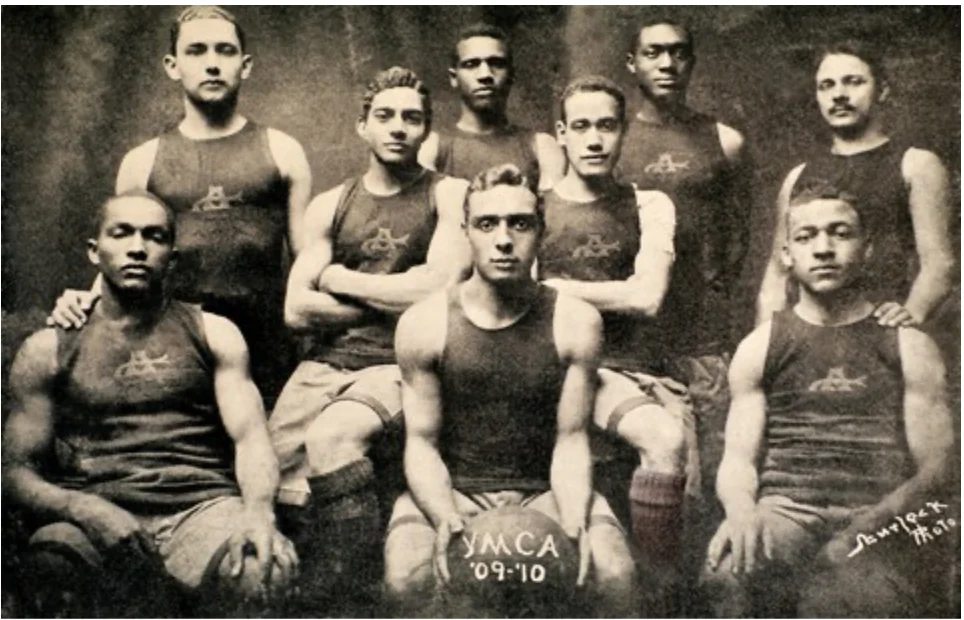
The vibrant pulse of a basketball bouncing on asphalt is an unmistakable sound on 135th Street in Harlem. Approaching a local park, one is immediately drawn into a scene of youthful energy: a well-maintained outdoor court, freshly painted lines, and a sturdy chain-link fence barely containing the excitement. Here, the ball is a blur, passed, dribbled, and shot with a rhythm that captivates onlookers, drawing more children to the periphery of the game. This snapshot of everyday life in New York City encapsulates a profound cultural truth: basketball is synonymous with the city, from the legendary courts of Harlem to the bustling playgrounds of Brooklyn. Its ubiquity within African American culture in urban centers like New York is not merely a matter of preference but a complex narrative deeply intertwined with decades of discriminatory practices, including redlining and segregation.
Basketball’s Formative Years: A "White Man’s Game" and Early Exclusions
The origins of basketball, a sport now globally celebrated for its diverse roster of athletes, stand in stark contrast to its contemporary image. Invented in December 1891 by Dr. James Naismith, a Canadian physical education instructor at the International YMCA Training School in Springfield, Massachusetts, the game was initially conceived as a less injury-prone alternative to football and baseball, suitable for indoor winter play. Naismith sought to create a sport that emphasized skill over brute force, leading to a game with simple rules and minimal equipment: two peach baskets and a soccer ball.
By the early 1900s, basketball had rapidly gained traction, primarily within collegiate and high school settings across the United States. Elite institutions like Harvard, Yale, Cornell, and Princeton were among the first to establish intercollegiate rivalries, with games dating back to 1901. These early collegiate competitions cemented basketball’s place in the burgeoning American sports landscape, but its accessibility remained largely confined to a specific demographic. The sport’s formal professionalization began with the founding of the National Basketball League (NBL) in 1937. This league, alongside the Basketball Association of America (BAA), which formed in 1946, paved the way for the creation of the ubiquitous National Basketball Association (NBA) in 1949, following their merger.
For its initial three decades, basketball remained largely inaccessible to Black athletes due to pervasive racial segregation. Micheal Novack, in his 1946 work The Joy of Sports, famously articulated the prevailing perception: "Basketball was originally invented as a white man’s game." This sentiment was starkly reflected in the demographic makeup of early collegiate and professional teams, which were overwhelmingly white. The color barrier was rigidly enforced across American society, preventing Black participation in mainstream leagues and institutions. Black individuals were systematically excluded from athletic scholarships, team rosters, and even spectating at many venues.
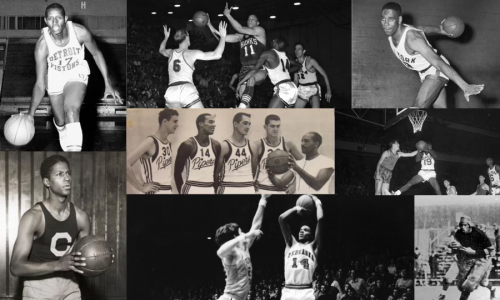
The formal breaking of this barrier was a gradual process. It was not until 1928 that George Gregory Jr. broke ground as the first Black collegiate player, competing for Columbia University. His presence was an anomaly in an era where segregation was the norm. Decades later, the 1949-1950 NBA season marked a pivotal moment when Chuck Cooper (Boston Celtics), Nathaniel Clifton (New York Knicks), and Earl Lloyd (Washington Capitols) shattered the professional color line, becoming the first Black players to participate in an NBA game. Their courageous entry into the league paved the way for future generations of Black athletes, but the path was fraught with challenges, including racial slurs from fans, discriminatory treatment in hotels, and the immense pressure to perform under scrutiny.
During this era, access to organized basketball was predominantly through community centers like YMCAs. However, pervasive racial discrimination meant that many white-owned or controlled YMCAs explicitly denied membership to Black individuals, enforcing segregation even in recreational spaces. This systemic exclusion, rooted in Jim Crow-era discrimination prevalent across the nation, forced Black communities to forge their own paths, fostering independent athletic organizations and creating spaces where the sport could thrive despite widespread societal barriers.
The Economic and Spatial Impact of Systemic Segregation in New York City
The historical trajectory of basketball’s prominence in African American communities cannot be fully understood without examining the deep-seated legacy of racial and economic segregation. New York City, a beacon of diversity, harbors a complex history of discriminatory practices that profoundly shaped its urban landscape and the opportunities available to its residents. Chief among these was redlining, an exclusionary practice initiated with the 1934 National Housing Act (NHA). This landmark legislation, intended to stabilize and improve the housing market through federal programs like the Federal Housing Administration (FHA) and the Home Owners’ Loan Corporation (HOLC), inadvertently codified and exacerbated racial segregation.
The HOLC, through its notorious "residential security maps," systematically categorized neighborhoods based on perceived investment risk. Areas with significant Black populations were frequently shaded red, signaling them as "hazardous" for lenders. These designations were not based on objective economic factors alone but were steeped in racial prejudice, explicitly linking the presence of Black residents to declining property values and financial instability. For instance, HOLC underwriting manuals explicitly warned against "inharmonious racial groups" and recommended physical barriers, like highways or parks, to separate Black and white neighborhoods. Consequently, the FHA leveraged these maps to guide its lending policies, effectively denying federally insured housing loans to minority communities. This practice choked off access to capital, stifled homeownership, and severely depressed property values in Black neighborhoods, perpetuating a cycle of disinvestment and economic inequality that persists in many forms today. A 2020 study by Aaronson et al. highlighted the long-run effects of these HOLC maps on place-based measures of economic opportunity and socioeconomic success, demonstrating how redlining created enduring disparities in wealth and access to resources.
The impact of redlining extended beyond housing. As Black families, driven by the promise of better opportunities and an escape from Jim Crow laws in the South, migrated to northern cities in what became known as the Great Migration, white residents often responded with "white flight." This phenomenon involved a mass exodus of white homeowners to newly developing suburbs outside city limits, often facilitated by government-backed mortgages that were largely unavailable to Black families. The departure of white residents further depressed housing prices in urban areas and eroded the tax base, leading to underfunded public services, including schools, sanitation, and critically, parks and recreational facilities, in predominantly Black neighborhoods. This cycle intensified the lack of resources and further entrenched segregation.
This economic inequality, exacerbated by redlining practices, directly influenced the types of sports accessible to children in these marginalized communities. Redlined neighborhoods were characterized by less green space and smaller, often poorly maintained parks. An analysis by the Trust for Public Land, for example, revealed a stark disparity in New York City: the average park size in poor neighborhoods was a mere 6.4 acres, compared to a significantly more generous 14 acres in wealthy areas. This scarcity of expansive green spaces made sports requiring large fields, such as baseball or football, impractical or prohibitively expensive for local youth due to the sheer lack of suitable infrastructure.
Furthermore, the cost of entry for many sports served as an additional barrier. Playing baseball at a competitive level, for instance, demanded substantial financial investment in specialized equipment (bats, gloves, uniforms), league fees, and travel teams. These costs often placed such sports out of reach for families in economically depressed communities. Basketball, by contrast, offered a remarkably low barrier to entry. All that was truly needed was a ball and a hoop, making it an inherently more accessible sport for children in economically disadvantaged areas. David C. Ogden, a professor at the University of Nebraska who extensively researched race and sport dynamics, highlighted this point, noting that the lack of baseball facilities in Black neighborhoods and the high cost of elite baseball were primary reasons for the sport’s lack of racial diversity. His 2003 research indicated that "More than two-thirds of the 27 coaches said that African-American youth prefer to spend their time on the basketball court rather than on the diamond." This economic reality, coupled with spatial limitations, inadvertently channeled generations of Black youth towards basketball, solidifying its role as a cornerstone of community life.

The Genesis of Black Basketball Institutions: YMCAs and the Black Fives Era
Amidst the pervasive segregation and limited access to mainstream sports facilities, the Black community proactively created its own athletic infrastructure. The Young Men’s Christian Association (YMCA), while often exclusionary in its white-majority branches, played a pivotal role in fostering Black basketball through the establishment of dedicated Black YMCAs. These institutions became crucial hubs, providing safe spaces for recreation, education, and community organizing where Black individuals could gather, compete, and develop their athletic talents away from the discriminatory practices of the wider society. They offered not just gymnasiums but also meeting rooms, educational programs, and a sense of collective identity and empowerment.
A significant milestone in this burgeoning movement was the formation of the Smart Set Athletic Club of Brooklyn in 1907, which emerged as America’s first fully independent Black basketball team. This pioneering team laid the groundwork for what would become known as the "Black Fives" era (roughly 1904-1950), a period characterized by dozens of independent Black basketball teams and leagues flourishing across major U.S. cities. As more Black YMCAs sprang up in urban centers like New York, Philadelphia, and Baltimore, basketball’s popularity spread like wildfire, becoming a central feature of community life. These teams and leagues were often locally sponsored and deeply intertwined with the social fabric of their neighborhoods, providing entertainment, pride, and a sense of shared purpose.
A key figure in this expansion was Edwin Bancroft Henderson, an influential educator, physical education pioneer, and civil rights activist based in Washington D.C. Often referred to as the "Father of Black Basketball," Henderson learned the game during summer sessions at Harvard University in the early 1900s. Recognizing its potential as a tool for physical development, character building, and social organization, he enthusiastically introduced basketball to young Black men in the D.C. area, and his efforts significantly contributed to the game’s dissemination throughout the East Coast. Henderson’s pioneering work included organizing the first interscholastic athletic league for Black high schools in 1906, fostering a structured environment for the sport’s growth. These early Black teams and leagues, often operating outside the purview of white sports media, cultivated a distinct style of play characterized by speed, agility, and improvisation, which would later influence the broader game. The competitive spirit of these leagues was fierce, as evidenced by matches like the 1911 season finale where the 12th Streeters triumphed over the reigning champion Smart Set, 20:17, before a crowd of over 2,000 spectators, a testament to the sport’s burgeoning appeal within the Black community, as chronicled by Mark Domke.
Beyond recreation, basketball also presented a rare avenue for economic upward mobility for Black athletes in an era of profound racial discrimination. The Harlem Globetrotters, formed in 1926 by Abe Saperstein, epitomized this phenomenon. While renowned for their dazzling showmanship and comedic routines, the Globetrotters were first and foremost an exceptionally skilled basketball team that consistently defeated top white teams. For many talented Black players, the Globetrotters offered one of the few viable and respected pathways to earn a living through their athletic prowess, traveling the world and showcasing their talents when mainstream professional leagues remained closed to them. They were not just entertainers; they were cultural ambassadors of Black athletic excellence, challenging stereotypes and inspiring countless aspiring athletes globally.
Breaking Barriers and the NBA’s Transformation
The gradual desegregation of professional sports