Jono Maryono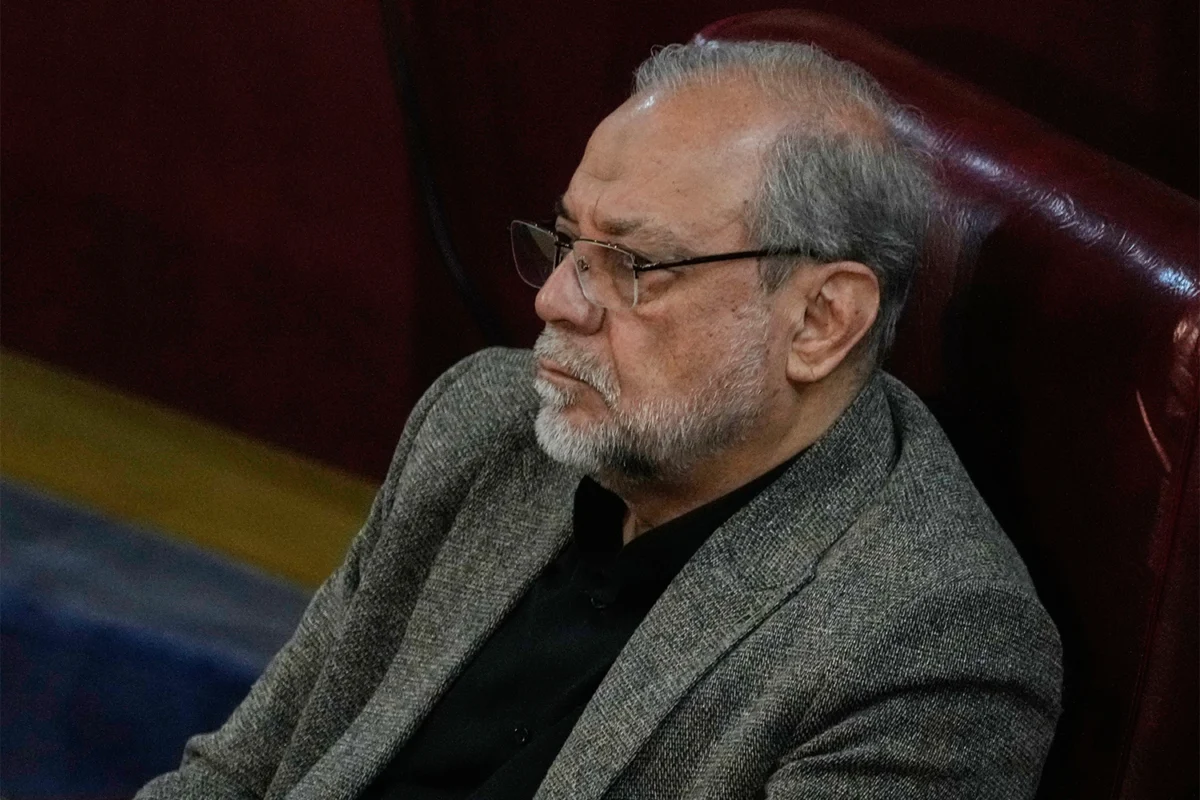
Tehran, Iran – In a significant reshuffling of its top security apparatus, Iran has appointed Mohammad Bagher Zolghadr as the new head of the Supreme National Security Council (SNSC), succeeding Ali Larijani, who was reportedly killed in an air strike last week. The appointment places a seasoned veteran of the Islamic Revolutionary Guard Corps (IRGC) at the helm of one of the nation’s most critical decision-making bodies, a move that signals a potential recalibration of Iran’s security posture amidst escalating external pressures from a US-Israeli alliance and persistent internal dissent.
Zolghadr, a figure described by regional analysts as a "heavyweight security figure," brings to the SNSC a deep and extensive background in Iran’s military and security establishment. His tenure as secretary of the advisory Expediency Council since 2023 has kept him engaged in high-level strategic deliberations, but his career has been predominantly shaped by his decades of service within the IRGC. As a member of the corps’ foundational generation, forged in the crucible of the 1979 Islamic Revolution, Zolghadr’s combat experience in the Iran-Iraq War (1980-1988) has endowed him with a pragmatic, often hardline, approach to national security.
His prior roles within the IRGC were substantial, including eight years as chief of the IRGC Joint Staff and another eight years as its deputy commander-in-chief. These positions placed him at the forefront of military planning, operational command, and the strategic direction of the powerful paramilitary force. Following his extensive military career, Zolghadr transitioned into high-level political and judicial roles, further broadening his understanding of Iran’s complex governance structures. This blend of military prowess and political acumen is seen by many as crucial for navigating the multifaceted challenges confronting Iran.
A Strategic Succession in a Volatile Landscape
The selection of Zolghadr to lead the SNSC, a body intricately linked to the office of Supreme Leader Mojtaba Khamenei, underscores the gravity of the current geopolitical climate. The SNSC is responsible for formulating and overseeing Iran’s national security and foreign policy, making its leadership a pivotal position in times of heightened regional tension. Larijani, the former SNSC chief, was widely regarded as a seasoned political operator with a deep understanding of both domestic and international affairs. His death, attributed to an air strike, has created a void that Tehran has moved swiftly to fill with a figure possessing a distinctly more military-oriented profile.
Al Jazeera correspondent Suheib Alassa noted that Zolghadr’s appointment reflects Tehran’s immediate need for a capable leader to fill the strategic vacuum left by Larijani. The process of identifying a successor for such a critical role, especially given Larijani’s long-standing influence, was unlikely to be a hasty or superficial one. Rather, it suggests a deliberate, perhaps protracted, assessment to pinpoint an individual with the precise combination of security expertise, strategic foresight, and the requisite political capital to manage Iran’s current predicament.
The Imminent Challenges Facing Zolghadr
Mohammad Bagher Zolghadr inherits a security landscape fraught with peril. The ongoing military confrontation, which regional observers have characterized as a US-Israeli "war on Iran," presents immediate and formidable tests. Strikes are reportedly continuing across Iran, impacting not only major urban centers like Tehran and Isfahan but also focusing on western and northwestern regions, particularly East Azerbaijan province, which shares a border with neighboring countries. These attacks have fueled concerns about concerted efforts to foment internal destabilization.
In response to these external pressures and perceived internal threats, Iranian authorities have undertaken a significant crackdown, arresting hundreds of individuals accused of collaborating with foreign entities. This intensified security sweep is widely interpreted as a proactive measure to preemptively contain potential security breaches and mitigate the impact of any foreign-backed subversion. This move follows a period of significant internal unrest earlier this year, which reportedly resulted in substantial casualties, highlighting the delicate balance Tehran must maintain between managing external threats and addressing domestic grievances.
On the international front, Iran has continued its retaliatory missile strikes across the region. These actions are intended to project an image of capability and resolve, signaling to adversaries, particularly Israel, that Iran possesses the intelligence and means to strike targets deep within its territory. Concurrently, Iran has intensified its pressure campaign in the Strait of Hormuz, a vital chokepoint for global oil transit. Restrictions on shipping in this waterway have already exerted a palpable impact on the global economy, contributing to rising oil prices and creating ripple effects across international markets.
These interwoven developments paint a complex picture of a nation under siege, grappling with a multifaceted challenge that combines direct military confrontation with sophisticated internal security operations. Zolghadr’s appointment, therefore, is not merely a response to the immediate war but a strategic decision aimed at bolstering Iran’s capacity to navigate this intricate and perilous environment.
Hardline Leanings and Strategic Imperatives
The elevation of Zolghadr, a figure with a pronounced military background, is likely to be viewed favorably by hardline factions within Iran’s political establishment. They may perceive his extensive IRGC credentials as more aligned with the nation’s current "war footing" than those of his predecessor. This shift in leadership could signal a more assertive and militarized approach to national security, potentially prioritizing robust defense strategies and a less conciliatory stance in diplomatic engagements.
The nature of the SNSC leadership post, its direct linkage to the Supreme Leader’s office, and the current geopolitical exigency demand a leader capable of not only possessing deep security expertise but also effectively managing complex strategic portfolios. Zolghadr’s career trajectory suggests he is equipped with these attributes. His ability to synthesize military intelligence, formulate defensive and offensive strategies, and coordinate with various security and intelligence agencies will be crucial in the coming months.
The Role in Future Negotiations
Beyond the immediate military and security challenges, Zolghadr is poised to play a pivotal role in any future diplomatic overtures or negotiations aimed at de-escalating the current conflict and potentially ending the protracted war. The effectiveness of such negotiations will likely hinge on the extent to which Zolghadr’s approval and strategic direction are integrated into the diplomatic process.
Ali Hashem, reporting from Tehran for Al Jazeera, commented on the strategic implications of Zolghadr’s appointment, stating, "Zolghadr’s appointment suggests Iran’s leadership is trying to add more military layers to the national security establishment." He further emphasized the critical nature of Zolghadr’s involvement in any diplomatic initiatives, adding, "An important thing to note is that whoever is sitting at the negotiation table will have to get Zolghadr’s approval before anything passes." This assertion highlights the centralized nature of security decision-making in Iran and underscores Zolghadr’s potential influence over the nation’s foreign policy trajectory.
Background and Historical Context
The IRGC, established shortly after the 1979 revolution, has evolved from a revolutionary guard force into a powerful military, economic, and political entity within Iran. Its members, particularly those from the early generations like Zolghadr, are deeply ingrained in the ideological and strategic foundations of the Islamic Republic. Their experiences in defending the revolution and engaging in regional conflicts have shaped their worldview and their approach to foreign policy and national security.
The Iran-Iraq War, a brutal conflict that lasted eight years, was a formative experience for many Iranian military leaders. The immense human and economic cost of that war instilled a deep-seated understanding of the importance of military preparedness and strategic deterrence. Zolghadr’s leadership during this period, and his subsequent roles in shaping the IRGC’s capabilities, have positioned him as a key figure in Iran’s defense planning.
The Expediency Council, where Zolghadr served prior to his SNSC appointment, is a body tasked with mediating disputes between the Parliament and the Guardian Council, and also advises the Supreme Leader on policy matters. His role there provided him with insights into the broader policy landscape and the intricate workings of Iran’s governance.
Broader Implications and Analysis
Zolghadr’s appointment signals a clear prioritization of security and military strength in Iran’s current strategic calculus. The emphasis on a seasoned IRGC commander suggests a belief that a more robust and assertive military posture is necessary to deter external aggression and maintain internal stability. This could lead to a period of increased military readiness and potentially a more confrontational stance in regional affairs.
The impact of this appointment on regional dynamics remains to be seen. However, it is likely to be closely monitored by Iran’s adversaries, particularly the United States and Israel, who may interpret it as a sign of Iran’s resolve to continue its current course of action. Conversely, regional allies of Iran might see it as a reassuring development, indicating continuity and strength in Tehran’s security leadership.
Domestically, the appointment could be seen by some as a move to consolidate power within the security establishment and to project an image of strong leadership in the face of internal dissent. The emphasis on military experience may also resonate with a segment of the population that prioritizes national security and resilience in the face of external threats.
Ultimately, Mohammad Bagher Zolghadr’s tenure at the helm of the Supreme National Security Council will be a critical period for Iran. His leadership will be tested by the intensity of the ongoing regional conflict, the effectiveness of Iran’s internal security measures, and the complex dynamics of international diplomacy. His ability to balance these competing pressures and to navigate the delicate interplay between military might and strategic diplomacy will define Iran’s security trajectory in the coming years. The global implications of his decisions, particularly concerning regional stability and energy markets, will undoubtedly be substantial.