Layla Zulfa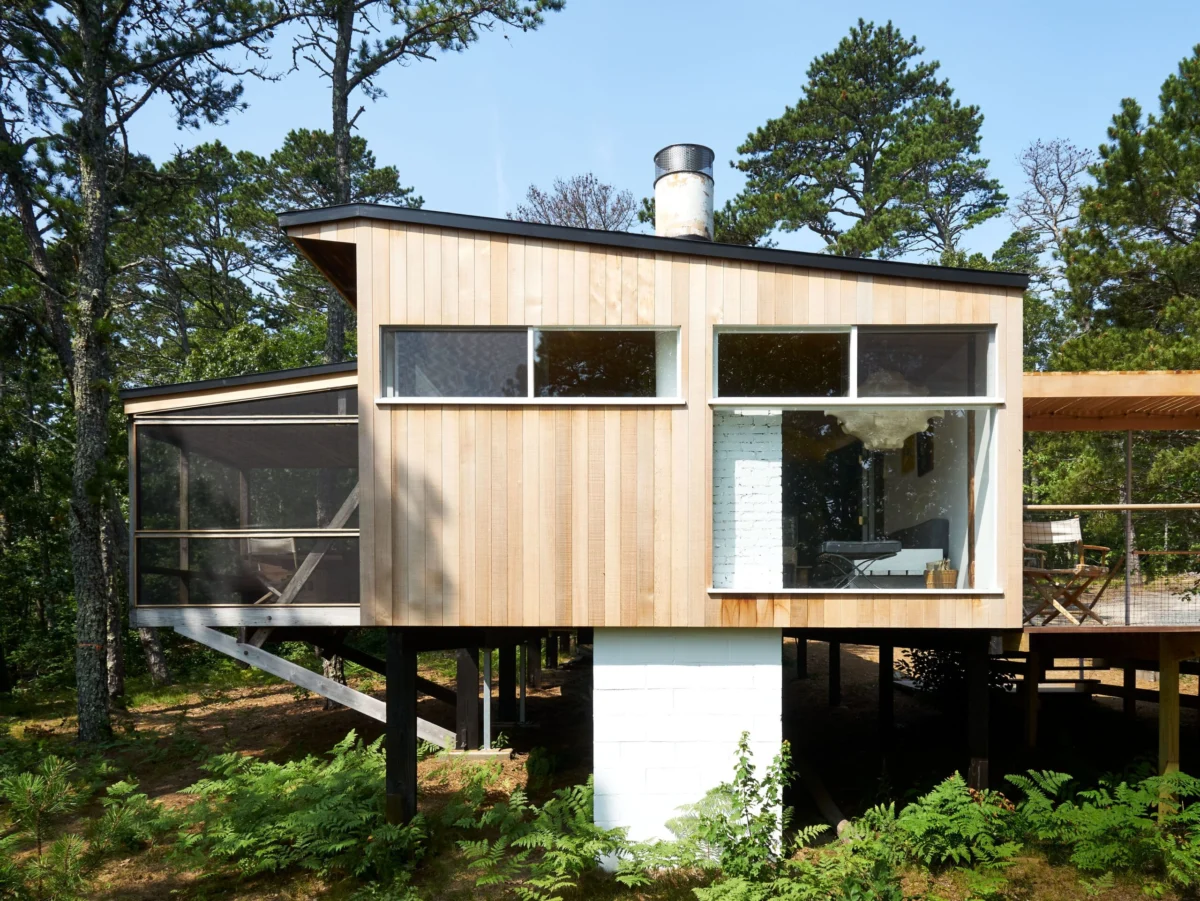
The architectural legacy of Marcel Breuer, the Bauhaus-trained pioneer who reshaped the landscape of American modernism, has seen a significant revitalization on the outer reaches of Cape Cod. The Cape Cod Modern House Trust (CCMHT) recently completed a comprehensive restoration of Breuer’s personal beach retreat in Wellfleet, Massachusetts, a project that not only saves a deteriorating masterpiece but also provides a rare window into the private life of one of the 20th century’s most influential architects. Known for his "heavy lightness"—a term coined by scholar Barry Bergdoll to describe Breuer’s ability to make massive materials appear weightless—the architect’s own home stands as a definitive example of his philosophy, blending European avant-garde ideals with the rugged, vernacular traditions of New England.

The restoration of the Breuer house represents the fifth major project undertaken by the CCMHT, an organization dedicated to the preservation of the unique concentration of Modernist architecture found in the woods of the Outer Cape. This specific site, overlooking Williams Pond, was where Breuer experimented with his "Long House" concept, a design that would eventually inform his 1949 exhibition at the Museum of Modern Art (MoMA) in New York. While the MoMA house was intended as a prototype for affordable suburban living during America’s post-war housing boom, the Wellfleet home remained a deeply personal laboratory for Breuer’s evolving aesthetic from the late 1940s until his death in 1981.
Historical Context and the Bauhaus Migration
To understand the significance of the Wellfleet house, one must look back to the early 1940s, a period marked by the migration of European intellectuals and artists to the United States. Marcel Breuer, having fled Nazi Germany and eventually resigning from the Bauhaus, followed his mentor Walter Gropius to Harvard University’s Graduate School of Design. During this era, Wellfleet became an unlikely epicenter for Modernist thought. The area’s secluded woods and pristine kettle ponds attracted a circle of architects and designers, including Serge Chermayeff, who built a home nearby on a sylvan plot.

Breuer’s first visits to Chermayeff in the early 1940s ignited a lifelong passion for the Cape Cod landscape. He was captivated by the "scraggly pines," sandy terrain, and the relative isolation of the National Seashore. In 1948, Breuer purchased 24 acres of land overlooking Williams Pond. At the time, the site was almost inaccessible; Breuer famously carved out his own driveway through the dense trees, reportedly damaging his sports car in the process. This rugged approach reflected the architect’s desire for a direct, unmediated connection with nature—a theme that would dominate the design of his residence.
Architectural Design: The Long House and Heavy Lightness
The Wellfleet house, constructed in 1948–1949 for less than $5,000, was a radical departure from the ornate coastal estates of the era. It was a prototype of the "Long House," a lean, timber-framed volume elevated on stilts above a steep drop toward the pond. The structure initially lacked electricity and telephone service, emphasizing a return to a simpler, more contemplative mode of living.

Key architectural features of the home include:
- The Butterfly and Shed Roofs: The house utilizes gently sloped shed roofs that allow for ribbon windows, maximizing natural light and providing panoramic views of the surrounding woods.
- Elevated Stilts: By raising the house on stilts, Breuer achieved a "feeling of levitation," according to CCMHT founder Peter McMahon. This technique minimized the building’s footprint and preserved the natural topography of the site.
- The Cantilevered Porch: A hallmark of Breuer’s work, the screened porch juts out from the rear façade, suspended over the landscape. This space served as the heart of the home during the summer months.
- Materiality: The house is a "palimpsest" of materials, featuring cedar siding, birch ceiling panels, and ebonized oak floors. Breuer’s use of cinder blocks for interior furniture, such as the dining table bases, showcased his ability to elevate industrial materials into the realm of high design.
Chronology of Expansion and Decline
Following the initial construction in 1949, the Breuer family returned to the Cape every summer. As the family’s needs grew, so did the house. In 1961, Breuer added a dedicated studio to the property, followed by an additional apartment in 1969. These additions were connected by elevated walkways and pergolas, creating a sprawling yet cohesive complex that integrated seamlessly with the forest.

Throughout these decades, Breuer used the house as a canvas, frequently repainting surfaces in bold, experimental hues. However, after his death in 1981, the property entered a long period of deferred maintenance. The harsh Atlantic climate—characterized by high humidity, salt air, and seasonal hurricanes—took a significant toll on the structure. By the time the CCMHT launched its fundraising campaign to purchase the property in the early 2020s, the house was in critical condition. Rotted plywood walls, sagging porches, and compromised birch panels threatened the structural integrity of the landmark.
The Restoration Process: A Forensic Approach
The CCMHT officially acquired the property in 2024 and immediately began a painstaking restoration process led by Peter McMahon and a team of specialized contractors. The project was described as a "low-tech, grassroots" effort that prioritized historical accuracy over modern convenience.

One of the primary challenges was determining which version of the house to restore. Because Breuer had updated the home over 30 years, the interior was a layer cake of different eras. McMahon’s team adopted a forensic approach, peeling back layers of paint and consulting black-and-white archival photographs. In areas where no photographic evidence existed, the team relied on physical discoveries. For example, when removing a closet in Breuer’s bedroom, the team discovered a patch of the original brown paint, which was then used to color-match the entire room.
Technical highlights of the restoration include:

- Structural Stabilization: The cantilevered rear porch, which had begun to sag under the weight of an original stone-topped dining table, was reinforced. The heavy slate top was replaced with a lighter mahogany top to prevent future structural failure.
- Surface Refreshing: The birch ceiling panels were replaced or cleaned, and the oak floors were re-ebonized to restore their original deep luster.
- Kitchen Restoration: The kitchen floor was reconstructed using speckled black linoleum, matching a previous renovation identified in family records. The walls were revived in a specific shade of blue found during the stripping process.
- Preservation of Artifacts: During the restoration, the team unearthed a trove of cultural treasures. These included a lithograph by Paul Klee, a painting by Alexander Calder, and Breuer’s original blueprints. Perhaps most significantly, they found over 1,000 rolls of family photographs documenting decades of parties, bonfires, and intellectual gatherings at the house.
Statements and Reactions
The restoration has been met with acclaim from the architectural community. Peter McMahon emphasized the "majestic" quality of the small structure, noting that it serves as a "tribute to what you can do with very simple forms if you really understand the site." He noted that while Breuer occasionally pushed structural limits too far—leading to some of the maintenance issues—the architect’s willingness to experiment is what gives the house its unique character.
Scholars have pointed out that the preservation of the Breuer house is essential for understanding the transition of Modernism from a European industrial movement to an American domestic ideal. The project has also sparked discussions on the vulnerability of Modernist heritage in coastal areas, where rising sea levels and extreme weather pose a constant threat to light-framed timber structures.

Broader Impact and Implications
The success of the Breuer house restoration has broader implications for architectural preservation in the United States. It demonstrates a viable model for saving "fragile" Modernist homes that might otherwise be demolished by developers looking to build larger, contemporary mansions. By turning these homes into living museums and short-term rentals, the CCMHT provides a sustainable financial model for their continued upkeep.
The Breuer house is now integrated into the CCMHT’s broader program, which includes homes by Jack Hall, Paul Weidlinger, and Charlie Zehnder. From May through September, the house is available for week-long rentals, allowing members of the public to experience the "levitation" of Breuer’s design firsthand. In the fall, the property hosts an artist residency program, continuing the site’s legacy as a place of creative production.

Analysis of Legacy
Marcel Breuer’s Wellfleet retreat is more than a vacation home; it is a physical manifesto of his career. It bridges the gap between his early Bauhaus furniture designs—represented by the original director’s chairs and Castiglioni lamps still found in the house—and his later Brutalist masterpieces, such as the Whitney Museum of American Art in New York.
The restoration ensures that Breuer’s personal vision of domesticity remains accessible to future generations. As McMahon cautions visitors today, reaching the house still requires a bit of the rugged spirit Breuer himself possessed: "Four-wheel drive is best. Better yet, bike." This insistence on maintaining the site’s original, somewhat difficult character is a final nod to the architect’s belief that great design should exist in harmony with, rather than in spite of, the natural world.