
 Reynand Wu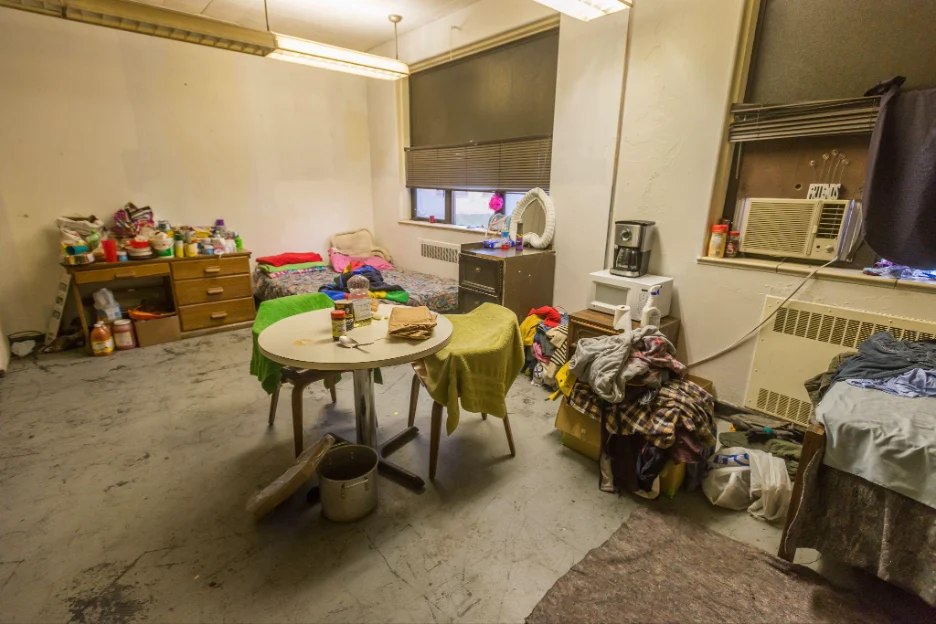
Migrant labor is the indispensable, constant bedrock of U.S. agriculture, yet the individuals who perform this vital work are systematically rendered invisible. This profound invisibility is not merely a social phenomenon but a meticulously engineered spatial reality, where employers strategically conceal worker housing behind dense groves, far from public roads, or on private land secured by locked gates. These isolated sites are inherently difficult for external parties to access and, crucially, equally challenging for residents to leave, establishing a pervasive environment of control and limited autonomy.
The Unseen Backbone of U.S. Agriculture
The agricultural sector in the United States relies heavily on a workforce comprising millions of migrant and seasonal farmworkers. According to the U.S. Department of Labor, a significant portion of these workers are foreign-born, with many operating under the H-2A visa program, which allows agricultural employers to bring temporary foreign workers to the U.S. for seasonal labor. These workers cultivate, harvest, and process a vast array of crops, ensuring the abundance and affordability of food for the nation. Despite their critical contribution, often involving arduous labor in extreme weather conditions for long hours, their living and working conditions frequently fall far below standards of dignity and human rights. The average farmworker family income often hovers around or below the poverty line, underscoring the economic vulnerability that underpins their reliance on employer-provided housing.
A History of Transient Labor and Spatial Control
The reliance on a transient and often vulnerable labor force in American agriculture is deeply rooted in history. From the sharecroppers and tenant farmers of the post-Civil War South to the Dust Bowl migrants of the Great Depression, and later the Bracero Program (1942-1964) that brought millions of Mexican farmworkers to the U.S., the pattern has been consistent: a demand for cheap, flexible labor often housed in temporary, employer-controlled facilities. The Bracero Program, while addressing wartime labor shortages, also established precedents for employer-controlled housing and conditions that sometimes bordered on exploitation. When the program ended, it was largely replaced by undocumented immigration and later, the expansion of the H-2A visa program, perpetuating a system where workers’ legal status and housing are often intertwined with their employment. This historical trajectory has solidified a structural dynamic where migrant workers, often lacking significant bargaining power or legal protections, remain susceptible to the terms dictated by their employers, including housing arrangements.
The Architecture of Invisibility and Control
The housing provided to migrant farmworkers is frequently characterized by conditions that strip residents of privacy, comfort, and dignity. As observed by Joey Colby Bernert, a statistician and clinical social worker who encountered many migrant workers as a paralegal at an immigration law firm in Metro Detroit, workers often return from long, strenuous days in fields and orchards to dormitories built far from any town center. These shared spaces are described as cramped, with multiple beds in tight quarters, communal bathrooms, and often rudimentary, if any, kitchen facilities.
Visual evidence from various regions, including North Carolina, California, and Illinois, corroborates these accounts. Photographs depict rows of identical cabins, their interiors revealing narrow beds, small windows, and insufficient space for personal belongings or even basic movement. A striking image from Rantoul, Illinois, in 2014, shows a migrant farmworker bedroom with tightly packed bunks, illustrating the lack of personal space. Similarly, a historical photo by Dorothea Lange from 1936 captures a migrant agricultural worker’s family in Nipomo, California, sitting outside a temporary shelter during the Great Depression, highlighting the enduring nature of inadequate housing for agricultural laborers across generations. These images are not mere documentation; they serve as critical evidence of a system designed to marginalize and erase the very people essential to its operation.
The physical design and placement of these living quarters are central to this system of control. By situating housing in remote, inaccessible areas, employers effectively limit workers’ access to external communities, services, and independent social networks. This isolation curtails opportunities for organizing, seeking outside help, or even simply enjoying leisure activities. Furthermore, the employer’s direct control over housing means that any complaint or grievance about working conditions, wages, or even the housing itself, carries an immense risk. Speaking up can lead not only to job termination but also the immediate loss of shelter, and for many foreign-born workers, the threat of forcible deportation. This precarious situation creates a chilling effect, limiting autonomy and effectively silencing dissent.
Sociological Lenses: Space as a Tool of Power
Sociology offers robust frameworks to understand that this is not merely a problem of substandard housing but a deeply embedded structural issue. Conflict theory, a foundational sociological perspective, posits that societal development and change are driven by struggles over power and resources. In the context of migrant labor, this struggle is acutely visible in the very organization and control of living spaces.
Henri Lefebvre and the Social Production of Space: The French philosopher and sociologist Henri Lefebvre argued profoundly that space is not a neutral, empty container but is actively "socially produced." This means that the physical environment — the layout of a room, the distance between buildings, the design of a community — is shaped by those who hold authority and power, reflecting their interests rather than necessarily prioritizing comfort, fairness, or optimal function for its inhabitants. In migrant labor housing, the social production of space clearly reflects the interests of employers in maintaining control over their workforce. The remote location, the shared and minimalist accommodations, and the lack of privacy are all deliberate choices that serve to maximize labor efficiency and minimize costs, even at the expense of worker well-being. These spatial arrangements create a power dynamic where workers are constantly aware of their dependent status, reinforcing the employer’s authority.
Michel Foucault and Disciplinary Architecture: Building on similar ideas, Michel Foucault, another influential French philosopher, demonstrated how institutions utilize architecture to enforce discipline and control. In his work, Foucault explored how structures like prisons, hospitals, and schools are designed to normalize certain behaviors and create docile bodies through surveillance and the organization of space. Migrant housing operates on similar principles, albeit often without overt bars or guards. The buildings are typically constructed to meet only the bare minimum legal standards for shelter, standards that often barely exceed what is permissible for a prison cell in terms of square footage per person. This "minimum standard" architecture, while technically legal, inherently dehumanizes. The lack of personal space, the communal facilities, and the constant proximity to others, often strangers, diminish individuality and foster an environment where residents feel perpetually monitored. As one worker recounted to Colby Bernert, his bunk was so close to the next that he could hear every breath of the man above him, underscoring the complete absence of personal boundaries. His wife detailed rules governing visitors, meals, and noise, and how they, as a married couple, were unable to live together. This architecture, therefore, serves as a subtle yet powerful mechanism of control, enforcing discipline and limiting the freedom of movement and association without the need for overt coercion.
Regulatory Frameworks and Their Limitations
The U.S. has legal provisions intended to protect migrant farmworkers, notably the Migrant and Seasonal Agricultural Worker Protection Act (MSPA) and various Occupational Safety and Health Administration (OSHA) standards for temporary labor camps. The H-2A visa program also includes requirements for employers to provide housing that meets federal and state safety and health standards. However, enforcement of these regulations faces significant challenges. The remote locations of many camps make routine inspections difficult. Furthermore, workers’ fear of retaliation—loss of job, housing, or even deportation—often prevents them from reporting violations. Many advocacy groups argue that the minimum standards themselves are often insufficient to ensure truly humane and dignified living conditions. The transient nature of the workforce and the seasonal demand for labor also complicate oversight, creating a cycle where violations can persist largely unchecked.
Stakeholder Perspectives and Advocacy
The issue of migrant worker housing elicits diverse reactions from various stakeholders:
- Agricultural Employers/Associations: Often emphasize the economic necessity of the H-2A program and the challenges of providing housing, citing high costs, labor shortages, and compliance with existing regulations. They may argue that they meet legal minimums and that any improvements would significantly increase operational costs, potentially impacting food prices and competitiveness.
- Worker Advocacy Groups: Organizations like the United Farm Workers (UFW), Farmworker Justice, and local legal aid societies vehemently advocate for improved living and working conditions, fair wages, and stronger protections against exploitation. They highlight human rights abuses, the need for independent oversight, and the empowerment of workers to organize and bargain collectively without fear of reprisal.
- Government Agencies (DOL, OSHA): These agencies are tasked with enforcing existing laws but often face limitations in funding, staffing, and jurisdiction. They typically respond to complaints, but proactive inspections can be challenging due to the dispersed and often hidden nature of the housing sites.
- Public Health Officials: Have increasingly raised concerns about the public health implications of overcrowded and unsanitary housing, particularly in the wake of pandemics like COVID-19, where such conditions can facilitate rapid disease transmission.
Broader Implications: A Systemic Challenge
The systemic invisibility and control embedded in migrant labor housing have far-reaching implications:
- Economic Disparity: It perpetuates a cycle of poverty and vulnerability for a workforce essential to a multi-billion-dollar industry. The low wages and exploitative living conditions contribute to wealth inequality and impede workers’ ability to improve their socioeconomic status.
- Human Rights Concerns: The lack of privacy, dignity, and autonomy, coupled with the threat of retaliation, raises serious human rights concerns, bordering on forced labor in some instances. The ability to control housing as a lever of employment control fundamentally undermines basic freedoms.
- Public Health Risks: Overcrowding, inadequate sanitation, and limited access to healthcare in remote housing sites create significant public health risks, not only for the workers but potentially for the broader community. These conditions exacerbate the spread of infectious diseases and worsen chronic health issues.
- Social Isolation and Marginalization: The deliberate isolation of migrant communities reinforces their marginalization from mainstream society, limiting access to education, social services, and opportunities for cultural integration. This impacts not only the workers but also their families, particularly children.
- Erosion of Labor Protections: The difficulty in monitoring and enforcing housing and labor standards undermines the intent of protective legislation, creating a de facto environment where employers can operate with reduced accountability.
Moving Forward: Towards Transparency and Reform
The analysis of migrant labor housing through a sociological lens reveals that this is not merely a housing crisis resulting from economic necessity or oversight. It is, fundamentally, a calculated labor strategy. These camps are not temporary accidents; they are often long-term, structurally designed solutions to a problem that many in power have little incentive to truly fix. The system thrives on the invisibility and vulnerability of its workforce.
Addressing this deeply entrenched issue requires a multi-faceted approach. First and foremost, there is an urgent need for increased transparency and public awareness. As scholars, journalists, and citizens, it is imperative to bring these hidden designs and their human cost to light. We cannot change what remains unseen. Policy reforms should focus on strengthening and rigorously enforcing housing standards, moving beyond mere minimums to ensure dignified living conditions. This includes independent oversight mechanisms, easier avenues for workers to report violations without fear of reprisal, and increased funding for legal aid and advocacy groups. Ultimately, empowering migrant workers through better wages, improved labor protections, and the right to organize are crucial steps toward dismantling a system built on spatial control and exploitation, ensuring that those who feed the nation can live with the dignity they deserve.








