Layla Zulfa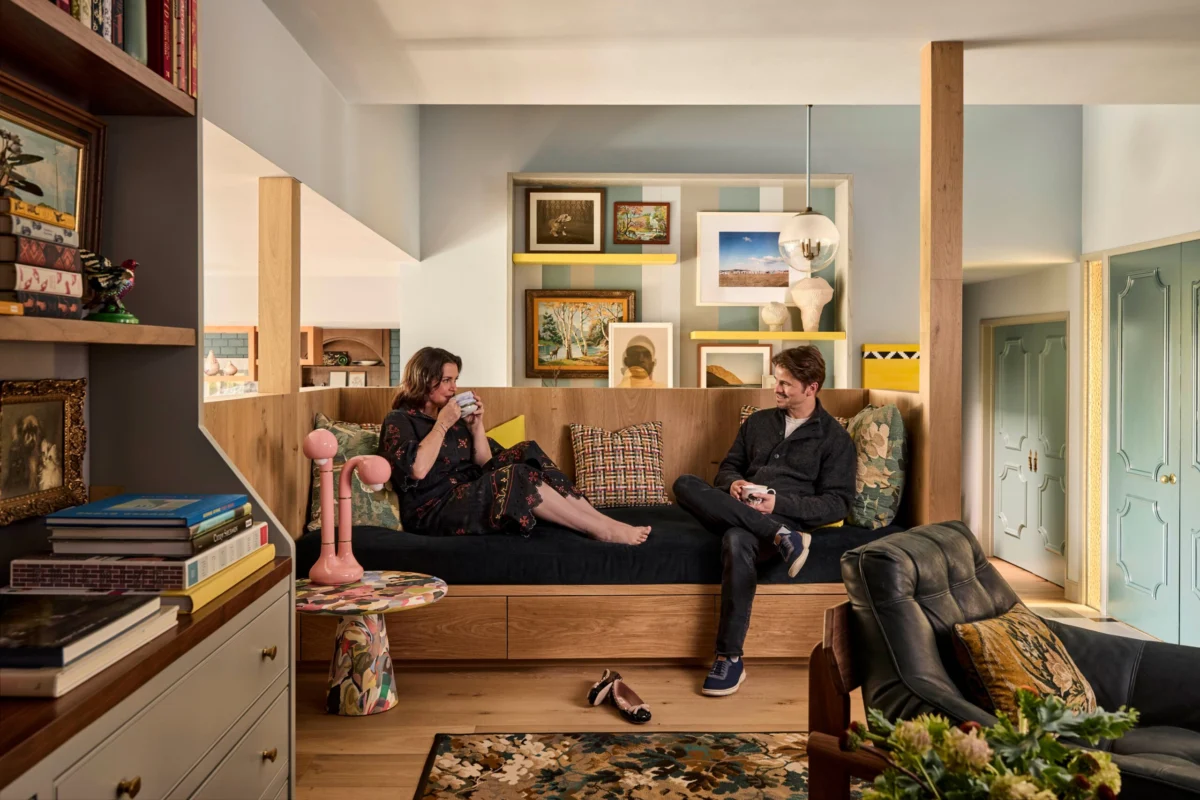
In the competitive landscape of Los Angeles real estate, where modern minimalism often dictates the aesthetic of celebrity residences, the 3,200-square-foot home of actors Melanie Lynskey and Jason Ritter stands as a defiance of contemporary trends. Located in a quiet pocket of Los Angeles, the residence has recently undergone a comprehensive interior transformation that prioritizes emotional resonance, cultural heritage, and a "warm maximalism" rarely seen in high-profile renovations. The project, a collaboration between the Emmy-nominated Yellowjackets star and designer Jason Martin of the LA-based studio Martin & Brockett, represents a significant shift from the home’s previous identity—a structure defined by early-1990s renovations and cold, utilitarian surfaces.

The renovation serves not only as a physical update to the property but as a psychological anchoring for Lynskey, a New Zealand native, and Ritter, whose family legacy is deeply embedded in American television history. By integrating a vast collection of Antipodean art and sentimental family heirlooms, the couple has transformed a standard luxury residence into a curated narrative of their collective lives.
The Evolution of a Vision: From Cold Tile to Cozy Soul
Melanie Lynskey and Jason Ritter occupied the home for several years before initiating the full-scale redesign. According to Lynskey, the initial experience of the house was contradictory; while the "soul" of the building felt warm, the physical materials—specifically an abundance of beige travertine and cold tile—created a sense of detachment. This experience is common in Los Angeles homes renovated during the late 20th century, a period when travertine was a dominant luxury material, often used to create a Mediterranean or neoclassical feel that can feel dated and impersonal in a modern context.

Lynskey’s decision to renovate was born from a desire to avoid the "renter’s regret" she felt with her previous property, where she lived for 13 years without ever fully personalizing the space. The process began in the kitchen, a project Lynskey managed independently. The result—emerald subway tiles set against soft blue-gray cabinetry and high-end Wolf appliances—provided the confidence to expand the project to the rest of the house. However, the complexity of the remaining rooms, particularly those with "confusing" layouts inherited from previous owners, necessitated professional intervention.
The Collaboration: Jason Martin and the Art of Editing
The introduction of Jason Martin marked a pivotal moment in the home’s chronology. Lynskey, who had never worked with a professional designer, expressed initial trepidation regarding the potential clash of visions. In the world of high-end interior design, the relationship between a client with a strong aesthetic and a designer with an established brand can often be fraught. However, Martin’s approach was one of "elevated editing," a method that sought to organize and amplify Lynskey’s existing collections rather than replacing them with sourced showroom pieces.

Martin noted that Lynskey was among his most "adventurous" clients, largely due to her lack of interest in neutral palettes. In the design world, the term "neutral" typically refers to whites, beiges, and greys. For Lynskey, however, deep reds, saturated blues, and complex floral patterns served as the foundational palette. This aesthetic choice aligns with a broader resurgence in "cluttercore" and maximalist design, which values personal history and visual density over the starkness of "white-box" modernism.
Cultural Anchoring: The Role of New Zealand Art
A primary objective of the renovation was to honor Lynskey’s heritage. The home functions as a gallery for her extensive collection of New Zealand art, featuring works by Māori and Pacific Island artists. These pieces are not merely decorative; they serve as a geographical and emotional link to Wellington and the landscapes of her youth.

Key works in the collection include:
- Henrietta Harris: Multiple pieces, including Everything, Everything and Quack, are distributed throughout the living spaces and the primary bath.
- Kelcy Taratoa: The work Whare-kura punctuates a blue brick wall in the family room, bringing a contemporary Māori perspective to the interior.
- Ahilapalapa Rands: An embroidered work titled Entwined adds a tactile, traditional element to the family room’s decor.
- Cora-Allan Lafaiki Twiss: A piece on hiapo cloth (Niuean barkcloth) titled Sighting a Snow Capped Mountain represents the intersection of traditional craft and contemporary fine art.
By prioritizing these artists, the home avoids the "globalized" look of many celebrity interiors, which often rely on blue-chip American or European artists. Instead, the art provides a specific, localized identity that reflects the homeowner’s personal history.

Textiles and Saturated Palettes: The Fabric of the Home
If the art provides the home’s structure, the textiles provide its texture. Lynskey is a self-described collector of fabrics, having spent years stockpiling bolts from Liberty London and other high-end houses during sales. Martin’s task was to find a functional application for these "weird boxes of fabric."
The resulting interior features a sophisticated layering of patterns from prestigious textile houses, including:

- Watts of Westminster: A historic British firm known for its 19th-century Gothic Revival patterns.
- Pierre Frey: A French house celebrated for its eclectic and color-rich designs.
- Dedar: An Italian company at the forefront of contemporary textile technology and pattern.
To prevent the abundance of color and pattern from descending into chaos, Martin utilized natural and animal motifs as a unifying theme. This "thematic thread" allows for disparate elements—such as a red lacquered "snug" and a blue-walled family room—to feel part of a cohesive whole.
The "Snug" and the Living Room: Solving Architectural Riddles
One of the most significant challenges of the renovation was the downstairs area, which had been left in a state of architectural limbo following a 1990s remodel. A small, "confusing" room was reimagined as a "snug"—a British and Commonwealth term for a small, cozy room often found in pubs or older homes.

The snug was finished in a high-gloss red lacquer, a bold choice that requires meticulous surface preparation and multiple coats to achieve a mirror-like depth. This room, which features a custom built-in daybed by Martin & Brockett, has become Lynskey’s primary space for reading scripts. The use of saturated color in small spaces is a recognized design technique to create a "jewel-box" effect, making a room feel intentional and intimate rather than cramped.
The living room also required a spatial overhaul. Despite Lynskey’s repeated attempts to arrange the furniture herself, the room remained dysfunctional until Martin introduced custom daybeds and built-in shelving. This highlights a common issue in large Los Angeles residences: "volume without purpose." By creating distinct zones for game nights and relaxation, the designers transformed the living room from a pass-through space into a destination.

Preserving Legacy: The Ritter Family Sofa
While much of the home’s aesthetic is driven by Lynskey’s vision, the inclusion of a specific piece of furniture from Jason Ritter’s late father, John Ritter, provides the home’s emotional gravity. An overstuffed sofa in a leafy green pattern, originally part of the elder Ritter’s estate, was treated as a non-negotiable element of the design.
John Ritter, a beloved figure in American television known for Three’s Company, remains a significant influence on his son’s life. Martin designed the family room around this sofa, ensuring that the legacy of the Ritter family was woven into the new fabric of the house. Jason Ritter, who joked that his own creative contributions were akin to the "white nothing area" in The Matrix, noted that he eventually learned to trust the synergy between his wife and their designer, intervening only on a few key choices, such as the pink Murano glass chandeliers in the dining room.

Market Trends and Broader Implications
The Lynskey-Ritter renovation reflects a broader trend in the luxury housing market: the move toward "soulful" real estate. For decades, the goal of high-end renovation was often "resale value," leading to a homogenization of interiors characterized by white walls and neutral finishes. However, the rise of platforms like Architectural Digest and the increasing influence of personal branding have encouraged celebrities to create homes that are highly specific and non-traditional.
Supporting data suggests that while "neutral" homes may sell faster on the mass market, custom, high-concept interiors often command a premium among a specific subset of affluent buyers who value "turn-key" properties with a distinct personality. Furthermore, the use of historical textile houses and regional artists indicates a move toward "slow design"—an approach that values the provenance and story of objects over the convenience of mass-produced luxury.

Conclusion: A House with Meaning
As the project concluded, both the homeowners and the designer expressed a sense of melancholy that the process was over. This reaction is a testament to the success of the collaboration. The home is no longer a collection of "cold tile" and "confusing rooms"; it is a 3,200-square-foot testament to a family’s history and a designer’s ability to edit a bold vision into reality.
By refusing to "hold back," Melanie Lynskey and Jason Ritter have created a space that functions as both a sanctuary and a statement. In a city where artifice is often the default, their Los Angeles home stands as an authentic, color-rich, and deeply personal achievement in modern interior design.