Layla Zulfa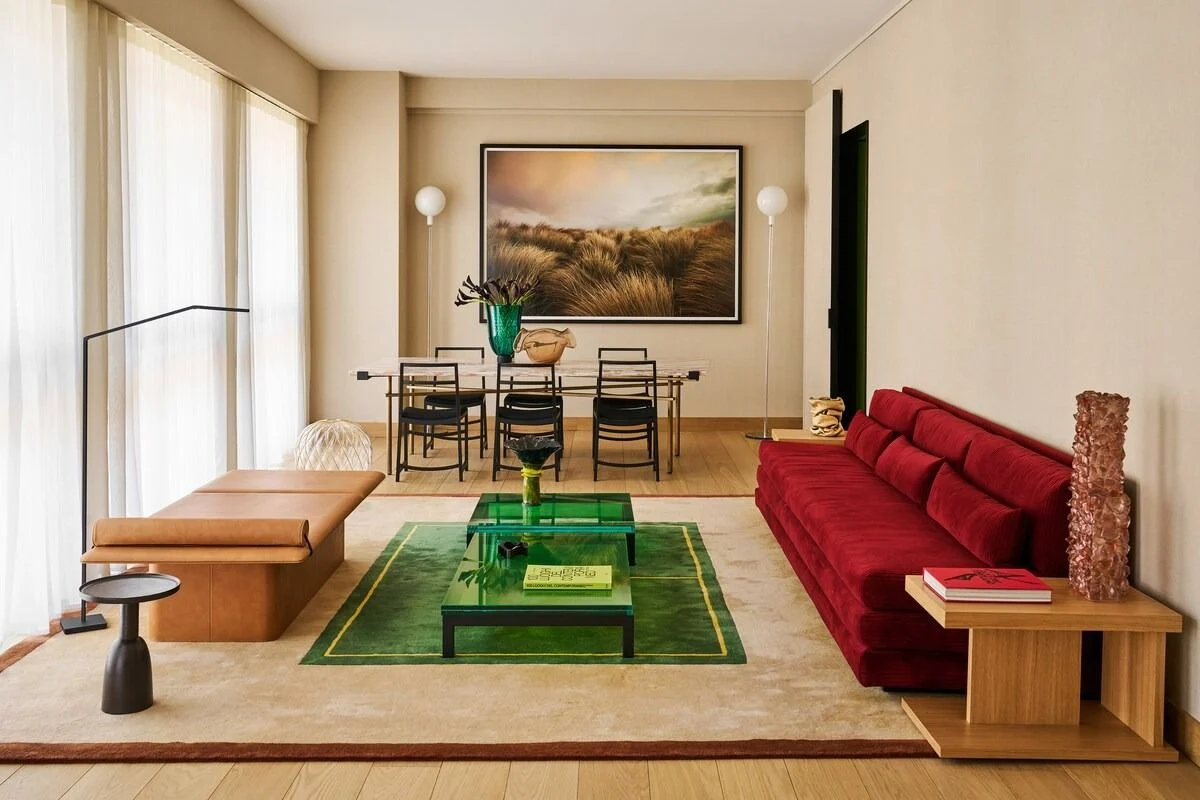
Milan has long functioned as the industrial and financial engine of Italy, but its international reputation is inextricably linked to its status as a global epicenter for fashion and industrial design. In this northern Italian metropolis, aesthetic excellence is not a localized luxury but a pervasive element of the urban fabric. Home to legacy fashion houses such as Prada, Armani, and Versace, the city also serves as the perennial host of Milan Fashion Week and the Salone del Mobile. The latter, established in 1961, has grown into the world’s largest furniture and design trade fair, attracting over 300,000 visitors annually and transforming the city into a sprawling gallery of innovation every April.
Over the last decade, and particularly following the momentum of Expo 2015, Milan has undergone a residential renaissance. This transformation is most evident in the short-term rental market, where traditional apartments are increasingly being reimagined as high-design "living showrooms." For the modern traveler, these properties offer a synthesis of Milanese architectural heritage—characterized by frescoed ceilings and parquet flooring—and contemporary interior curation featuring sculptural lighting and vintage Italian furnishings. The shift reflects a broader global trend in luxury hospitality where affluent travelers prioritize residential authenticity and "design DNA" over the standardized amenities of traditional five-star hotels.
The Evolution of the Milanese Residential Aesthetic
The history of Milanese design is a study in the balance between rigorous functionality and bold experimentation. Post-war architects like Gio Ponti and Achille Castiglioni set a precedent for interiors that treat every object, from a door handle to a lounge chair, as a work of art. This legacy is now being utilized by property developers and independent hosts to differentiate their offerings in a competitive market. According to recent tourism data from the City of Milan, the metropolitan area saw a record-breaking 8.5 million arrivals in 2023, with a significant portion of high-net-worth individuals seeking alternative accommodations that reflect the city’s status as a "style capital."
The current inventory of luxury rentals in Milan is characterized by a move away from generic minimalism toward a "layered" aesthetic. This involves the integration of original architectural features with iconic furniture pieces—such as the LC5 sofa by Le Corbusier or Smeg appliances—to create spaces that feel curated rather than merely decorated.
High-Design Destinations: A Chronology of Style
The following properties represent the pinnacle of Milan’s design-led rental market, categorized by their unique contributions to the city’s architectural narrative.
The Modernist Revival: Domya Retreat Suite and Porta Venezia
In the district of Porta Venezia, known for its eclectic mix of Liberty-style architecture and contemporary galleries, design-forward rentals are embracing bold geometry. The Domya Retreat Suite serves as a primary example of modernist worship. The living area is anchored by the LC5 sofa, a collaboration between Le Corbusier, Pierre Jeanneret, and Charlotte Perriand, characterized by its tubular steel frame. The inclusion of the Tre Pezzi Armchair by Franco Albini further cements the space’s identity as a mini-gallery of 20th-century Italian mastery.
Nearby, other units in Porta Venezia lean into Bauhaus-inspired motifs. These spaces often utilize oversized graphic patterns and primary colors to maximize the visual impact of compact urban layouts. Market analysts note that these "Instagrammable" yet historically informed interiors are particularly successful in attracting the "design obsessive" demographic that flocks to the city during the Salone del Mobile.
The Luxury Showroom Concept: Maison Senato and Corso Plebisciti
A significant trend in the Milanese market is the emergence of hospitality brands that bridge the gap between boutique hotels and private residences. Maison Senato has established several high-profile units, such as Maison Oro and the Penthouse Maison Onice. These properties are defined by their "wow factor," utilizing saturated jewel tones—emerald greens, ruby reds, and warm golds—to create a sense of theatrical luxury.
The Penthouse Maison Onice, priced from $8,361 per night, represents the absolute ceiling of the Milanese Airbnb market. Its defining feature is a master bathroom clad in luminous green onyx marble sourced from Thailand, complemented by a private rooftop pool—a rare commodity in Milan’s dense, historic core. Similarly, the luxury apartment in Corso Plebisciti utilizes teal-and-blush palettes and stained-glass doors to balance classic period architecture with a playful, contemporary spirit.
Historical Preservation and Green Spaces
While Milan is often perceived as a dense urban environment, a subset of luxury rentals focuses on the "hidden garden" archetype. A prominent three-bedroom rental in the city center features a secluded private garden, providing a rare outdoor sanctuary. The interior of this property juxtaposes modern lounge seating with original ceiling frescoes, a hallmark of Milanese noble residences. This preservation of old-world artistry within a functional modern home reflects the city’s reverence for craftsmanship.
In the Navigli district, the focus shifts toward industrial heritage. Recently renovated lofts in this area preserve exposed brick and wooden ceiling beams, reflecting the neighborhood’s history as a hub for commerce and canals. These properties cater to a younger, creative class of travelers who value the "industrial chic" aesthetic that has become synonymous with urban renewal in European capitals.
Market Analysis and Economic Impact
The proliferation of high-end Airbnbs in Milan has significant implications for the local economy and urban development. Data from the European Short-Term Rental Index indicates that luxury listings in Milan have a 25% higher occupancy rate during peak fashion and design weeks compared to standard listings. This "event-driven" economy allows hosts to command premium prices that often exceed the nightly rates of the city’s most prestigious hotels, such as the Bulgari Hotel or the Four Seasons.
However, the rise of these "showroom apartments" has also sparked a dialogue regarding housing availability for residents. City officials have considered various regulations to balance the lucrative tourism sector with the needs of the local population. In response, many property managers have shifted toward professionalized "hospitality suites" that operate under stricter commercial guidelines, ensuring a level of service—including concierges and cleaning crews—that aligns with traditional hotel standards.
Implications for Global Interior Design Trends
The "Milanese style" found in these rentals is increasingly influencing global interior design. The move toward "dopamine decor"—characterized by vibrant colors and tactile fabrics like bouclé and velvet—is a direct reaction to the years of gray-toned minimalism that dominated the rental market. Designers are observing that travelers now seek "sensory-rich" environments.
Furthermore, the integration of "collectible design" into rental units is a burgeoning trend. By placing authenticated vintage pieces in functional living spaces, hosts are educating guests on design history. This "living museum" approach has proven successful in Milan, where the boundary between a private home and a public showroom is famously porous.
Future Outlook for Milanese Hospitality
As Milan prepares for future international events, including the 2026 Winter Olympics, the demand for high-design residential stays is expected to grow. The city’s ability to reinvent its architectural past for a modern audience remains its greatest strength. Whether through the use of traditional materials like Carrara marble and terrazzo or the bold application of Bauhaus principles, Milan’s Airbnbs are no longer just places to stay; they are essential components of the city’s cultural exports.
In conclusion, the most sophisticated Airbnbs in Milan offer more than luxury; they provide a portal into the city’s deep-seated design DNA. By prioritizing architectural integrity, historical preservation, and curated furniture, these properties allow travelers to experience the "Made in Italy" philosophy from the inside out. As the market continues to professionalize, the line between the private residence and the luxury boutique hotel will continue to blur, cementing Milan’s status as the world’s premier destination for design-conscious travel.