
 Ronny Sianturi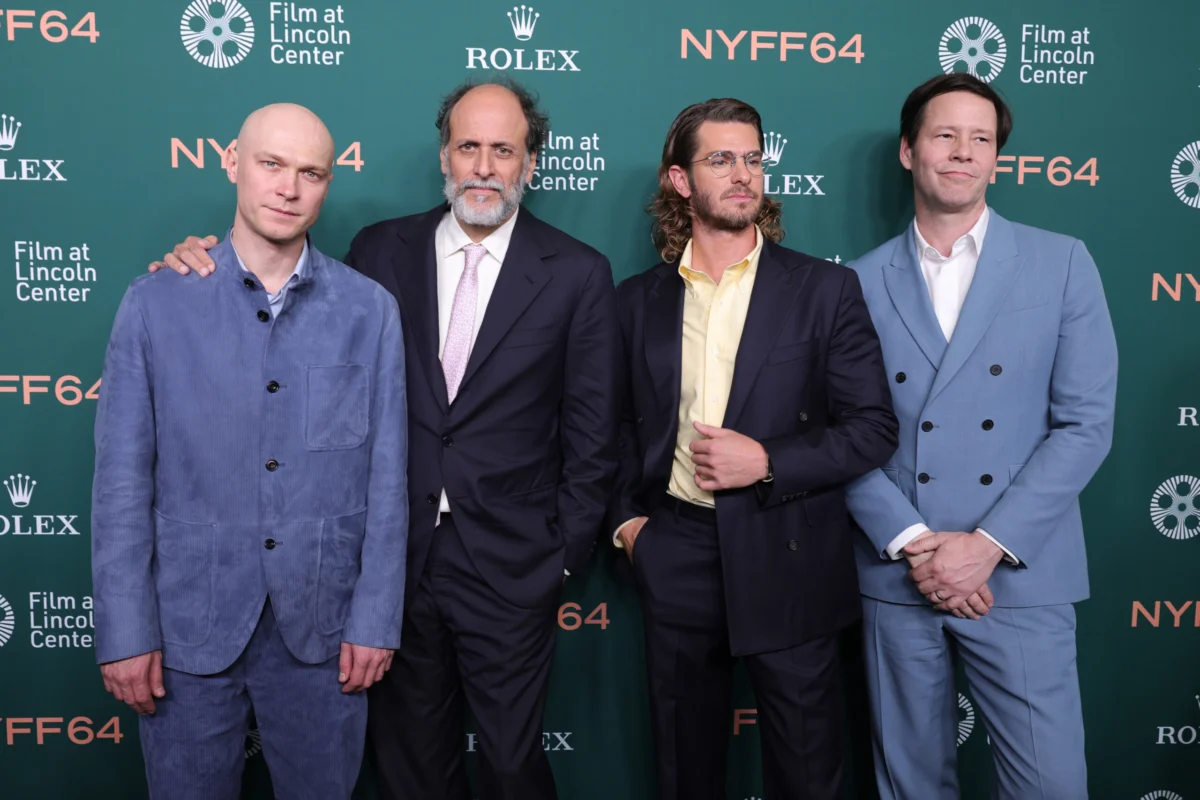
The intersection of advanced computation and unbridled corporate ambition takes center stage in Luca Guadagnino’s latest cinematic venture, Artificial. The film made its high-profile world premiere on a Monday evening at the 64th New York Film Festival, marking the beginning of a contentious and widely anticipated theatrical journey. Distributed by Neon—the independent studio behind the Academy Award-winning feature Anora—Artificial offers a biting, chronologically structured dramatization of the modern artificial intelligence boom. However, the film’s journey to the screen has been fraught with industry friction, highlighted by its high-profile abandonment by Amazon MGM Studios following a massive $50 billion corporate investment in OpenAI.
As regulatory bodies, tech ethicists, and global policymakers grapple with the rapid acceleration of artificial intelligence, Guadagnino’s feature arrives as a timely psychological and structural postmortem of Silicon Valley’s formative years. The film’s premiere positions it as a major cultural lodestone for the upcoming awards season, blending high-stakes corporate espionage with the intimate, often tragic human dynamics that birthed the generative AI era.
Chronology of an AI Revolution: From Academic Ideals to Corporate Hegemony
Artificial adopts a nearly documentary-style chronology, tracing the development of generative artificial intelligence from its academic roots to its current commercial dominance. The narrative opens in 2003 at the University of Toronto, depicting Ilya Sutskever—portrayed as an idealistic, socially unpolished Russian immigrant—approaching Geoffrey Hinton, widely recognized as a foundational godfather of modern neural networks. The film meticulously follows Sutskever as he moves under Hinton’s tutelage and subsequently transitions into the Silicon Valley ecosystem via Google.
The timeline advances to a pivotal 2014 technology conference, where a young, ambitious Sam Altman secures Sutskever’s allegiance, recruiting him as the chief science officer for a nascent OpenAI. What follows is a dramatization of the organization’s formative alliances, including a pivotal supper featuring Altman, Elon Musk, Greg Brockman, and other early architects of the movement.
As the narrative progresses, the film illustrates Sutskever’s gradual disillusionment. The scientific pursuit of artificial general intelligence (AGI) to benefit humanity increasingly clashes with Altman’s aggressive capitalization and accelerationist philosophy. The timeline accelerates through the watershed public release of ChatGPT in November 2022—a launch that stunned both the technology sector and OpenAI’s own workforce—and details the subsequent structural transformation of OpenAI from a non-profit research entity into a commercially driven enterprise.
The chronology culminates in the dramatic internal power struggles of late 2023, specifically the November boardroom coup that briefly ousted Altman before Microsoft CEO Satya Nadella and loyalist factions engineered his swift return. This event, depicted in the film as a definitive turning point, solidified the triumph of corporate technocapitalism over institutional safety guardrails.
Data, Corporate Exits, and the Economics of Artificial Intelligence
The financial mechanics underpinning the real-world events depicted in Artificial are central to the film’s thematic resonance. The massive capital injections characterizing the sector—exemplified by Amazon’s $50 billion investment in OpenAI and Microsoft’s role as OpenAI’s primary infrastructure provider—highlight the immense economic stakes involved in controlling foundational large language models.
The decision by Amazon MGM Studios to drop the film underscores the complex web of conflicts of interest defining contemporary Hollywood and Silicon Valley. Initially backing the project, Amazon severed ties as its broader cloud computing and financial entanglements with generative AI developers deepened. This corporate distancing reflects a broader industry sensitivity regarding media critiques of the tech sector’s leadership.
Despite the corporate retreat, the film captures a mounting wave of internal dissent and regulatory warning signs. The narrative concludes with postscripts detailing the public departures and whistleblowing activities of prominent AI safety researchers, including former figures from OpenAI and Anthropic who have raised alarms over the industry’s disregard for long-term existential risk.
Casting and Character Portraits: Translating Silicon Valley Figures to Cinema
Artificial features an ensemble cast portraying the primary architects of the modern AI landscape. Director Luca Guadagnino noted during his festival presentation that despite the mathematical and computational complexity of AI, the technology is fundamentally driven by human interaction and interpersonal politics.
Andrew Garfield stars as Sam Altman, delivering a performance designed to interrogate the charismatic influence and operational tactics of the OpenAI CEO. Garfield’s portrayal captures a paradoxical persona that balances public diplomacy with aggressive corporate maneuvering. Conversely, Altman has publicly dismissed the film’s accuracy based on promotional materials, maintaining that the production prioritizes dramatic caricature over biographical precision.
Yura Borisov stars alongside Garfield as Ilya Sutskever, portraying the psychological toll of a scientist realizing the commercial trajectory of his life’s work. The film also features portrayals of other key industry figures:
- Greg Brockman, portrayed by Cooper Hoffman, is depicted as an earnest AGI evangelist operating in lockstep with Altman.
- Mira Murati, played by Monica Barbaro, captures the enigmatic balance between oversight and complicity within OpenAI’s leadership.
- Geoffrey Hinton, brought to the screen by Mark Rylance, serves as the moral conscience of the scientific community.
- Elon Musk, played by Ike Barinholtz, is presented as an eccentric, unpredictable presence reflecting the early days of the tech mogul’s involvement in foundational AI research.
- Dario Amodei, representing the transition from early OpenAI ideals to the formation of safety-conscious competitor Anthropic, is depicted among the idealistic faction of the movement’s early days.
Broader Impact and Industry Implications
The release of Artificial arrives at a critical juncture for global technology policy. By dramatizing the internal fractures between safety researchers and commercial accelerators, the film feeds into ongoing public debates regarding the oversight of autonomous systems. The parallel timing of whistleblower media appearances—such as former researchers discussing safety failures on national television programs concurrently with the film’s festival screenings—amplifies the cultural resonance of the project.
Industry analysts note that while the film functions as an entertaining and sophisticated primer on the rise of generative AI, its broader implication lies in its challenge to the prevailing narrative of technological inevitability. By framing the current AI quagmire as the result of deliberate human choices and economic incentives rather than autonomous scientific progression, Artificial invites audiences to critically evaluate the distribution of power, data, and societal autonomy in the digital age.
As the film prepares for its commercial release by Neon, its creators face the unique challenge of maintaining narrative relevance in a fast-moving sector where foundational developments occur on a weekly basis. Nevertheless, Artificial establishes itself as a definitive cinematic artifact of the technological transition defining the early twenty-first century.








