
 Kang Muslim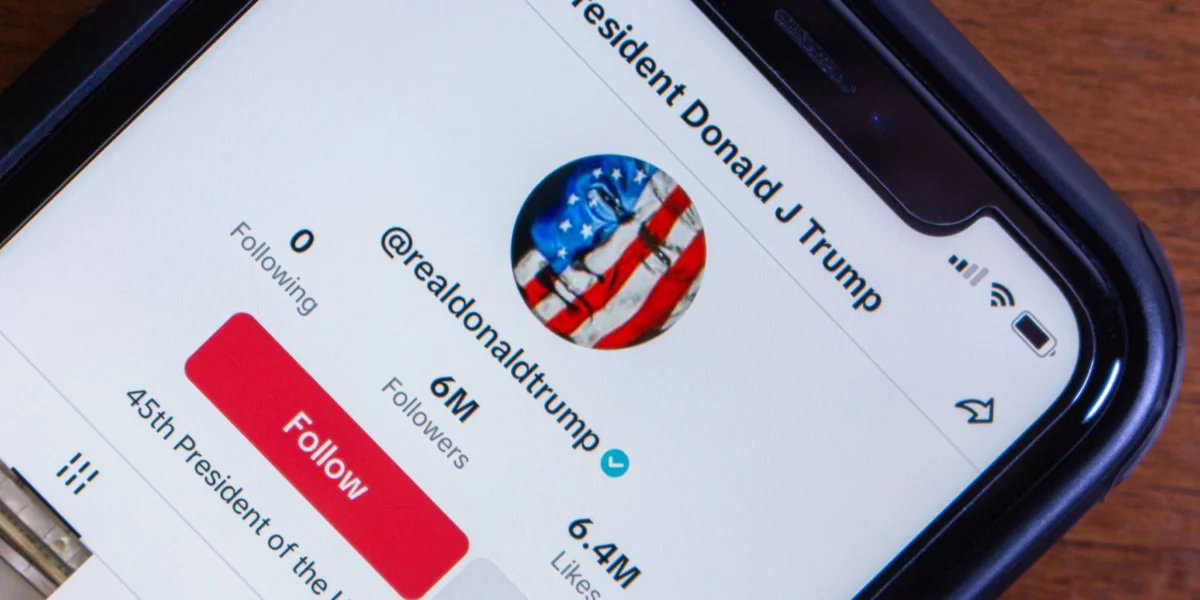
The landscape of modern political campaigning has fundamentally shifted from the town halls and television broadcasts of the 20th century to the algorithmic feeds of social media applications. A comprehensive new study published in the Journal of Political Marketing sheds light on this transformation, demonstrating that political candidates on TikTok achieve substantially higher view counts and user interactions by employing short, highly emotional, and performance-driven videos rather than substantive, policy-heavy discussions. Authored by Jenny Bronstein and Tal Eitan from the Department of Information Science at Bar-Ilan University in Israel, the research investigates the structural mechanisms of TikTok during the high-stakes 2024 U.S. presidential election. By evaluating every TikTok post from the official accounts of Donald Trump and Kamala Harris, the study offers a rigorous examination of how digital platform architectures dictate political discourse, rewarding visual spectacle, rapid entertainment, and emotional resonance over detailed legislative proposals.
Theoretical Framework: Media Ecology and Affective Publics
To understand why candidates pivot toward brevity and spectacle, Bronstein and Eitan anchored their research in Media Ecology Theory. This established communication framework posits that media platforms are far more than neutral pipelines meant for transmitting information from a sender to a receiver. Instead, the inherent design tools, constraints, and algorithmic rules of a specific platform actively shape and transform the nature of the messages created within its ecosystem. TikTok, designed explicitly for rapid-fire consumption of vertical video content, imposes structural constraints that favor immediate visual stimulation, dynamic pacing, and effortless replayability.
Complementing this perspective is the concept of "affective publics," which describes how digital communities coalesce around shared emotional states rather than structured, rational-critical debates. In an algorithmic environment engineered to maximize user retention and instantaneous engagement, a burst of humor, a striking visual symbol, or a carefully curated expression of outrage will inevitably travel much further than a comprehensive policy white paper. Political campaigns, therefore, must adapt their communication strategies to survive and thrive within this emotional economy, aligning their messaging with the behavioral patterns dictated by the platform’s underlying code.
Methodology and Campaign Timelines
The empirical scope of the research encompasses the entirety of the digital campaigning period for both major candidates during the 2024 U.S. presidential cycle. The tracking window commenced the moment each candidate launched their official TikTok account in the summer of 2024 and concluded the day after the November election. During this intensive multi-month window, the research team compiled a definitive dataset consisting of 276 videos. This corpus included 57 posts from Donald Trump’s account and 219 posts from Kamala Harris’s account, reflecting two vastly different operational philosophies regarding social media output frequency and content curation.
The investigators implemented a rigorous coding scheme to evaluate each video across multiple dimensions. Every post was analyzed for stylistic attributes—such as whether the candidate spoke directly to the camera, shared behind-the-scenes casual moments, or integrated footage of massive campaign crowds. Furthermore, the coding framework tracked thematic and emotional variables, including the deployment of humor, direct criticism of political opponents, and appearances by prominent cultural figures or celebrities. Finally, the researchers cross-referenced these qualitative categories with quantitative engagement metrics, tracking the precise number of views, likes, comments, and shares each video accumulated to determine which stylistic choices generated the greatest algorithmic visibility.
Divergent Strategies: Volume Versus Brevity
The comparative analysis revealed striking differences in how the Trump and Harris campaigns utilized TikTok as an instrument for voter outreach. Kamala Harris adopted a high-volume, explanatory strategy. Her campaign uploaded content with remarkable frequency, resulting in a total of 219 posts throughout the tracking period. However, Harris’s videos were notably longer, averaging 37 seconds per clip. These extended, issue-focused videos were associated with steady, reliable, but ultimately lower average interaction levels per post. When Harris spoke directly to the camera, she frequently adopted an instructional or pedagogical tone, prioritizing complex public policy topics such as human rights, disaster recovery, and reproductive healthcare, while often incorporating calls to action encouraging civic participation.
Conversely, Donald Trump maintained a much lower posting frequency, accumulating a total of 57 videos, but leveraged a strategy centered on extreme brevity and high emotional impact. Trump’s videos averaged a mere 18 seconds in length. Despite the lower volume of content, these ultra-short clips correlated with significantly higher average engagement levels per post. Trump favored an assertive, broadcast-style delivery method that focused heavily on core populist themes, including economic grievances, border security, and expressions of absolute confidence in electoral victory. Approximately two-thirds of Trump’s posts featured these punchy, direct-to-camera appeals, which consistently correlated with heightened play counts and user likes.
Visual Spectacle and the Projection of Momentum
Despite their contrasting approaches to camera delivery and video length, both campaigns relied heavily on visual spectacle to project energy, momentum, and authority. More than 80 percent of all analyzed videos from both candidates featured footage captured at live campaign stops, roaring motorcades, or massive arena rallies. By repeatedly broadcasting scenes of energetic crowd reactions, packed auditoriums, and candidates stepping triumphantly off airplanes, the campaigns utilized these visuals as powerful symbolic displays of territorial reach and political strength.
For the Trump campaign, these demonstrations of campaign spectacle held particular strategic value, correlating strongly with higher share counts among users. Sharing these videos functioned as a digital endorsement, allowing supporters to signal their alignment with a perceived wave of populist momentum. Similarly, the Harris campaign utilized grand event footage to demonstrate broad national backing, though these scenes were often integrated into longer, narrative-driven montages rather than allowed to stand alone as isolated, high-impact moments.
The Role of Relatable Moments, Humor, and Celebrity Endorsements
Humanizing candidates through informal, everyday scenarios has become a staple of modern digital campaigning, yet the study found that casual moments alone did not guarantee algorithmic success. Approximately half of the videos produced by both candidates featured relatable, informal settings designed to project approachability and warmth. Trump cultivated a working-class, populist aesthetic by filming segments during a visit to a McDonald’s franchise and taking a ride in a garbage truck. Meanwhile, Harris shared personal anecdotes regarding cooking and caregiving responsibilities. Interestingly, statistical analysis revealed no significant differences in engagement for these relatable videos, indicating that casual charm must be paired with stronger emotional or structural triggers to capture algorithmic attention.
Humor and entertainment proved to be remarkably potent tools for audience capture, albeit used sparingly by both political camps. Fewer than 10 percent of the videos posted by either candidate relied primarily on jokes, internet memes, or parodies. However, when Trump utilized comedic elements or lighthearted visual framing, those posts were linked to drastically higher engagement metrics across the board, proving that levity acts as a powerful catalyst for audience interaction on short-form platforms.
Strategic associations with cultural icons, athletes, and internet influencers formed another critical pillar of the 2024 digital strategy. Trump frequently featured male figures from competitive sports leagues and popular podcasting networks, effectively reinforcing a populist, masculine brand identity. In contrast, Harris collaborated with a diverse roster of musicians, actors, and media personalities to signal inclusivity and broad cultural alignment. For Trump, videos featuring these high-profile cultural figures correlated with increased share counts, operating as a streamlined mechanism for identity-signaling among key demographic cohorts.
Opponent Attacks and Rhetorical Divergence
The tactics employed to criticize political opponents revealed further divergence in campaign communication styles. Kamala Harris integrated references to Donald Trump in approximately one-fifth of her videos, frequently utilizing a split-screen format to juxtapose a clip of her opponent directly alongside her own detailed rebuttal. This analytical approach allowed her to counter specific policy stances, as seen in instances where she critiqued his economic proposals by targeting corporate pricing models.
Trump referenced Harris in roughly one-third of his videos, yet he rarely engaged with her substantive policy arguments or specific legislative claims. Instead, his counter-messaging relied heavily on sarcasm, visual exaggeration, and direct personal mockery. By employing sweeping generalizations regarding economic performance and job creation, Trump bypassed conventional debate formats in favor of emotionally charged soundbites. Despite the prominent role of negative campaigning in both feeds, the researchers found no statistically significant difference in user engagement for videos that focused primarily on attacking political opponents, suggesting that negative framing alone does not inherently outperform positive spectacle on TikTok.
Methodological Limitations and Broader Implications
While the study offers profound insights into contemporary political communication, Bronstein and Eitan noted several important methodological limitations. The research focused exclusively on TikTok, meaning these specific behavioral patterns and structural dynamics may not translate seamlessly to digital platforms featuring alternative interface designs and user demographics, such as Instagram, YouTube Shorts, or X (formerly Twitter). Furthermore, the analysis was restricted to two candidates within a single, highly polarized U.S. presidential election cycle.
Additionally, the reliance on public engagement metrics presents inherent analytical boundaries. While view counts, likes, and shares accurately measure how widely a video circulated through the platform’s distribution network, these numbers do not capture the internal psychological sentiments of the audience, nor do they prove that the content successfully altered voter behavior at the ballot box. Finally, the study’s coding architecture recorded the mere presence of specific stylistic features without quantifying the precise intensity of the emotional appeal embedded within each video.
The implications of these findings extend far beyond the 2024 election cycle, signaling a permanent evolution in how political leaders must communicate with the electorate. As digital platforms continue to prioritize rapid entertainment, visual spectacle, and emotional resonance over detailed deliberation, political parties face mounting pressure to compress complex legislative agendas into seconds-long, performance-based formats. This structural reality presents both opportunities for unprecedented voter reach and profound challenges for the future of substantive political discourse in the digital age.









