
 Prabowo Widodo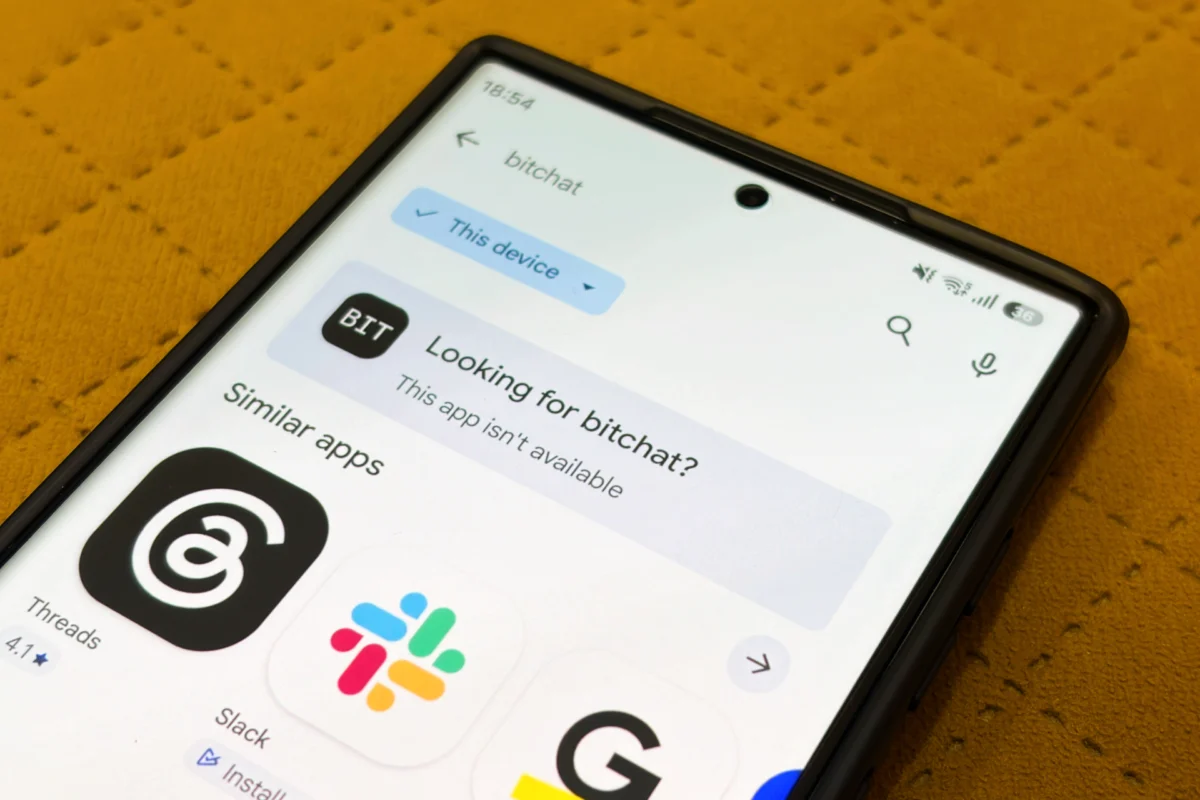
Bitchat, the decentralized and privacy-focused messaging application championed by former Twitter CEO Jack Dorsey, has officially vanished from the Apple App Store and Google Play marketplace across India. The sudden disappearance marks a severe escalation in New Delhi’s ongoing regulatory crusade against open-source, censorship-resistant communication platforms. The application, which uniquely functions independently of traditional cellular networks, internet service providers (ISPs), and centralized cloud infrastructure, has become a lightning rod for controversy in a nation increasingly leaning toward proactive digital suppression during times of political friction.
The sweeping enforcement action follows months of mounting pressure from Indian authorities, who have progressively targeted the software’s developer repositories, distribution networks, and web accessibility. As civil unrest intensifies in the capital and other major metropolitan areas over controversial electoral reforms, the suppression of Bitchat highlights a deepening global conflict between state-mandated surveillance capabilities and the fundamental human right to unmonitored digital assembly.
The Direct Order and Official Notices
The crackdown became public on a Saturday when Jack Dorsey took to social media platform X to share a formal compliance notice issued to Apple by India’s Ministry of Electronics and Information Technology (MeitY). According to the documentation provided by Cupertino, the government invoked Section 69A of the Information Technology (IT) Act. This specific legal instrument serves as the Indian state’s primary statutory mechanism for ordering online blocking, granting authorities sweeping powers to censor digital content and applications in the interest of national sovereignty, defense, and public order.
Apple complied with the federal directive, stripping Bitchat from its Indian storefront while confirming that the application would remain available on international app stores outside the country. However, the tech giant was also forced to shutter domestic access to the app through TestFlight, its proprietary beta-testing ecosystem, effectively shutting down all official avenues for Indian users to download or update the software.
Parallel restrictions were swiftly observed across Android infrastructure. Independent checks conducted on Saturday afternoon confirmed that Bitchat was entirely absent from the Google Play store in India. Simultaneously, attempts to access Bitchat’s official website yielded connection timeouts across multiple major Indian Internet Service Providers. Although neither Google nor domestic ISPs immediately confirmed receiving formal takedown orders from MeitY, the simultaneous blackout across varied platforms strongly suggests coordinated state-level enforcement. Apple, Google, and the Indian Ministry of Electronics and Information Technology have all declined requests for comment regarding the coordinated removals.
A Chronology of Escalation
To fully understand the current friction between Bitchat and Indian regulatory bodies, one must examine the timeline of events that transformed a niche cryptographic project into a perceived threat to national security.
Bitchat was officially launched in July of the previous year, introducing a novel communication paradigm built upon Bluetooth mesh networking. By allowing nearby mobile devices to form localized peer-to-peer clouds, the application enabled individuals to exchange end-to-end encrypted messages without needing Wi-Fi, cellular data connections, or traditional telecom relay towers.
The software remained relatively obscure until mid-2026, when widespread public demonstrations erupted across parts of India. As local law enforcement agencies implemented broad internet shutdowns to quell the protests, demonstrators discovered that Bitchat—along with similar peer-to-peer tools like Briar—offered a resilient lifeline for coordinating movements and sharing ground-level documentation without state interference.
The sudden utility of the app triggered an unprecedented surge in domestic popularity. Market intelligence data compiled by Sensor Tower revealed that India accounted for roughly 85% of Bitchat’s global downloads during a single week in July 2026, marking a staggering leap from a baseline of approximately 1% over the preceding thirty days.
This massive surge immediately drew the attention of Indian regulatory bodies. In July 2026, Jack Dorsey publicly disclosed that Indian authorities had formally ordered GitHub—a widely used software hosting platform—to take down public code repositories associated with the open-source messaging application. That initial takedown notice relied on intermediary liability provisions under India’s IT law, which target platforms for hosting third-party content. The government argued at the time that Bitchat’s decentralized architecture actively undermined the state’s ability to intercept communications, trace malicious actors, or enforce law enforcement mandates during public emergencies.
The shift from targeting code repositories on GitHub in July to invoking Section 69A against consumer-facing app stores in October demonstrates a deliberate escalation in the government’s containment strategy.
Digital Rights and Constitutional Concerns
The aggressive measures taken against Bitchat have triggered sharp rebukes from legal experts, civil liberties organizations, and digital rights advocates who question the constitutional validity of restricting software based purely on its underlying cryptographic architecture.
The Internet Freedom Foundation (IFF), a prominent New Delhi-based digital rights advocacy group, issued a scathing critique labeling the latest blocking order unconstitutional. The organization argued that Section 69A of the IT Act was explicitly drafted to enable the government to block specific instances of unlawful information—such as content that incites violence or threatens state integrity—rather than preemptively banning an entire open-source utility simply because it possesses technical capabilities that resist network shutdowns. Furthermore, the IFF underscored a recurring transparency issue: neither the formal blocking directive nor the specific instances of illegal content that allegedly justified the action have been made publicly accessible by the ministry.
Legal scholars point out that targeting a protocol or a tool rather than actionable speech creates a perilous legal precedent. By criminalizing software that provides resilience against internet blackouts, regulatory bodies effectively assert that citizens have no inherent right to communicate when the state decides to sever connectivity infrastructure.
The Broader Context: Protests and Internet Blackouts
The timing of the Bitchat ban coincides with a fresh wave of youth-led civil unrest sweeping across India. Thousands of demonstrators, largely consisting of Generation Z activists, have taken to the streets to protest controversial administrative alterations to the country’s electoral voter rolls. Protesters have openly demanded the resignation of India’s chief election commissioner, alleging systemic manipulation of voter registries designed to disenfranchise targeted demographics.
The demonstrations have frequently resulted in direct clashes with security forces. On a Saturday in New Delhi, police detained numerous protesters during large-scale rallies near key civic landmarks. To regain control of the narrative and disrupt organizational logistics, authorities have increasingly relied on preemptive communication blackouts. On the Friday preceding the weekend crackdown, the Delhi government suspended internet services around the historic Jantar Mantar protest site for a mandatory 12-hour window.
Similar tactical shutdowns were deployed during the July 2026 demonstrations. Deprived of standard cellular connectivity and social media platforms, citizens increasingly turned to decentralized, mesh-network applications like Bitchat to bypass state-imposed communications blackouts. It is this exact intersection of civil unrest and technological autonomy that has transformed Bitchat from a developer experiment into a primary target for state containment.
Implications for the Future of Decentralized Tech in India
The suppression of Bitchat carries profound implications for the broader technology sector, open-source software development, and digital sovereignty in the world’s largest democracy.
For developers and tech entrepreneurs, the enforcement actions signal an increasingly hostile regulatory environment for cryptographic tools and peer-to-peer applications. As governments globally grapple with the rise of end-to-end encryption and decentralized architectures, India’s aggressive stance positions the nation at the forefront of a growing movement toward national intranet boundaries and sovereign digital control.
Furthermore, the targeting of an open-source project raises difficult compliance questions for platforms like GitHub, Apple, and Google. When state mandates clash with the global, borderless nature of open-source code, multinational corporations find themselves pressured to enforce local censorship regimes globally or face severe operational penalties within lucrative domestic markets.
Ultimately, the banning of Bitchat in India demonstrates the limits of state power in the digital age, even as it highlights the heavy toll regulation can take on accessibility. While app store bans and internet filtering can successfully scrub tools from mainstream consumer interfaces, the open-source nature of mesh-networking software means that determined users can often find alternative avenues for distribution. However, by criminalizing access for the average citizen, the Indian government has sent an unmistakable message: in times of crisis, the state’s monopoly on communication infrastructure remains absolute, and any technology designed to challenge that monopoly will be systematically erased.








