
 Prabowo Widodo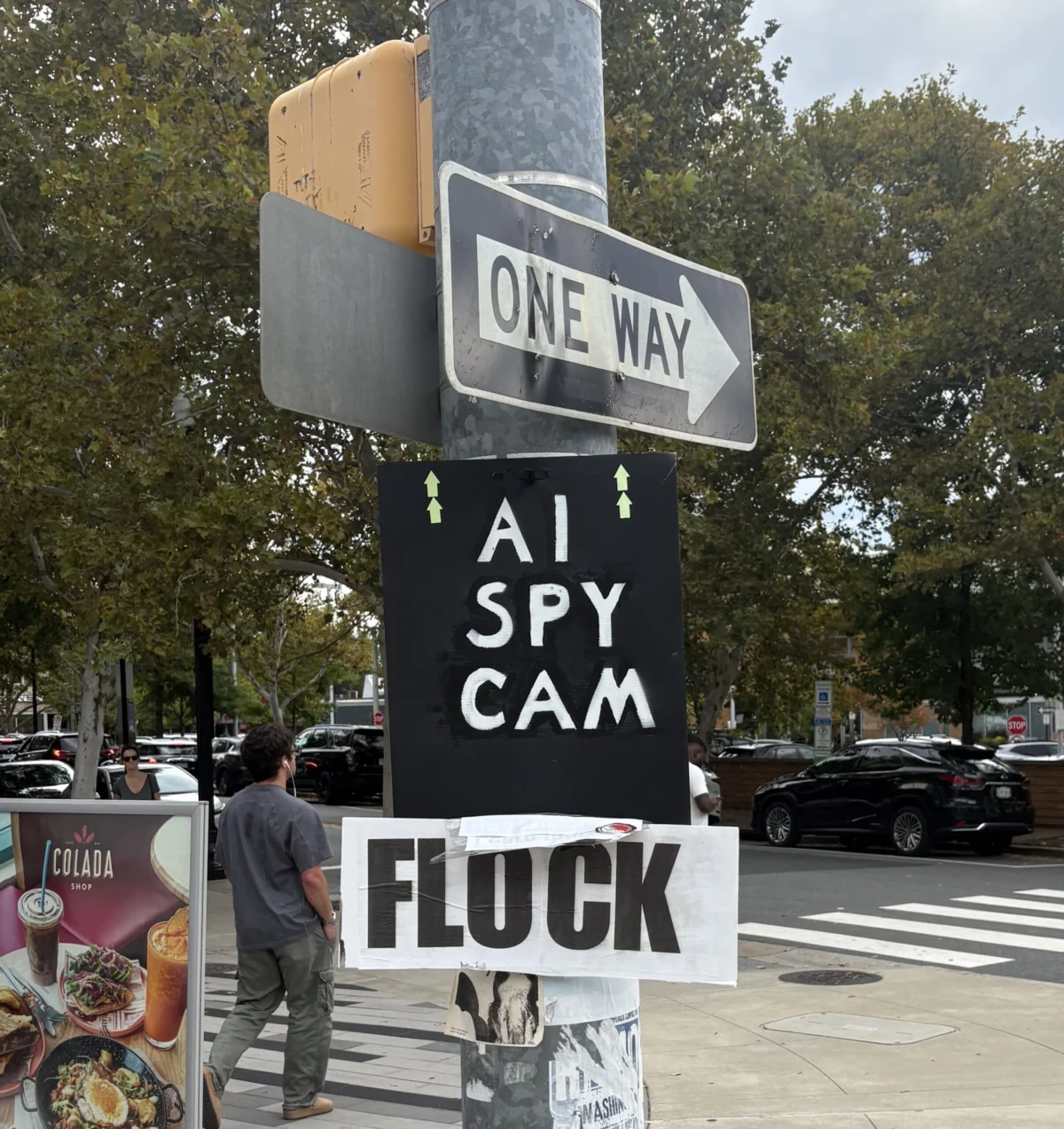
The escalating debate over automated surveillance and citizen privacy reached Capitol Hill on Friday, as Senator Bernie Sanders (I-Vermont) introduced legislation aimed at curtailing the deployment of automated license plate reader (ALPR) technology by the federal government. The proposed legislation, officially titled the Ban Flock Act, seeks to bar federal agencies from deploying ALPR systems or accessing vast data repositories accumulated by private vendors and local law enforcement networks.
While the bill’s moniker directly references Flock Safety—currently the dominant provider of ALPR technology in the United States—the text of the legislation applies broadly to any and all automated license plate reading infrastructure. Co-sponsored by Senator Jeff Merkley (D-Oregon) and Representative Alexandria Ocasio-Cortez (D-New York), the bill reflects a growing, bipartisan wave of skepticism regarding the unregulated harvesting of public movement data by corporate and governmental entities.
The legislative push arrives amidst a turbulent backdrop for Flock Safety and the broader surveillance industry. Across the United States, communities, municipal leaders, and civil liberties organizations have intensified protests against the omnipresent network of cameras, prompting a wave of contract terminations and temporary suspensions in major metropolitan areas. As lawmakers grapple with the implications of persistent tracking, the Ban Flock Act attempts to establish a stringent national boundary against federal involvement in mass transit monitoring.
Legislative Mechanics and Enforcement Mechanisms
Under the framework of the Ban Flock Act, federal agencies would be strictly prohibited from utilizing ALPR hardware and software, as well as tapping into data feeds managed by local police departments and private companies. The legislation includes narrow exemptions exclusively for toll collection purposes and specific data uses authorized by future congressional action. However, any future legislative exceptions would mandate a strict data retention limit capped at a maximum of 48 hours, a fraction of the storage periods routinely employed by private vendors and law enforcement agencies.
To compel compliance among state and municipal authorities, the bill introduces severe financial penalties. Beginning in the first fiscal year following enactment, state and local governments that fail to outlaw the technology would forfeit vital federal grant funding distributed across five major federal departments, most notably the Department of Justice and the Department of Homeland Security.
Furthermore, the legislation incorporates robust enforcement provisions designed to empower both individual citizens and state regulators. Under the proposed statute, private citizens would be granted the legal standing to sue the federal government for violations of the surveillance restrictions. Additionally, state attorneys general would be authorized to enforce the statutory limits within their respective jurisdictions, creating a multi-layered accountability structure intended to deter unauthorized tracking.
The Scale of Flock Safety and Industry Dominance
According to legislative findings cited by Senator Sanders, Flock Safety stands as the largest vendor of automated license plate reading technology in the United States, operating a sprawling network comprising more than 120,000 cameras nationwide. The sheer magnitude of the company’s footprint is underscored by corporate metrics; in a company blog post published in February, Flock revealed that its surveillance apparatus processes more than 20 billion vehicle reads each month.
The company’s business model relies on fixed-position, high-definition cameras strategically placed at neighborhood entrances, commercial corridors, and municipal thoroughfares. These devices capture high-speed images of passing vehicles, utilizing optical character recognition (OCR) software to log license plate numbers, vehicle makes, models, colors, and timestamps. This data is then cross-referenced against criminal databases in real-time, alerting law enforcement when a vehicle associated with a stolen car, missing person, or warrant passes a camera.
While proponents argue that the technology serves as a vital force multiplier for overburdened police departments, civil rights advocates and privacy groups contend that the continuous logging of everyday citizen movements constitutes an unprecedented erosion of constitutional protections against unreasonable search and seizure. The aggregation of billions of data points allows entities to map the daily routines, associations, and travel habits of millions of Americans without requiring a warrant or demonstrating probable cause.
Chronology of Public Pushback and Corporate Adjustments
The introduction of the Ban Flock Act represents the culmination of mounting public resistance that has accelerated significantly over the past year. As the deployment of ALPR cameras expanded into suburban neighborhoods and rural municipalities, civic groups mobilized to challenge the legality and oversight of the technology.
In July, the Los Angeles Police Department announced a temporary suspension of its utilization of Flock surveillance cameras amid intensifying scrutiny over privacy policies and data governance. Following the LAPD’s decision, municipalities across the country began severing ties with the vendor. August marked a particularly challenging period for the company, characterized by a record pace of municipal contract terminations as city councils weighed the mounting liabilities of mass data collection against promised public safety benefits.
In response to sustained public pressure, CEO Garrett Langley and executive leadership at Flock Safety initiated a series of policy adjustments designed to curb potential abuses and soothe jittery municipal clients. Previously, the company maintained a decentralized stance, asserting that the specific operational parameters and data management practices of the cameras fell entirely under the purview of local law enforcement agencies.
Shifting from this hands-off approach, Langley announced a significant reduction in the company’s default data retention period, lowering the storage window from 30 days down to seven days. Additionally, Flock introduced mandatory auditing tools designed to automatically flag unusual or unauthorized database searches. When the auditing software detects aberrant query patterns, it systematically locks individual law enforcement officers out of the platform pending an internal review.
Internal Vulnerabilities and Cases of Abuse
Despite the implementation of automated safeguards, high-profile incidents of systemic abuse have fueled ongoing legislative skepticism. Proponents of strict surveillance regulations frequently point to documented instances where law enforcement personnel exploited access to tracking platforms for personal or illicit purposes.
One of the most publicized breaches of the Flock platform involved a former Milwaukee police officer who entered guilty pleas to charges of misconduct after utilizing the system to track his former romantic partner and her ex-partner on 179 separate occasions. In each instance, the officer falsely categorized the searches within the system as official police investigations, bypassing internal oversight mechanisms until the pattern of harassment was uncovered.
The vulnerability of ALPR platforms to insider threat has prompted ongoing discussions regarding technical countermeasures. During a recent podcast interview, technology investor Jason Calacanis proposed the implementation of a multi-factor authorization framework, commonly referred to as a "double-key" system, which would require two distinct administrative approvals before a sensitive search could be executed. Responding to the suggestion, Langley acknowledged that the concept is actively under consideration by the company’s engineering teams.
Broader Implications for National Surveillance Policy
The introduction of the Ban Flock Act signals a pivotal moment in the ongoing national discourse concerning the intersection of public safety technology and constitutional privacy rights. While the bill currently faces significant hurdles in a divided Congress, its sponsorship by prominent progressive lawmakers underscores a hardening political divide over the proliferation of automated data collection.
Legal scholars note that even if the legislation struggles to achieve passage in the near term, the national dialogue sparked by the bill is likely to influence state-level legislative agendas. A growing number of state legislatures are already considering independent restrictions on the longevity of law enforcement data retention and the commercial sale of vehicle telemetry.
As technology vendors continue to scale their operational footprints, balancing the legitimate investigative needs of law enforcement agencies against the Fourth Amendment rights of the general public remains one of the most complex policy challenges of the digital age. The upcoming debates surrounding the Ban Flock Act, alongside industry-facing events such as the upcoming TechCrunch Disrupt conference where Langley is scheduled to speak, will undoubtedly shape the regulatory trajectory of automated surveillance for years to come.








