
 Ronny Sianturi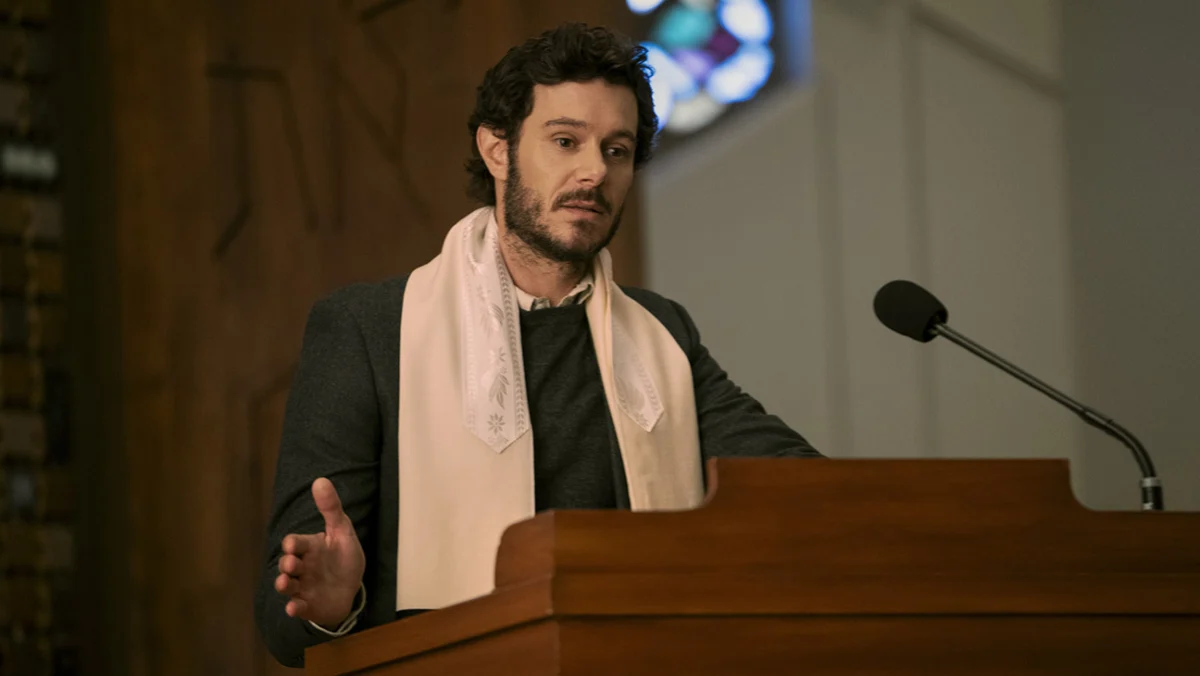
The intersection of Hollywood culture and geopolitical discourse has once again sparked intense public friction, bringing the realms of entertainment and international diplomacy into an uneasy collision. At the center of this latest controversy is actor Adam Brody, widely recognized for his portrayal of a modern rabbi in the hit Netflix romantic comedy series Nobody Wants This. Brody recently drew sharp criticism from Rabbi Steve Leder, the former senior rabbi of Los Angeles’s Wilshire Boulevard Temple and a technical consultant for the first season of the television show. The dispute erupted following a candid interview in which Brody expressed outspoken views on the ongoing Israel-Gaza conflict, utilizing language that Rabbi Leder and other community leaders have characterized as deeply uninformed, flippant, and inflammatory.
The public rebuke highlights a growing tension within the entertainment industry, where high-profile figures frequently comment on complex international crises without deep historical grounding, often testing the delicate relationships between production teams, creative talent, and the communities they strive to authentically represent.
The Genesis of the Conflict: Brody’s GQ Interview and Public Backlash
The controversy crystallized following the publication of a profile in GQ magazine, in which Adam Brody reflected on the geopolitical realities of the Middle East alongside domestic political concerns. When the conversation turned toward the ongoing war in Gaza, Brody offered a blunt and unvarnished assessment.
"Put me down as thinking it’s a genocide," Brody stated during the interview. "Put me down as wanting a free Palestine." He elaborated further, describing the situation as an "awful" human toll that should have reached a breaking point much sooner. The actor also linked his observations to a broader sense of disillusionment, remarking that global events, including the COVID-19 pandemic, domestic political shifts, and the Middle East conflict, had exposed ideological divisions among acquaintances that he previously found disheartening and foreign to his worldview.
While Brody’s remarks resonated with critics of Israeli military policy and advocates for Palestinian statehood, they provoked immediate outrage among prominent members of the Jewish community. For many, the actor’s use of the term "genocide"—a specific legal and historical term defined under international law—was not only a mischaracterization of the military campaign in Gaza but also a profound trivialization of historical atrocities suffered by the Jewish people and other targeted populations globally.
Rabbi Steve Leder’s Response: A Call for Informed Discourse
The most prominent and authoritative pushback against Brody came from Rabbi Steve Leder, a towering figure in American religious leadership and a veteran spiritual leader of the Wilshire Boulevard Temple. Utilizing Instagram, Leder released a strongly worded video message directed squarely at the actor.
"You by your own admission are a relatively ignorant Jew, and your ignorance really showed the other day," Leder stated in the video. "Here’s some technical advice: If you know nothing about something, you should say nothing about it."
Leder pointedly referenced Brody’s own previous public admissions regarding his religious upbringing. In prior interviews, including a conversation with The New York Times, Brody acknowledged that he "barely got bar mitzvahed and retained nothing from it." Leder argued that this admitted lack of foundational religious and historical education made the actor ill-equipped to pontificate on complex geopolitical conflicts involving the Jewish state.
Furthermore, Leder expressed profound disgust at the casual manner in which Brody delivered his political positions. Comparing the actor’s declaration of "put me down for genocide" to the casual ordering of a restaurant table at an exclusive Los Angeles hotspot, Leder argued that such flippancy denigrates the gravity of actual human suffering. The rabbi also noted the selective outrage embedded in contemporary celebrity activism, pointing out that Brody readily applied the term "genocide" to Gaza while remaining silent on documented humanitarian crises and mass violence occurring in other parts of the world.
Background Context: The Production of Nobody Wants This and the Role of Wilshire Boulevard Temple
The clash carries a distinct layer of irony given the professional ties connecting Brody to the Jewish institutions he inadvertently critiqued. Nobody Wants This follows the unconventional romance between Noah, a progressive Los Angeles rabbi played by Brody, and Joanne, a non-Jewish podcast host portrayed by Kristen Bell. The series, created by Erin Foster—who converted to Judaism prior to her marriage—aims to explore the cultural and religious hurdles of interfaith relationships with nuance and respect.
To ensure authenticity during the production of the show’s first season, the creators enlisted Rabbi Steve Leder as a technical adviser. Leder worked closely with the cast, writers, and crew to vet scripts, traditions, and on-screen portrayals, ensuring that Jewish rituals, vernacular, and clerical responsibilities were depicted accurately and respectfully. Additionally, production teams utilized the historic Wilshire Boulevard Temple as a filming location, embedding the physical architecture of one of Los Angeles’s most significant Jewish landmarks directly into the fabric of the show.
Leder, who stepped down in 2024 after leading the temple for 37 years, is deeply embedded in the history of both Los Angeles Jewry and the entertainment industry. Established in 1929 with financial backing from early Hollywood pioneers including Louis B. Mayer, Jack and Harry Warner, and Irving Thalberg, the Wilshire Boulevard Temple has long served as a spiritual home for industry executives, creators, and talent. Leder himself oversaw a massive $150 million restoration of the historic sanctuary, maintaining its status as a cornerstone of cultural and religious life in Southern California.
Chronology of Events Leading to the Public Dispute
- September 2024: Adam Brody participates in promotional interviews for the release of Nobody Wants This, casually noting in profiles that his personal connection to Judaism is minimal and restricted to a routine Bar Mitzvah ceremony in his youth.
- Late 2024 to Early 2025: The geopolitical landscape remains heavily saturated with global discourse surrounding the Israel-Hamas war, drawing widespread commentary from cultural figures across the political spectrum.
- Mid-2025: Brody sits down for an interview with GQ magazine, explicitly stating his support for a "free Palestine" and characterizing the military conflict in Gaza as a "genocide."
- October 2025: With the third season of Nobody Wants This slated to premiere on October 22, public scrutiny intensifies around the cast’s personal statements.
- Shortly After the GQ Publication: Rabbi Steve Leder releases a video message via Instagram condemning Brody’s comments as ignorant, flippant, and historically inaccurate, reigniting debates over celebrity activism and Jewish representation.
Broader Impact and Industry Implications
The public reprimand of a lead actor by a major religious consultant underscores the delicate tightrope Hollywood productions must walk when addressing cultural identity in an era of heightened political polarization. In the wake of the October 7, 2023, attacks and the subsequent war in Gaza, the entertainment industry has experienced profound internal friction. Studios, showrunners, and talent agents frequently navigate competing demands from creators, audiences, and cultural leaders who monitor media representations with intense scrutiny.
Industry analysts note that while actors maintain the legal and moral right to express personal political opinions, their statements can inadvertently complicate the reception of commercial art. In the case of Nobody Wants This, a romantic comedy designed to appeal to a broad, mainstream audience through lighthearted cultural exploration, the intrusion of sharp geopolitical division threatens to polarize its viewer base.
Despite the controversy, supporters of the show, including Leder himself, have sought to insulate the creative achievements of the production team from the political utterances of individual cast members. In the comments section of his Instagram post, Leder specifically defended series creator Erin Foster, affirming her professionalism and expressing confidence that her commitment to the project will not be derailed by external political disputes.
As Nobody Wants This prepares to launch its upcoming season, the episode serves as a case study in the modern perils of celebrity discourse. It highlights the friction that occurs when Hollywood’s superficial engagement with identity meets the deep, generational historical grievances stewing in the real world—leaving spiritual leaders like Leder to demand accountability, historical literacy, and a higher standard of public discourse from those who claim platforms of mass influence.








