
 Johny Marice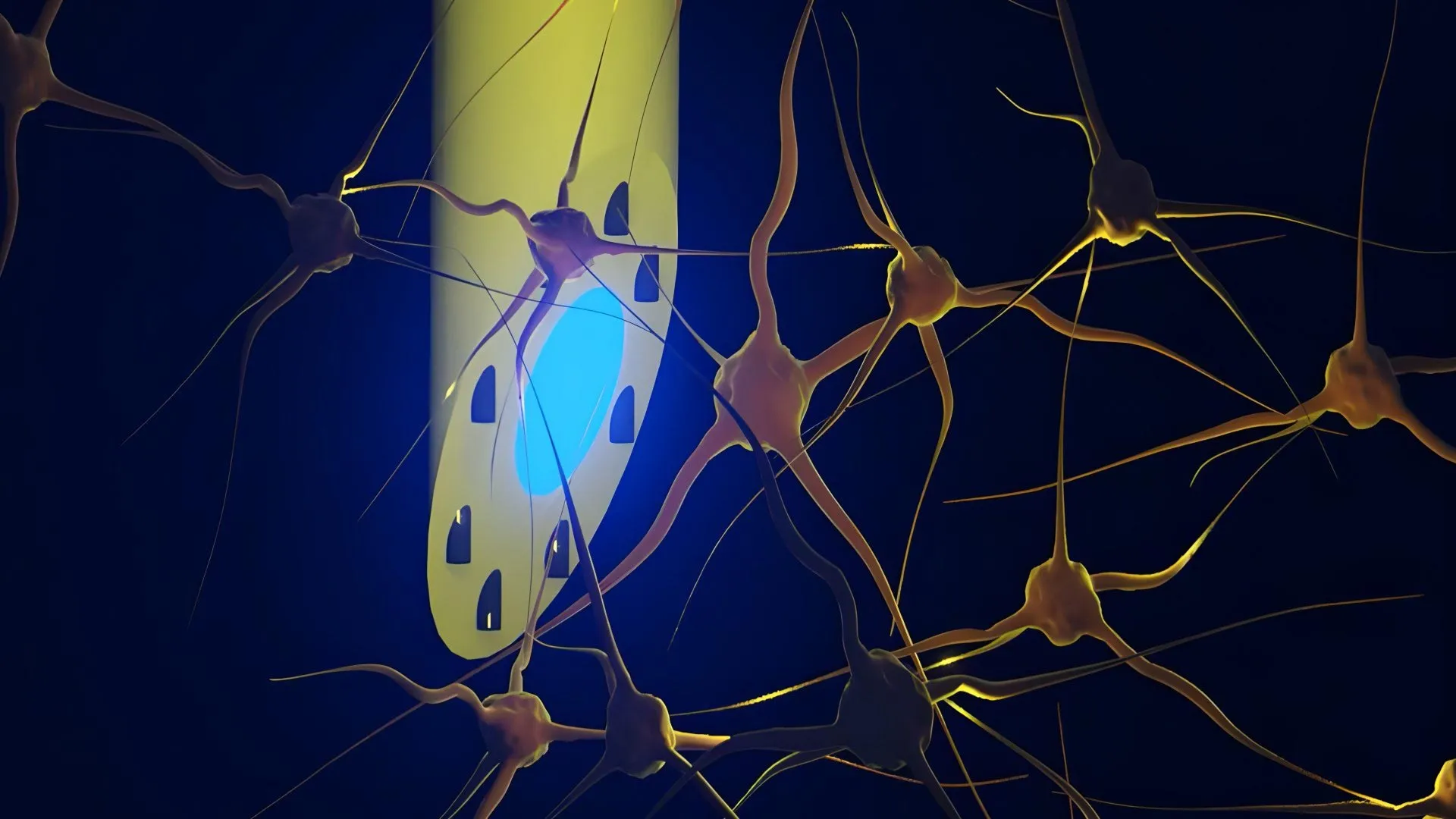
This breakthrough, detailed in the journal Advanced Science, represents a significant leap forward in neuro-engineering. By developing the microfluidic Axialtrode—or mAxialtrode—researchers from the Technical University of Denmark (DTU), the University of Copenhagen, and University College London have addressed a decades-old limitation in neuroscience: the inability to monitor and manipulate multiple brain layers simultaneously with a single, non-invasive device.
The Evolution of Neural Interfacing
For over half a century, the gold standard for studying deep-brain activity has been the use of rigid electrodes and optical fibers. These devices, typically constructed from silicon or glass, provided the initial window into the electrical firing patterns of neurons. However, these tools brought inherent physiological drawbacks. Because the human brain "floats" within the cranium and undergoes constant micro-movements, rigid implants frequently cause localized tissue trauma, leading to chronic inflammation, glial scarring, and the eventual degradation of signal quality.
The mAxialtrode project began with the goal of creating a "living" interface—one that mimics the mechanical properties of soft neural tissue. By transitioning from rigid semiconductor-based materials to flexible polymers, the research team, led by Postdoc Kunyang Sui and Associate Professor Christos Markos, has moved closer to a seamless biological integration. The fabrication process involves drawing a large polymer rod down to a diameter of less than half a millimeter, a technique that requires micron-level precision to ensure the integrity of the internal micro-channels.
Structural Innovation: The Multimodal Fiber
The genius of the mAxialtrode lies in its internal architecture. While traditional optical fibers are essentially "blind" to everything but the light they emit at their distal tip, the mAxialtrode is a multi-layered, functional conduit.
At the center of the fiber resides an optical core capable of delivering light for optogenetic stimulation. Surrounding this core are eight microscopic channels. These channels serve a dual purpose: they function as micro-fluidic pathways for the targeted delivery of pharmaceuticals and as conduits for ultra-thin metal wires capable of recording electrophysiological data. This design allows for a "layered" approach to brain study, where researchers can simultaneously record electrical activity, deliver therapeutic agents, and trigger specific cellular responses via light across various depths of the cerebral cortex and hippocampus.
Chronology and Experimental Validation
The journey from concept to in vivo success spanned several years of iterative design. The developmental timeline began with the conceptual modeling of polymer-based fibers, followed by rigorous bench testing to ensure that the microscopic channels could withstand the pressures of fluid delivery without leaking.
In the most recent phase of the project, the team conducted successful trials in murine models. These experiments were pivotal for validating the device’s "real-world" performance. In the trials, the mAxialtrode was implanted into the brains of living mice, connected to external light sources, micro-pumps, and recording hardware. The results were conclusive:
- Optogenetic Control: The device successfully stimulated specific nerve cells using both blue and red light frequencies.
- Spatial Versatility: Researchers achieved chemical delivery points spaced three millimeters apart, demonstrating unprecedented control over localized areas.
- Minimal Disruption: The mice showed no signs of discomfort, and the flexibility of the fiber allowed it to move in tandem with the brain tissue, significantly reducing the "stabbing" effect associated with traditional probes.
Collaborators including Associate Professor Rune W. Berg and Associate Professor Rob C. Wykes played critical roles in these trials. Their work in analyzing neural circuits provided the necessary validation that the data captured by the mAxialtrode is not only accurate but also representative of complex, real-time neurological processes.
Addressing the Epilepsy Challenge
The potential for treating epilepsy is perhaps the most immediate clinical promise of this technology. Epilepsy is fundamentally a disease of erratic, synchronized electrical activity across various neural layers. Current treatments, such as anti-epileptic drugs, are systemic, often causing significant side effects by affecting the entire body. Furthermore, surgical intervention is often a "blunt" tool, requiring the removal of tissue.
The mAxialtrode offers a third path: focal therapy. By delivering a drug directly to the exact cluster of neurons triggering a seizure while simultaneously providing electrical or optical inhibition, doctors could potentially stop a seizure before it spreads. This localized approach would minimize systemic drug exposure, potentially revolutionizing the quality of life for patients with drug-resistant epilepsy.
Fact-Based Analysis of Future Implications
While the research is promising, the transition from a laboratory tool to a clinical medical device is a rigorous, multi-year undertaking. The regulatory pathway—involving the FDA in the United States and the EMA in Europe—requires extensive longitudinal studies to prove the safety of long-term implantation.
One primary concern for regulators will be the long-term biocompatibility of the polymers used. While the current findings show reduced inflammation compared to silicon, "long-term" in animal models does not always equate to the decades of use required for human patients. Furthermore, the miniaturization of the auxiliary hardware—the pumps and the light sources—must be achieved before a patient can realistically carry such a system outside of a clinical or research setting.
However, the industry sentiment remains highly optimistic. Other neuro-technology firms have already begun to pivot toward flexible electronics, suggesting that the mAxialtrode is arriving at a moment of significant technological maturity. The ability to integrate chemistry, electricity, and light into one sub-millimeter strand places this device at the forefront of the "closed-loop" neuro-modulation field.
Broader Impact on Neuroscience
Beyond epilepsy, the implications for neuroscience are vast. Our current understanding of complex processes—such as memory formation, decision-making, and consciousness—is hampered by the "snapshot" nature of current measurement tools. Because scientists have been limited to measuring activity at a single point, they have been forced to infer the activity of the surrounding circuitry.
The mAxialtrode allows for a volumetric understanding of the brain. It enables researchers to see how a signal enters the cortex, travels through the hippocampal layers, and eventually manifests as an output. By mapping these pathways in real-time, the device could accelerate the development of treatments for neurodegenerative diseases like Alzheimer’s and Parkinson’s, where the breakdown of these communication channels is a primary symptom.
Next Steps and Intellectual Property
The research team has moved to protect their innovation through patents, a standard but necessary step for attracting the venture capital required for clinical trials. The focus now shifts toward refining the manufacturing process for mass production and developing the next generation of software that can interpret the massive influx of data produced by the device.
As the team prepares for the next phase of research, the scientific community is watching closely. If the mAxialtrode can successfully translate its performance from mice to human neurology, it will likely render the current generation of rigid electrodes obsolete. By harmonizing the mechanical, electrical, and chemical requirements of the brain, this technology does more than just study the organ; it seeks to communicate with it in its own language.
The journey toward clinical adoption remains a formidable challenge, but the foundation laid by the DTU-led team suggests that the future of neurology may be as flexible and multi-dimensional as the brain itself. With further regulatory scrutiny and engineering refinement, the mAxialtrode could well become the standard-bearer for the next generation of brain-computer interfaces, bridging the gap between biological complexity and technological precision.









