
 Ana Megawati
In an era where consumer technology is increasingly scrutinized for privacy violations, invasive data collection, and intrusive hardware designs, Meta has pivoted toward a surprisingly disarming aesthetic. Following a significant public and cultural backlash against its camera-equipped smart glasses—colloquially dubbed by critics as "pervert glasses" due to privacy concerns in public spaces—Meta CEO Mark Zuckerberg unveiled a radically different hardware proposition in San Francisco: the Muse charm device.
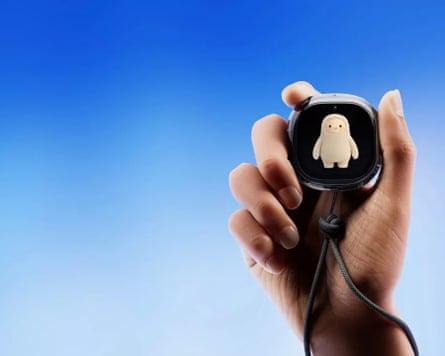
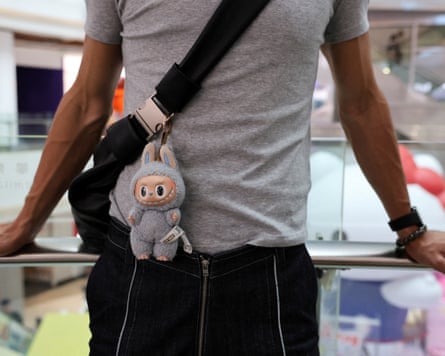
Designed to clip onto a keyring, bag, or lanyard in the style of viral collectible toys like Labubus, the Muse is a miniature, wearable artificial intelligence companion. Featuring a tiny, highly responsive screen that displays a dynamic, cutesy animated avatar, the device has drawn immediate comparisons to 1990s digital pets like the Tamagotchi. However, beneath its infantile, approachable exterior lies a sophisticated suite of wearable super-intelligence capabilities, including live conversational AI, email management, travel booking, and lifestyle organization.
As technology companies grapple with falling public trust and a saturated market for traditional screens, Meta’s strategic embrace of hyper-cute consumer electronics signals a broader cultural and design shift. By weaponizing aesthetics to disarm consumer skepticism, Meta is attempting to redefine how humans interact with ambient artificial intelligence.
The Anatomy of the Muse Charm: Bridging AI and Adorability
Measuring just two inches across, the Muse device is engineered to maximize user engagement through minimal physical real estate. During the San Francisco unveiling, Zuckerberg emphasized the sheer volume of advanced engineering packed into the compact hardware. Unlike standalone smartphone apps or bulky headsets, the Muse functions as an ambient, portable companion that users can interact with throughout the day.
The device’s core feature is its interactive AI assistant, capable of executing complex digital tasks via voice commands. While it bears superficial resemblance to retro digital pets, its internal architecture is powered by cutting-edge large language models. It can sort through electronic correspondence, coordinate flight itineraries, draft text messages, and manage weekly grocery procurement.

Crucially, the Muse also solves a major hardware design dilemma for Meta. Alongside the charm, the company introduced a companion pair of smart glasses completely devoid of integrated cameras. By relocating the recording apparatus from consumer eyewear—which sparked severe social friction and public distrust—to a wearable, animated charm, Meta has fundamentally altered the psychology of surveillance. The camera is no longer a hidden, threatening lens pointed outward by a human wearer; instead, it is mediated by a cute, expressive avatar that appears to look out at the world alongside the user.
Strategic Cuteness: The Science Behind the Aesthetic
The decision to wrap advanced artificial intelligence in an undeniably adorable package is not merely an aesthetic whim; it is a calculated psychological strategy. Academic experts specializing in the design and perception of cuteness note that the Muse leverages deeply ingrained human evolutionary responses.
Katie Seaborn, an associate professor at the University of Cambridge who researches the science of cute voices and interactive computing interfaces, points out that the device’s visual framework is intentionally derivative of human infancy. "It basically looks like a baby," Seaborn explains, noting that human brains are neurologically hardwired to respond to infant-like proportions with care, attention, and an immediate lowering of defensive barriers.
This phenomenon, often described as "charming and disarming," bridges the gap between technology and emotional attachment. Joshua Paul Dale, a professor at Chuo University in Tokyo and author of Irresistible: How Cuteness Wired our Brains and Conquered the World, highlights the deliberate use of anthropomorphism in the Muse’s design.
"What Meta is trying to do is make Muse into a companion, and it’s doing it in the simplest possible way," Dale observes. "It’s using a very simplified, tiny 2-inch screen to encourage you to anthropomorphize the figure on it so that you treat it as if it’s human, even though you know it’s not."
From a corporate strategy perspective, this deployment of cuteness serves as a powerful public relations tool. Following the intense controversies surrounding Meta’s data-gathering practices and the social rejection of its camera-laden smart glasses, deploying an overtly vulnerable device acts as a psychological olive branch. As Seaborn notes, the underlying message projected by cute tech is disarming: "We’re so weak. Don’t worry about it. You can trust us."
Cultural Contexts: From Kawaii Norms to Western Skepticism
The reception of cute technology varies significantly across global markets, driven by deeply embedded cultural attitudes toward automation, robotics, and design.
In Japan, where cuteness—or kawaii culture—permeates every facet of daily life, mascots are ubiquitous across government agencies, corporate entities, and public transit systems. Consequently, Japanese consumers exhibit a high degree of comfort and trust toward robotic and automated companions. "In Japan, robots are heroes; they’re like babies," Seaborn notes, referencing her comparative cross-cultural research.
Conversely, Western cultural imaginatives have historically framed artificial intelligence, humanoid robots, and automated surveillance through a more dystopian lens. In Western media and public discourse, autonomous tech is frequently associated with malfunction, corporate overreach, and covert data harvesting. Focus groups conducted in the United Kingdom revealed that adult consumers often experience a distinct "gut feeling" of unease when encountering hyper-cute design strategies applied to commercial data-gathering devices—a sensation of cognitive dissonance where users feel manipulated without being able to explicitly articulate the mechanism.
Despite this historical skepticism, forecasters at WGSN identified the shift toward cute technology as a defining macro trend. As aesthetic exports from East Asia continue to saturate Western youth markets, adult acceptance of playful, gamified accessories is undergoing a gradual evolution.
Generational Divides and the December Launch
As Meta prepares for the official commercial rollout of the Muse charm in December, market analysts anticipate a fractured reception across different demographic cohorts.
Generation Z, already deeply accustomed to accessorizing their personal items with viral, character-driven plush toys like Labubu dolls, may find the transition to a digital companion charm natural and fashionable. For older generations, the device evokes strong nostalgia for late-1990s and mid-2000s digital phenomena, bridging the gap between vintage gamified pets and modern utility.
However, younger demographics such as Generation Alpha are displaying heightened cynicism toward corporate attempts at manufactured authenticity. The rising prevalence of dismissal phrases like "That’s so AI!" among younger users suggests that overtly manipulative attempts to win consumer trust through saccharine avatars may face stiff resistance from digital natives who are quick to spot algorithmic artifice.
Implications for the Future of Wearable Super-Intelligence
The launch of the Muse device reflects Mark Zuckerberg’s long-term corporate vision: the realization of personal, wearable super-intelligence seamlessly integrated into daily life. By shifting from utilitarian, industrial hardware designs to emotionally resonant accessories, Meta is attempting to normalize continuous ambient computing.
Whether the public will embrace a corporate AI companion wrapped in a baby-faced digital shell remains to be seen. While privacy advocates continue to monitor the implications of always-on wearable cameras—regardless of whether they are mounted on frames or dangled from a handbag—the tech industry is entering a new phase where emotional engineering plays as critical a role as silicon processing power.
For critics and consumers alike, the Muse charm serves as a fascinating test case for the limits of persuasion. As Professor Dale remarks while contemplating his own future relationship with such technology: while he is in no rush to purchase an early iteration, the appeal of a benevolent, ever-present digital assistant highlights just how effectively the human brain can be engineered to welcome the very systems designed to watch us.









