
 Prabowo Widodo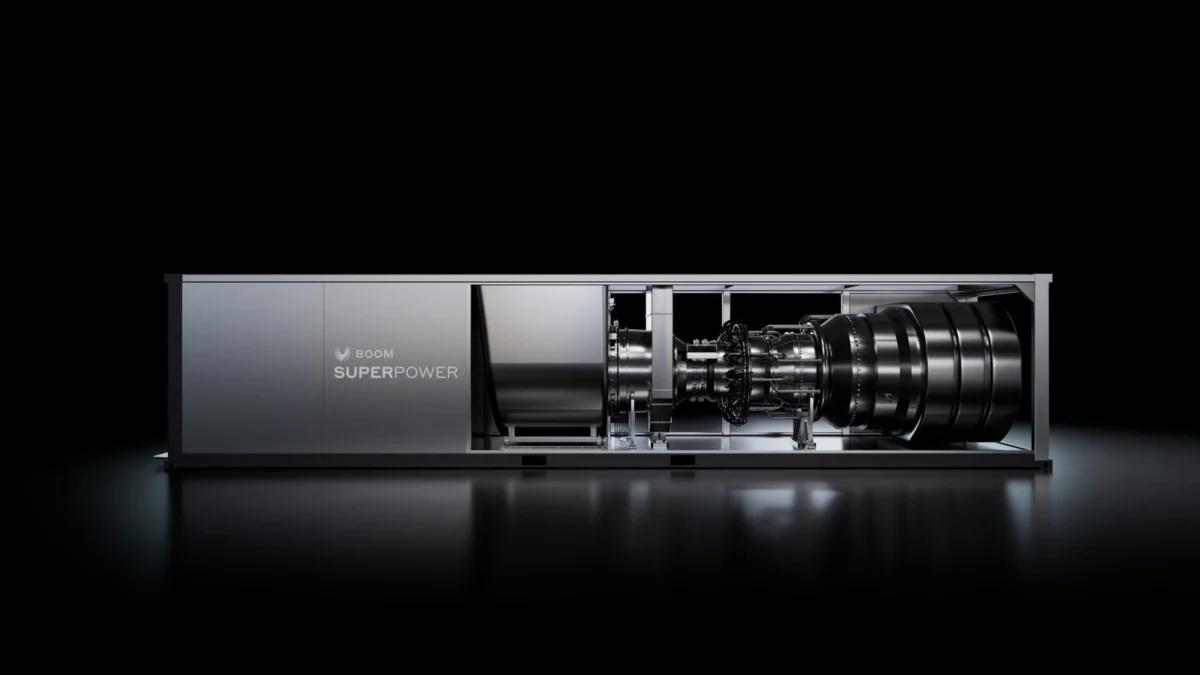
The rapidly expanding intersection of artificial intelligence infrastructure and energy markets has hit a notable roadblock in Denver, Colorado. Crusoe, a high-growth AI data center startup that recently closed a massive $3.9 billion funding round, has officially called off plans to utilize a novel line of stationary natural gas turbines developed by fellow local aerospace and energy firm Boom Supersonic. The aborted agreement—originally valued at $1.25 billion—was intended to supply 29 of Boom’s 42-megawatt "Superpower" turbines, with initial deliveries slated to begin in 2027.
The dissolution of this high-profile partnership underscores the complex, high-stakes calculus facing modern artificial intelligence infrastructure providers. As tech giants and specialized builders race to erect massive computational factories, the race for reliable, immediate power has forced companies to continuously pivot between grid power, renewable energy integration, and localized fossil-fuel generation.
Background and Evolution of the Companies
To understand the weight of this severed agreement, it is necessary to examine the distinct trajectories of both Denver-based companies. Founded in 2018, Crusoe initially entered the market with a unique value proposition: mitigating environmental waste by utilizing excess stranded natural gas from oil and gas fields to power modular bitcoin mining operations. Over the subsequent years, the company executed a strategic pivot, transforming from a crypto-mining enterprise into one of the preeminent builders of specialized artificial intelligence data centers in the United States.
Crusoe’s ascent has been defined by monumental infrastructure projects. The startup is the primary force behind massive computational campuses, including a landmark facility in Abilene, Texas, designed to supply critical computing power to OpenAI. Furthermore, the company has undertaken the construction of an additional 900-megawatt data center in Abilene destined for Microsoft, which relies heavily on on-site gas generation.
Boom Supersonic, meanwhile, has pursued an entirely different technological frontier. Primarily known for developing the Overture supersonic passenger jet, the company launched a secondary commercial venture to capitalize on its proprietary propulsion technology. Boom engineered the "Superpower" turbine—a stationary, natural gas-fired power plant that shares roughly 80% of its component architecture with the company’s airborne "Symphony" jet engine.
Last year, Boom secured $300 million in financing, a substantial portion of which was earmarked to commercialize this stationary turbine business. The corporate strategy, articulated by Boom CEO Blake Scholl, relied on generating robust revenue and profit streams from the stationary power division to help subsidize and fund the capital-intensive development of the Overture passenger aircraft. Crusoe signed on as the undisputed anchor client, serving as the critical launch customer for the diversification effort.
A Chronology of the Split
The partnership’s unraveling came to light publicly on a Friday through social media when Boom CEO Blake Scholl addressed the situation. Following congratulatory remarks directed at Crusoe founders Cully Cavness and Chase Lochmiller for Crusoe’s recent $3.9 billion capital injection, Scholl disclosed that the companies were no longer moving forward with the turbine launch partnership.
“The TL/DR is that turbines are no longer part of Crusoe’s near term primary power mix at Abilene/etc., so a launch partnership just didn’t make sense,” Scholl wrote in a post on X.
Despite the loss of its marquee launch customer, Scholl emphasized that Boom’s broader commercial pipeline remains active. He noted that the company anticipates delivering approximately 250 megawatts of Superpower turbines to alternative sites the following year, with an aggressive target of reaching one gigawatt of deployment capacity by 2028. Scholl expressed gratitude for Crusoe’s instrumental role in helping shape the initial design and specifications of the Superpower product line, leaving the door open for potential future collaborations should Crusoe’s power procurement strategies shift down the line.

Crusoe swiftly confirmed the termination of the deal to industry media, providing institutional context regarding its evolving operational framework.
Official Responses and Corporate Strategy
In an official statement issued via email by company spokesperson Andrew Schmitt, Crusoe highlighted the fluid nature of its energy procurement methodology.
“We build AI factories from the power up, and we’re bringing new campuses online across the country, powered by innovative energy sources,” Schmitt stated. “As our portfolio grows, we stay flexible, choosing the energy solutions that are right for each site as its needs evolve — including turbines, along with wind, solar, batteries and the grid. While Boom has been a great partner, the partnership isn’t the right fit today. We wish them well.”
Operational realities at Crusoe’s primary hubs help clarify this shift in energy strategy. According to the company, its initial 1.2-gigawatt data center in Abilene—constructed to service Oracle and OpenAI—draws its primary power directly from the electrical grid, supplemented by a gas-turbine power plant utilized exclusively for backup and emergency generation. However, the subsequent 900-megawatt Microsoft facility currently under development in the same region is slated to rely on primary on-site gas turbines.
This duality highlights the heterogeneous nature of modern AI data center development. Operators cannot afford a one-size-fits-all energy model; instead, they must tailor power solutions based on regional grid stability, regulatory hurdles, transmission line availability, and strict latency requirements.
Broader Implications for the AI and Energy Sectors
The termination of the Crusoe-Boom agreement carries distinct implications for both the artificial intelligence infrastructure boom and the nascent green-tech and industrial manufacturing sectors.
For Boom Supersonic, losing its launch customer represents an undeniable commercial hurdle, particularly after staking a significant portion of its near-term financial diversification strategy on the data center power market. While Boom maintains that other pipeline clients will absorb its production targets—scaling toward 250 megawatts and eventually one gigawatt—launch customers provide critical validation, early revenue, and operational feedback that smaller industrial hardware startups rely heavily upon. The pivot underscores the volatility inherent in hitching aerospace engineering R&D to the hyper-dynamic, rapidly evolving needs of the artificial intelligence sector.
Conversely, for Crusoe, the decision reflects a disciplined approach to capital allocation and operational agility. With $3.9 billion freshly secured in its war chest, Crusoe is positioned to source energy solutions dynamically on a site-by-site basis rather than being locked into a rigid master supply agreement that may no longer align with the micro-economics of specific data center campuses. As the demand for artificial intelligence computing capacity continues to strain national energy grids, infrastructure builders will likely experience frequent recalibrations in how they source, generate, and consume power.
Ultimately, while the partnership between the two Denver innovators has dissolved, the underlying pressures that brought them together—the insatiable energy appetite of generative AI and the desperate search for reliable, scalable power generation—remain more acute than ever.








