
 Jono Maryono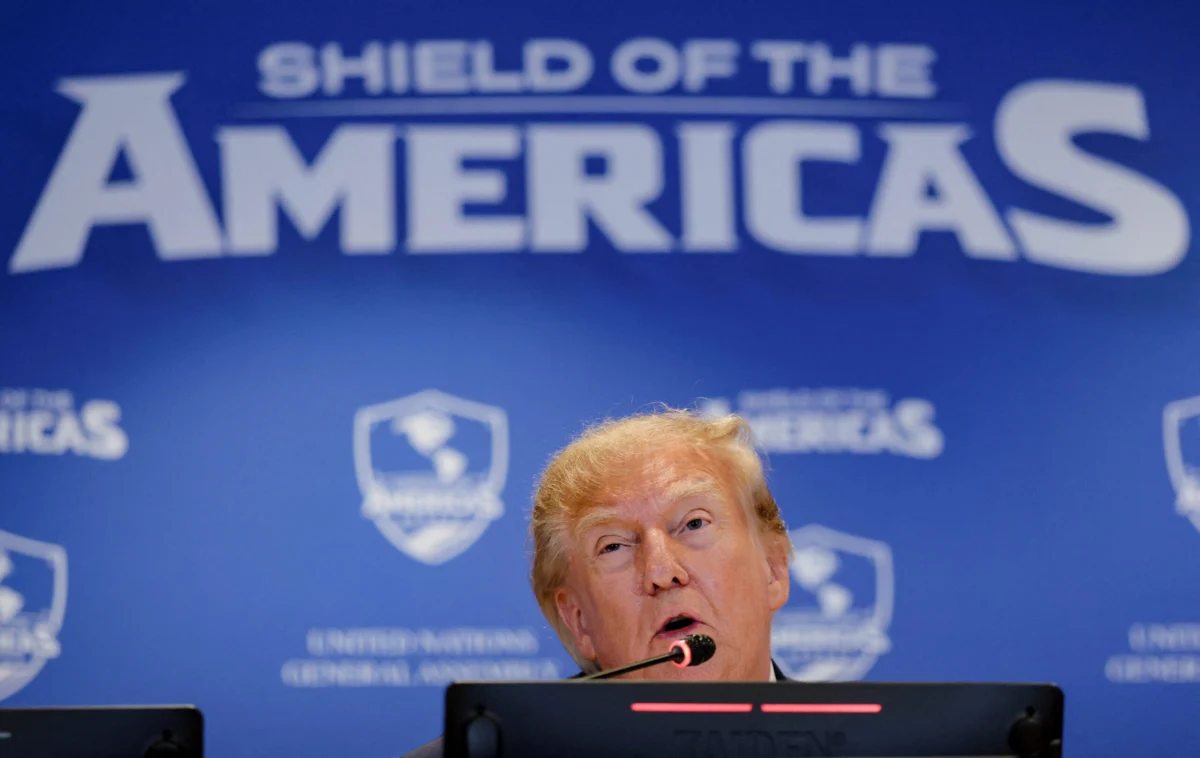
The geopolitical landscape of the Western Hemisphere faces a profound transformation as a United States-led coalition of nations formally commits to an aggressive, coordinated campaign against transnational organized crime. Meeting on the sidelines of the annual United Nations General Assembly (UNGA) in New York City, leaders and foreign ministers comprising the newly formed Shield of the Americas alliance endorsed sweeping economic and legal sanctions targeting 24 distinct criminal organizations. US President Donald Trump, addressing the coalition, pledged the deployment of "unmatched military might" to dismantle what he categorized as the "ISIS of the Western Hemisphere," intensifying a foreign policy doctrine that seeks to redefine security paradigms across North, Central, and South America.
The gathering underscores a rapidly escalating diplomatic and military posture by Washington. It aligns closely with the Trump administration’s broader strategic initiatives in the region, which have integrated counter-narcotics operations with kinetic military actions, economic warfare, and a revived interpretation of historical hemispheric influence doctrines. While allied nations in the coalition have signaled a willingness to adopt the stringent measures, the initiative has simultaneously triggered intense regional polarization, drawing sharp rebukes from major Latin American powers over sovereignty and international law.
Coalition Commitments and Targeted Organizations
During the high-level convening in New York, the 15 governments constituting the Shield of the Americas alliance issued a joint declaration outlining synchronized punitive actions. Participating states pledged to implement comprehensive asset freezes, enforce stringent visa restrictions against known members and active supporters of designated syndicates, and pursue aggressive criminal prosecutions within their respective domestic jurisdictions.
At the core of the targeted entities are 24 transnational organizations long identified by intelligence agencies as primary drivers of violence, corruption, and illicit trade. Prominent among them are groups previously designated as foreign terrorist organizations by Washington: Mara Salvatrucha, widely known as MS-13, a dominant Central American gang with sprawling networks across the Americas, and Tren de Aragua, a burgeoning Venezuelan syndicate that has rapidly expanded its operational footprint into Colombia, Peru, and Chile.
The consolidated blacklist also encompasses powerful Mexican drug cartels, established Colombian insurgent and criminal structures such as the National Liberation Army (ELN), dominant Brazilian prison-based factions including Primeiro Comando da Capital (PCC) and Comando Vermelho, as well as remnants of Peru’s Shining Path insurgency. By framing these disparate organizations under a unified "narco-terrorist" umbrella, the coalition aims to bypass traditional law enforcement frameworks, treating cartel operations as direct threats to national and regional sovereignty.
Despite the unified front presented in New York, the operational reality of implementing these measures varies significantly by nation. Alessandro Rampietti, reporting from Bogotá, noted that the joint statement remains largely symbolic in its immediate application. Because each member state operates under distinct constitutional and legal frameworks, domestic legislative actions are required to codify the designations. In Colombia, for instance, the administration has formally requested that Congress draft legislation to enable the proposed sanctions, illustrating that while the political intent is robust, institutional translation will require time and legislative maneuvering.
Chronology of Escalation: The Path to the Shield of the Americas
The formation of the Shield of the Americas coalition represents the culmination of a systematic policy shift initiated since President Trump returned to office last year. The trajectory of this campaign highlights a progressive hardening of US strategy toward hemispheric security:
- Early Administration Transition: The White House initiates a comprehensive overhaul of national security priorities, explicitly designating major Latin American drug cartels as foreign terrorist organizations, a classification traditionally reserved for political or religious extremist groups.
- Kinetic Interdictions in Maritime Corridors: The US military, in coordination with intelligence agencies, initiates a series of targeted kinetic strikes against marine vessels operating in the Caribbean Sea and the eastern Pacific Ocean. Washington asserts these vessels were actively transporting illicit narcotics destined for North American markets.
- Release of the National Security Strategy: Late last year, the administration publishes its updated National Security Strategy, explicitly outlining a revamped version of the 19th-century Monroe Doctrine. The document emphasizes American primacy and proactive interventionism to counter transnational threats and the growing influence of extra-hemispheric competitors.
- Consolidation of Regional Alliances: Through targeted diplomacy, Washington builds a coalition of ideologically aligned governments—predominantly featuring Argentina, Ecuador, and El Salvador, later joined by newly elected conservative administrations in Colombia and Peru—culminating in the formal establishment of the Shield of the Americas alliance.
- The UNGA Ministerial Summit: President Trump convenes the alliance on the sidelines of the United Nations General Assembly in New York, securing formal agreement on coordinated sanctions, visa bans, and asset freezes against 24 targeted criminal syndicates.
Supporting Data and Security Metrics
The intensification of the Washington-led campaign has yielded quantifiable impacts on both the operational capabilities of cartels and the broader humanitarian and legal landscape of the region.
According to US security briefings, maritime interdiction campaigns in the Caribbean and eastern Pacific have resulted in dozens of kinetic strikes against suspected drug-smuggling vessels. Official figures indicate that these operations have resulted in the deaths of more than 223 individuals. While the administration champions these metrics as decisive victories in disrupting the supply chains of fentanyl, cocaine, and other illicit substances, the methodology has attracted severe international scrutiny.
United Nations human rights experts and international legal scholars have raised profound concerns regarding the legality of these maritime strikes. Critics argue that lethal military engagements against suspected smuggling vessels—conducted outside of declared armed conflict zones and without judicial due process—violate fundamental tenets of international humanitarian law. Several legal analysts have cautioned that the scale and systemic nature of these operations could potentially amount to crimes against humanity, setting a dangerous precedent for extrajudicial state violence under the guise of counter-narcotics enforcement.
Concurrently, economic data highlights the immense financial muscle wielded by the targeted syndicates. The 24 organizations subject to the new coalition sanctions generate billions of dollars annually through drug trafficking, human smuggling, illegal mining, and extortion. Proponents of the asset freeze initiative argue that dismantling these financial networks is critical, as traditional law enforcement seizures have historically captured only a fraction of syndicate liquidity.
Official Responses and Divergent Regional Perspectives
The aggressive posture adopted by the US and its regional partners has exposed deep ideological and geopolitical divisions across Latin America, underscoring a continent-wide debate over autonomy, sovereignty, and security cooperation.
US Secretary of State Marco Rubio, a key architect of the administration’s Latin America policy, strongly defended the coalition’s objectives. During the New York meetings, Rubio praised the emergence of what he termed "strong leaders who are committed to the challenge of taking on transnational terrorism," emphasizing that traditional law enforcement mechanisms are wholly inadequate against cartels that possess paramilitary capabilities and transnational reach.
Conversely, the coalition’s exclusion of hemispheric heavyweights Brazil and Mexico signals underlying friction. Neither nation has opted to join the Shield of the Americas, reflecting deep-seated resistance to US-led security frameworks that many regional leaders view as infringing upon national sovereignty.
This friction was acutely captured by Brazilian President Luiz Inácio Lula da Silva during his address to the United Nations General Assembly. Lula explicitly rebuked the resurgent interventionist tendencies emanating from Washington, warning member states against the resurgence of "renewed hegemonic temptations" in Latin America and the Caribbean.
"Brazil is nobody’s back yard," Lula declared, encapsulating the sentiment of governments wary of the revamped Monroe Doctrine. Critics point out that unilateral US actions, coupled with demands for unconditional alignment, risk destabilizing regional diplomacy and undermining multilateral institutions designed to foster cooperative security rather than hierarchical dominance.
Broader Implications and Geopolitical Analysis
The formalization of the Shield of the Americas alliance and the deployment of aggressive counter-cartel measures carry far-reaching implications for international relations, regional stability, and domestic politics across the Americas.
From a geopolitical perspective, the strategy reflects a fundamental shift away from multilateral cooperation rooted in consensus toward bilateral and minilateral coercion. By demanding that sovereign nations formally adopt terrorist designations and align their internal legal codes with US strategic priorities, Washington is leveraging economic aid, trade relations, and diplomatic backing to enforce compliance. This dynamic has placed centrist and left-leaning governments in Latin America in a precarious diplomatic balancing act, forced to navigate domestic pressures while managing relations with their largest trading partner.
Furthermore, the integration of military force into counter-narcotics operations blurs the traditional line between civil law enforcement and national defense. Analysts warn that militarizing the response to organized crime can lead to increased human rights abuses, militarized policing structures within participating countries, and a cycle of retaliatory violence by deeply entrenched cartels capable of asymmetric warfare against state infrastructure.
Economically, the success of the sanctions regime hinges entirely on the diligence of financial institutions across the hemisphere. If the 15 member states effectively enforce asset freezes and disrupt laundering channels, the operational capacity of syndicates like Tren de Aragua and the primary Mexican cartels could face severe constraints. However, historical precedent suggests that sophisticated criminal organizations rapidly adapt by shifting assets into cryptocurrency, alternative trade-based laundering schemes, and jurisdictions with lax regulatory oversight.
Ultimately, the Shield of the Americas initiative marks a watershed moment in contemporary hemispheric relations. Whether it succeeds in permanently crippling transnational organized crime or merely catalyzes deeper geopolitical fragmentation and human rights crises across the Americas remains one of the defining questions of modern international security.









