Ferry Irwandi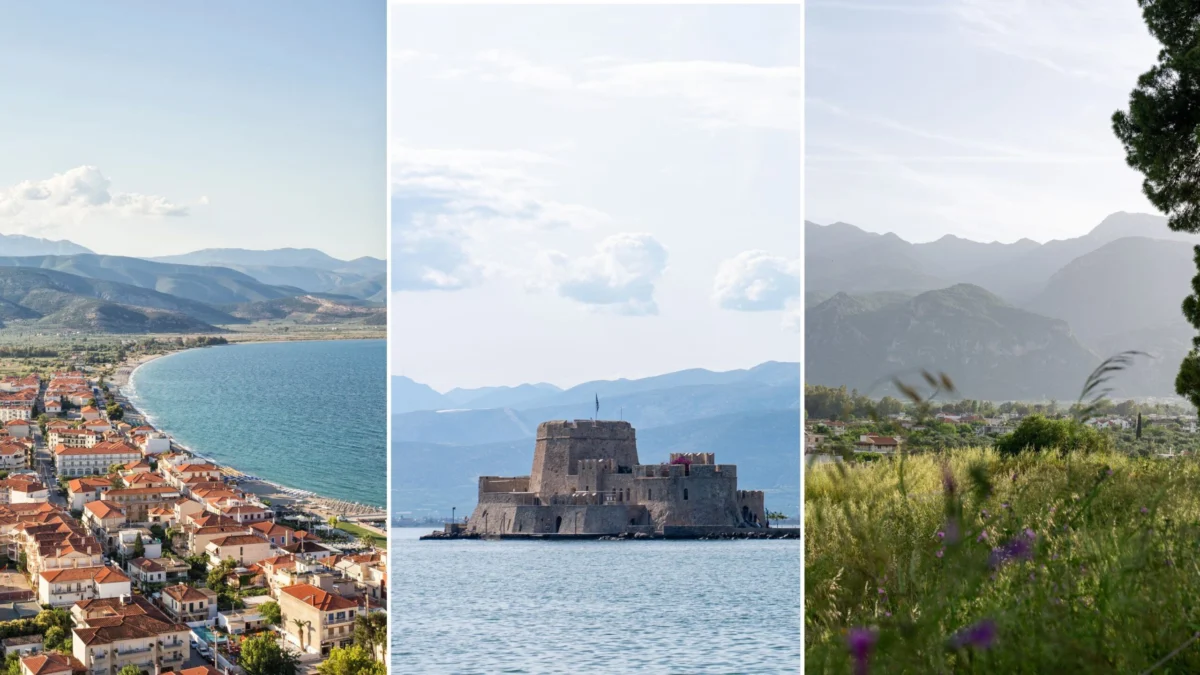
The Peloponnese peninsula, a rugged and vast landmass roughly the size of Slovenia, has long remained one of Europe’s most storied yet under-visited regions. Bordered by the Ionian, Mediterranean, and Aegean seas, its 860 miles of jagged coastline and towering mountain ranges have served as the backdrop for three millennia of Western history. However, despite its proximity to Athens, the region has historically captured only a fraction of Greece’s booming tourism market. In 2025, data from the Bank of Greece indicated that only three out of every 100 foreign travelers reached this westernmost peninsula. This statistical invisibility is currently undergoing a rapid reversal, driven by a convergence of high-profile cinematic exposure, multi-billion-euro luxury investments, and a grassroots movement to preserve the region’s unique cultural and linguistic heritage.

The primary catalyst for this renewed global interest is the release of Christopher Nolan’s latest blockbuster, The Odyssey. The film, which revisits Homer’s 3,000-year-old epic, was shot extensively on location in the southernmost region of Messinia. By bringing the mythical journey of Odysseus to life in the actual landscapes that inspired the poem, Nolan has effectively turned the Peloponnese into a living film set. Locations such as Nestor’s Cave, where Matt Damon’s Odysseus encounters the Cyclops, and the medieval Methoni Castle, which serves as the setting for Telemachus’s vigil, have already seen a surge in interest from international travelers. Beyond the spectacle, the film explores the ancient Greek concepts of xenia—the sacred bond of hospitality—and nostos, the theme of homecoming, both of which resonate deeply with the current socio-economic shifts occurring within the peninsula.
Strategic Infrastructure and the Luxury Hub of the Mediterranean
The modernization of the Peloponnese began in earnest during the early 2000s with the construction of new highways and tunnels that significantly reduced travel times from the capital. This physical connectivity laid the groundwork for the ambitious vision of the late Captain Vassilis Constantakopoulos, a Messinian shipowner who sought to transform his birthplace into a premier sustainable travel destination. His legacy, the Costa Navarino eco-retreat, has become a cornerstone of the region’s luxury sector.

In recent years, the development has expanded to lease land to ultra-luxury brands, including W Hotels and Mandarin Oriental, which opened in 2022 and 2023, respectively. The momentum shows no signs of slowing; industry reports indicate that nearly €2 billion in further investments are slated for the "Peloponnese Riviera" near Porto Heli. This includes the anticipated arrival of Four Seasons and Six Senses in 2026, alongside new marinas and high-end residential complexes. These developments are not merely commercial ventures but are strategically designed to stem the tide of "rural flight"—the exodus of young residents to Athens or abroad—by providing high-value employment opportunities within their home regions.
The Peloponnese Trail Network: A 1,200-Mile Odyssey
While luxury resorts cater to one segment of the market, a different kind of infrastructure is opening the peninsula’s interior to the world. The Peloponnese Trail Network, currently the largest hiking project in Greece, is a community-led initiative that connects nearly 1,200 miles of ancient footpaths. This network links isolated mountain villages, Ottoman-era stone paths, and archaeological sites, allowing for a slower, more immersive form of tourism.

Nikos Stakias, a hospitality veteran who returned to the Peloponnese after two decades abroad, is among the leaders of this project. The network is divided into 11 official trails, such as the 64-mile Argolis Trail and the 143-mile circular Parnon Trail. These paths do more than provide scenic views; they serve as a corridor through time. A hiker starting in the northeastern region of Argolis can visit the 4th-century BC theater of Epidaurus—a UNESCO World Heritage site once used as a healing center—before ascending to the Venetian-built Palamidi Fortress overlooking Nafplio, the first capital of modern Greece.
In the southeast, the Parnon Trail leads through the rugged mountains where the scents of wild rosemary, thyme, and sage dominate the air. This region is home to Leonidio, a town tucked between precipitous red cliffs that has recently gained international acclaim as a world-class rock-climbing destination. The trail network is a vital component of the region’s sustainability strategy, distributing economic benefits to inland communities that have historically been bypassed by coastal tourism.

Linguistic Survival and the Spartan Legacy
The isolation of the Peloponnese’s interior has preserved more than just landscapes; it has acted as a sanctuary for some of the world’s rarest cultural assets. In the town of Leonidio, residents like author and educator Eleni Manou are fighting to save the Tsakonian language. Tsakonian is a direct descendant of the ancient Doric dialect spoken by the Spartans, making it one of the few surviving links to the Bronze Age.
Until the 1950s, the Parnon mountain range kept Tsakonian-speaking villages largely cut off from the rest of Greece. However, as modern roads were built, the language began to vanish. Today, it is estimated that fewer than 2,500 people—mostly elders—still speak the dialect. To counter this, local workshops and children’s books are being used to reintroduce the language to the younger generation. The annual Melitzazz Festival in July serves as a contemporary platform for this ancient culture, blending Tsakonian traditions with modern music and gastronomy. Street signs in Leonidio are now bilingual, displayed in both modern Greek and the ancient Tsakonian script, signaling a renewed pride in the region’s Spartan roots.

The Continuity of Craft: 5,000 Years of Weaving
The theme of cultural preservation extends to the village of Geraki in Laconia. Here, the tradition of vertical loom weaving has continued uninterrupted for five millennia. The craft is part of the Greek National Intangible Cultural Heritage, and its survival is currently overseen by practitioners like Chrysoula Stamatopoulou.
In a world of mass production, the weavers of Geraki produce kilims—heirloom rugs featuring complex geometric designs such as the "tree of life," symbolizing fertility and abundance. The historical weight of this practice is profound; it is the same style of loom described in The Odyssey, used by Penelope to stall her suitors. Just five years ago, the tradition was on the brink of extinction, with only a single active weaver remaining in the village. Today, thanks to free weaving schools in Geraki and Leonidio, students from across Europe are traveling to the Peloponnese to learn the ancient technique, ensuring that the "thread of history" remains unbroken.

Historical Context: From Myth to Modern Independence
The Peloponnese has always occupied a central place in the Greek narrative. It was here that the Mycenaean civilization, the first advanced civilization in mainland Greece, rose to power. It was the site of the first six of Hercules’ twelve labors, from the slaying of the Nemean lion to the capture of the Erymanthian boar.
In the medieval period, the peninsula hosted the Byzantine Empire’s last stronghold at Mystras. Perhaps most significantly, the Peloponnese was the cradle of the Greek War of Independence against the Ottoman Empire in 1821. However, the 20th century was less kind to the region. The aftermath of World War II and a bitter civil war led to decades of stagnation, displacement, and mass emigration. The 2008 global financial crisis further exacerbated the "brain drain," forcing a new generation of educated Greeks to seek opportunities in Northern Europe and Australia.

Economic Implications and the "Nostos" Movement
The current transformation of the Peloponnese is being described by locals as a modern-day nostos, or homecoming. Social entrepreneurs like Maria Monastirioti, who left a high-stress career in Athens to return to the peninsula, are creating new economic models based on "agrotourism." By organizing village cooking classes and gastronomic experiences—such as the making of trachanokeftedes (fermented milk pasta balls)—these initiatives provide sustainable income for rural women and preserve culinary traditions that were at risk of being lost to globalization.
In Vamvakou, a village in Laconia that had dwindled to just nine residents, a revival project funded by the Stavros Niarchos Foundation has successfully attracted young families back to the mountains. The village now boasts a growing population, a school, and a tech hub, proving that even the most "ghost-like" settlements can be revitalized through targeted investment and community engagement.

Analysis: Balancing Growth with Authenticity
As the Peloponnese moves into the global spotlight, the challenge for policymakers and residents alike will be balancing the influx of high-end tourism with the preservation of the region’s rugged authenticity. The arrival of global hotel chains brings much-needed capital and infrastructure, but the true value of the peninsula lies in its "secret" status—its vast, uncrowded spaces and its deep-rooted traditions.
The Peloponnese Trail Network and the various cultural preservation projects represent a proactive approach to tourism management. By emphasizing the region’s unique linguistic, artisanal, and archaeological heritage, the Peloponnese is positioning itself not just as another beach destination, but as a site of profound cultural pilgrimage.

The peninsula’s journey from the mythological home of Odysseus to a 21st-century luxury and hiking hub is a testament to the enduring power of the Greek landscape. As the world watches The Odyssey on the silver screen, the real-life residents of the Peloponnese are busy weaving a new shroud—not one to stall for time, but one that celebrates a vibrant, sustainable future built on the foundations of a "blessed land." For the first time in decades, the story of the Peloponnese is not one of departure, but of a triumphant and long-awaited return.