
 Johny Marice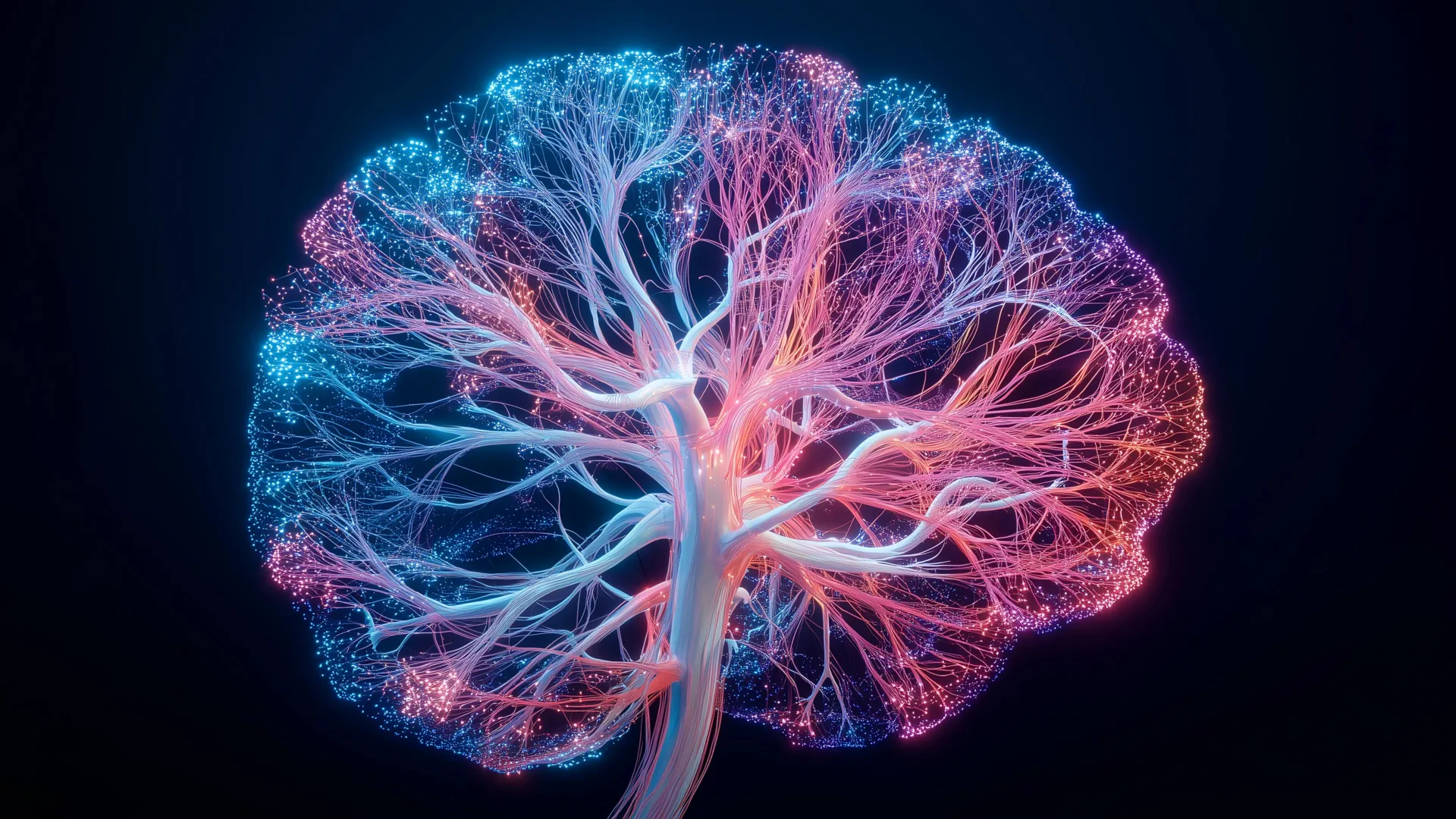
Scientists at the University of Illinois Urbana-Champaign have uncovered compelling evidence that could fundamentally reshape our understanding of both the human brain and the burgeoning field of artificial intelligence. Their groundbreaking findings suggest that the intricate process of decision-making in the brain commences far earlier than previously theorized, offering novel avenues for the design of future AI systems that are not only more capable but also significantly more energy-efficient.
This pioneering research, spearheaded by Yurii Vlasov, a professor of electrical and computer engineering at The Grainger College of Engineering, was recently published in the prestigious scientific journal Proceedings of the National Academy of Science (PNAS). The study highlights an unexpected and critical role for the brain’s earliest sensory regions in the complex act of decision-making. This challenges the long-held, hierarchical model of brain function, which posited that decisions emerge only after information has traversed a strict, sequential pathway through increasingly sophisticated brain regions.
Rethinking the Neural Basis of Decision-Making
The human brain, widely acknowledged as the most complex structure known in the universe, remains a profound enigma. Despite decades of intensive research, a complete understanding of its intricate workings continues to elude scientists. This very complexity underscores why the National Academy of Engineering identified "reverse engineering the brain" as one of the 14 grand challenges for engineering in the 21st century back in 2008, a testament to its monumental scientific and technological significance.
For many years, the development of artificial intelligence systems, including influential architectures like convolutional neural networks, has been heavily inspired by a simplified view of brain processing. This traditional model conceptualizes information flow as a unidirectional sequence. Sensory input, according to this paradigm, ascends through a series of brain regions, each processing increasingly complex aspects of the information, ultimately culminating in the frontal cortex, where the final decision is made. This hierarchical, feed-forward approach has been the bedrock upon which much of modern AI has been built.
However, Professor Vlasov and a growing cohort of researchers have increasingly voiced reservations about the completeness of this conventional model. They propose that this unidirectional flow might be an oversimplification, failing to capture the full dynamic and interconnected nature of biological intelligence.
The Rise of Natural Intelligence as an AI Blueprint
In contrast to the traditional AI paradigm, Vlasov and his team are exploring a model deeply rooted in "natural intelligence." This refers to the sophisticated cognitive abilities of biological organisms, honed and refined through hundreds of millions of years of evolutionary processes. This evolved framework suggests that the brain does not operate solely on a step-by-step, linear progression of information. Instead, decision-making is understood to be a far more fluid and iterative process, heavily reliant on interconnected feedback loops. These loops enable information to travel in both directions between different brain regions, fostering a continuous dialogue and refinement of neural signals.
The remarkable efficiency of biological intelligence, which performs extraordinarily complex tasks using a fraction of the energy consumed by even the most advanced current AI systems, makes understanding its underlying architecture a critical endeavor. This insight holds the potential to guide the development of future artificial intelligence, leading to systems that are not only more powerful but also vastly more sustainable.
"We want to learn from a billion years of evolution," Professor Vlasov articulated in a statement regarding the research. "How is that biological intelligence organized architecturally? Can we learn from the architectural side of the brain and emulate that to make AI more effective, less power hungry, and more intelligent than it currently is? In the level of decision-making, that’s where current AI is lacking." This sentiment underscores the core motivation behind the research: to bridge the gap between biological and artificial intelligence by learning from nature’s most successful cognitive design.
Uncovering Decision-Making Activity in Early Sensory Regions
To rigorously investigate these proposed neural processes, the research team meticulously focused their efforts on the brain’s earliest stages of sensing and perception. These initial processing areas are typically not associated with higher-level cognitive functions like decision-making in the traditional models.
The scientists employed sophisticated techniques to record neural activity in mice as these subjects navigated a specially designed virtual reality corridor and were tasked with making perceptual decisions. The experimental setup was designed to mimic real-world sensory input and required the mice to make choices based on subtle environmental cues.
The results were striking and directly contradicted the prevailing scientific consensus. The researchers found undeniable evidence of decision-related neural activity within the primary somatosensory cortex (S1). This region is conventionally understood as one of the brain’s earliest areas for processing sensory information, primarily touch and spatial awareness, and not as a site for complex cognitive decision-making.
Rather than acting as a passive relay station, simply forwarding incoming sensory data to higher brain centers, the S1 region in the experiment appeared to be actively influenced by signals originating from higher brain regions. This influence was mediated through the identified feedback loops, demonstrating a form of top-down regulation. This observation strongly suggests that decision-making is not a singular event occurring at a late stage of processing but rather an ongoing, dynamic process involving continuous communication and integration across multiple brain areas. The information flow is not a simple, one-directional river but a complex, interconnected network of streams and eddies.
The implications of this finding are profound. It implies that the brain begins to weigh options, assess probabilities, and prepare for action much earlier in the processing pipeline than previously believed. This early involvement could be crucial for the speed and efficiency with which biological systems respond to their environment.
Implications for the Next Generation of Artificial Intelligence
While the study does not provide a ready-made blueprint for constructing superior artificial intelligence, it offers invaluable new insights into the brain’s organizational principles for decision-making. These insights could serve as a powerful inspiration for the development of entirely new AI architectures.
The researchers are particularly interested in how these feedback mechanisms contribute to the efficiency and adaptability of biological decision-making. By understanding how the brain integrates information from various levels of processing, potentially across different time scales, AI developers might be able to create systems that are more robust, less prone to errors, and capable of learning and adapting more effectively.
"The neural code of the brain is still mostly an unknown language," Professor Vlasov acknowledged, highlighting the vastness of what remains to be discovered. "But this systems-level understanding can be viewed as a potential impact on how more efficient artificial neural networks can be built — how the next generation of AI can be thought through. Maybe with these analogies that we learn from real brains, we can improve AI further." This statement emphasizes the potential for cross-disciplinary inspiration, where insights from neuroscience can directly inform advancements in computer science and engineering.
The potential for developing more energy-efficient AI is a particularly significant implication. Current state-of-the-art AI systems, especially large language models and sophisticated deep learning networks, are notoriously power-hungry, requiring substantial computational resources and energy consumption. This limits their deployment in energy-constrained environments, such as mobile devices, remote sensors, or even large-scale data centers aiming for sustainability. By mimicking the energy efficiency of biological brains, future AI could become more accessible, versatile, and environmentally friendly.
Future Research Directions and Technological Advancements
Professor Vlasov and his team are not resting on their laurels. They have outlined ambitious plans for future research aimed at delving deeper into the temporal dynamics of these newly identified brain processes. A key focus will be on understanding the precise timing of neural signals within these feedback loops and how this timing contributes to the decisional outcome.
Furthermore, the researchers intend to develop and employ novel technologies for measuring neural activity with even greater precision. This will enable a more comprehensive understanding of how feedback loops emerge, how they are dynamically engaged, and how they coordinate different levels of brain processing. The goal is to unravel the complex interplay between bottom-up sensory input and top-down cognitive control that appears to be fundamental to efficient decision-making.
"By looking at the fast temporal dynamics of neural activity, maybe we can understand better how these feedback loops are engaged in making decisions," Professor Vlasov stated. "Maybe that’s the approach that potentially uncovers these currently unknown mechanisms — how these feedback loops are organized dynamically and how they form and shape different levels of processing. Maybe that can be implemented in new architectures for AI." This forward-looking perspective underscores the research team’s commitment to not only understanding biological intelligence but also to translating these discoveries into tangible technological advancements.
The pursuit of understanding the brain’s decision-making processes is not merely an academic exercise. It represents a critical step towards fulfilling one of humanity’s grandest engineering challenges and holds the promise of ushering in a new era of artificial intelligence that is more aligned with the elegance, efficiency, and intelligence of nature itself. The findings from the University of Illinois Urbana-Champaign are a significant stride in that direction, opening up exciting new frontiers for both neuroscience and artificial intelligence research.








