
 Prabowo Widodo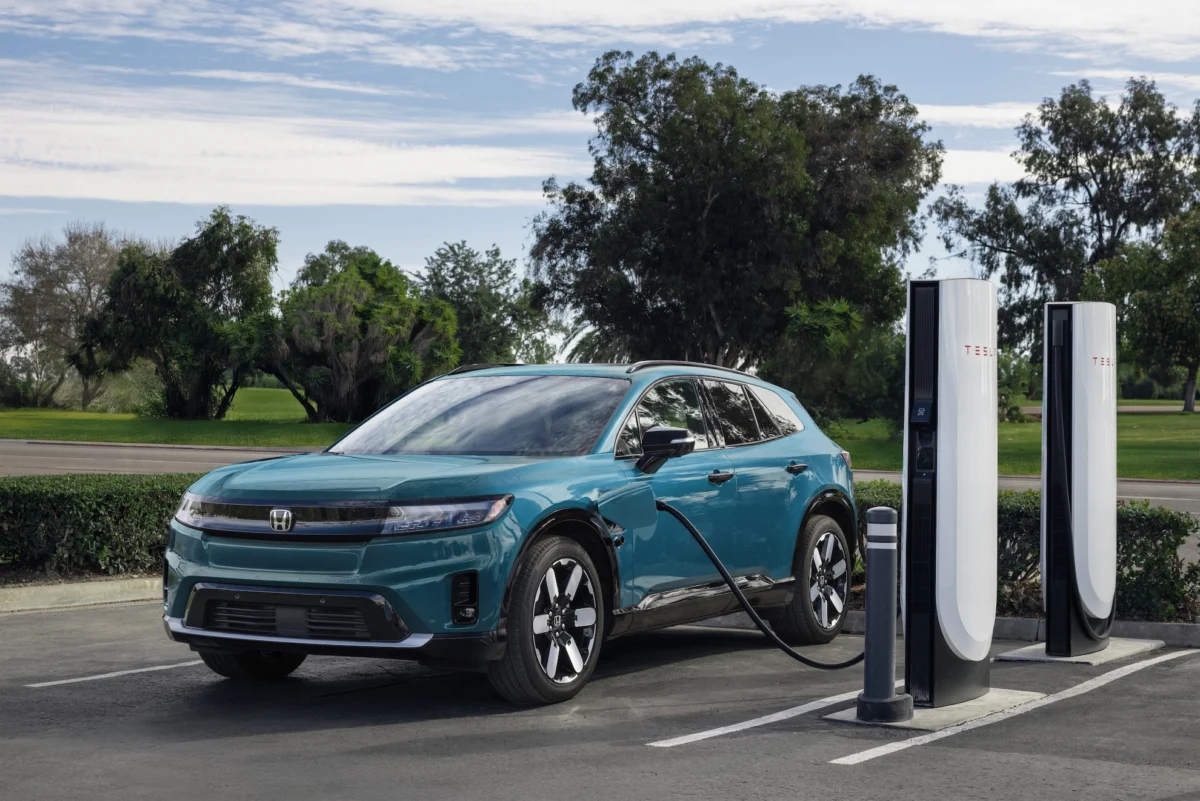
The recent confirmation that the Honda Prologue, once a beacon of Honda’s U.S. electrification strategy, is officially dead marks a significant turning point in the American electric vehicle (EV) landscape. This decision removes the last all-electric vehicle from Honda’s U.S. portfolio, signaling more than just the automaker’s backpedaling; it illustrates a broader and increasingly evident retreat of EV models from the U.S. market. This trend stands in stark contrast to the rest of the world, where EV adoption continues to accelerate, creating a "K-shaped" global market where some regions thrive while others falter.
The demise of the Honda Prologue, alongside several other notable EV models, prompts a crucial question: What factors are driving these departures from the U.S. market, and what are the wider implications for consumers, automakers, and the nation’s ambitious climate goals? The answer is multifaceted, encompassing policy shifts, evolving consumer preferences, escalating costs, company strategic pivots, and complex geopolitical trade dynamics.
The Shifting Sands of the U.S. EV Market: Headwinds and Hiccups
The U.S. electric vehicle market has experienced a turbulent period, marked by a significant deceleration in growth compared to earlier projections and global trends. While EV sales did grow between the first and second quarters of 2026, reaching 247,226 units or approximately 5.8% of the total market, these figures represent a 20.5% decline from the same period in 2025. This downturn follows a dramatic 36% drop in fourth-quarter 2025 sales compared to Q4 2024, a period immediately following a pivotal policy change.
A primary catalyst for this shift was the cessation of the $7,500 federal tax credit in Fall 2025. This incentive, designed to spur EV adoption by making electric vehicles more financially accessible, had an outsized effect on sales. Its removal instantly increased the effective price for many models, dampening consumer enthusiasm and disrupting automaker sales strategies. The tax credit had particularly benefited models manufactured in North America or with domestically sourced battery components, encouraging localization efforts that are now facing new challenges.

Beyond the tax credit, several other factors are contributing to the winnowing choices available to American consumers:
- Tariffs and Trade Policy: The imposition of tariffs on imported vehicles and components, particularly those linked to China, has complicated supply chains and increased costs. This directly impacts automakers relying on international production hubs, forcing them to re-evaluate market viability.
- Changing Consumer Tastes and Perceptions: While initial EV adopters were often early tech enthusiasts, the mainstream market exhibits different priorities. Concerns about charging infrastructure availability and reliability, range anxiety, higher upfront purchase prices compared to gasoline-powered equivalents, and the perceived hassle of long-distance EV travel continue to be significant barriers. Many consumers are gravitating towards hybrid vehicles as a transitional technology, offering better fuel efficiency without the full commitment to an all-electric lifestyle.
- Production Costs and Profitability: Manufacturing EVs remains capital-intensive, and achieving profitability, especially for newer models, is a challenge. Automakers are scrutinizing their product portfolios, prioritizing models with clearer paths to profitability or those that align with broader strategic shifts.
- Company Priorities and Strategic Pivots: Some automakers are recalibrating their long-term EV strategies, either scaling back ambitious targets, re-allocating resources to different vehicle segments (including internal combustion engine SUVs), or exploring entirely new technological avenues, such as autonomous driving or robotics.
- Regulatory Uncertainty: While the U.S. has set ambitious emissions reduction targets, the regulatory environment can still be unpredictable, impacting long-term planning for automakers.
Despite these challenges, the market isn’t entirely stagnant. New EVs, such as the Rivian R2, are still entering the U.S. market, and there are signs of a slow recovery in sales figures, even if they haven’t yet returned to previous peaks. However, the current landscape is characterized by a net reduction in available EV models as automakers pull the plug on numerous projects and existing lines. TechCrunch has committed to periodically updating this evolving list of EVs departing the U.S. market in 2026.
Automakers Retreat: A Model-by-Model Analysis of Departures
The current year has seen a notable exodus of electric vehicle models from the U.S. market, reflecting a broad recalibration among manufacturers. These decisions, though varied in their immediate causes, collectively paint a picture of an industry adapting to a complex and challenging U.S. landscape.
Honda’s U-Turn: The Prologue, O Series, and Acura RDX
Honda’s retreat from its U.S. EV ambitions has been particularly striking. Just a couple of years ago, the Japanese automaker aggressively declared its commitment to electrification with the unveiling of its "O Series" concepts. These included the futuristic Saloon and Space-Hub concepts at CES 2024, followed by a mid-sized SUV prototype at CES 2025, which was slated for production at Honda’s "EV Hub" factory in Ohio and an anticipated North American debut in the first half of 2026.

However, in a dramatic reversal, Honda announced in March 2026 that it was halting development of the Acura RDX EV, the Honda O sedan, and the Honda O SUV. The company explicitly cited U.S. tariffs and intense competition from Chinese manufacturers as primary reasons for this major overhaul of its EV plans.
Adding to this strategic pivot, the Honda Prologue, which had actually made it to production and was sold to U.S. consumers, officially joined the list of departed EVs. While rumors of its cancellation circulated in March, the official confirmation came on July 16, initially reported by CarBuzz and subsequently confirmed by TechCrunch. The Prologue represented a more grounded approach than the O Series, being a product of a partnership with General Motors, built at GM’s Ramos Assembly Plant in Mexico, and closely related to the Chevrolet Blazer EV. The Prologue saw respectable sales, moving approximately 33,000 units in 2024 and 39,000 in 2025. However, following the end of the federal tax credit in Fall 2025, sales entered a "free fall," making its continued presence in the market untenable. The cancellation of the Prologue leaves Honda without any fully electric vehicles in its U.S. lineup, at least for the foreseeable future, signifying a significant shift towards a hybrid-focused strategy in the near term.
Afeela: The Unfulfilled Promise of Sony-Honda Mobility
The Afeela, a joint venture between technology giant Sony and automotive stalwart Honda, began with considerable fanfare but ultimately never reached production. Its origins trace back to Sony’s surprise reveal of the Vision S prototype at the Consumer Electronics Show (CES) in 2020. The collaboration solidified in 2022 with the announcement of a joint venture, and a sleek Afeela-branded prototype was showcased at CES the following year, generating substantial buzz.
For months and years, the Afeela was seemingly everywhere in concept and marketing materials, even making an appearance at TechCrunch Disrupt, yet remained "nowhere" in terms of tangible market availability. Despite a significant marketing blitz highlighting its advanced technological features and sleek design, the Afeela never made it past the prototype stage. In March 2026, the joint venture confirmed it was abandoning the two Afeela-branded EV projects. This decision closely followed Honda’s independent choice to cancel three other planned EVs for the U.S. market, suggesting a broader realization within the Honda ecosystem that the U.S. EV landscape was proving more challenging than anticipated for new or ambitious projects. The Afeela’s demise serves as a cautionary tale of the difficulties in translating high-tech concepts into commercially viable automotive products, especially in a volatile market.
Hyundai’s Strategic Adjustments: The Ioniq 6

The Korean automaker Hyundai has, on the whole, performed commendably in the U.S. EV market, with models like the Ioniq 5 and upcoming Ioniq 9 gaining traction. However, even Hyundai has had to make strategic adjustments in response to changing economic realities. In March, the company announced it would no longer sell the Hyundai Ioniq 6 in the U.S. market.
This decision was directly tied to the impact of tariffs. Unlike its Ioniq 5 and the forthcoming Ioniq 9 models, which benefit from assembly at Hyundai’s Georgia factory in the U.S. (making them eligible for certain incentives and reducing tariff exposure), the Ioniq 6 is manufactured in South Korea and imported into the U.S. The escalating costs associated with tariffs likely rendered the Ioniq 6 less competitive in the U.S. market. Hyundai has, however, indicated that it will continue to import the more expensive, lower-volume N-model variant of the Ioniq 6, suggesting a pivot to a niche, performance-oriented segment where price sensitivity might be less pronounced. This move highlights how trade policies can directly influence product availability and force automakers to localize production or abandon specific models in affected markets.
Nissan Ariya: An Early Pioneer’s Retreat
Nissan holds a unique place in EV history as one of the early pioneers with the introduction of the Leaf hatchback over a decade ago. The Leaf was a groundbreaking vehicle that helped establish the viability of mass-market EVs. However, the brand’s subsequent all-electric offering, the Ariya SUV, faced a different fate in the U.S. market.
Nissan first unveiled the Ariya in 2020, with plans to begin sales in Japan the following year. It was positioned as a more modern, premium all-electric crossover to build on the Leaf’s legacy. However, in 2025, Nissan made the decision not to produce a 2026 model year of the Ariya for the U.S. market, and there are currently no indications of its return. This move suggests that the Ariya struggled to gain significant traction against a rapidly expanding field of competitors in the increasingly competitive electric SUV segment. Its departure raises questions about Nissan’s long-term EV strategy in the U.S. and its ability to compete effectively against both established rivals and new entrants.
Polestar’s Forced Exit: Geopolitical Headwinds

The case of Swedish EV maker Polestar, which is owned by Chinese automotive giant Geely, is a stark example of how geopolitical tensions and trade policy can abruptly halt a brand’s market access. Polestar found itself effectively banned from selling its new EVs in the U.S. after failing to receive specific authorization from the U.S. Department of Commerce to continue importing and selling vehicles equipped with "Chinese-connected vehicle technology."
This regulatory hurdle, part of a broader U.S. effort to restrict technology deemed a national security risk, meant Polestar could no longer import its new Polestar 3 and Polestar 4 models. The Polestar 3, notably, was assembled in both South Carolina (U.S.) and Chengdu (China), highlighting the complexity of modern automotive supply chains and the impact of such bans on globally manufactured products. While Polestar announced it would continue selling its existing stock of vehicles and support its U.S. customer base through its service network, the ban effectively curtailed its future growth in the market.
In a critical contrast, Volvo Cars, Polestar’s sibling company also owned by Geely, did receive the necessary authorization, allowing it to continue selling its connected cars in the U.S. This disparity underscores the highly specific and often opaque nature of such trade regulations and their profound impact on business operations. Polestar’s forced departure is a powerful illustration of how non-market factors can disrupt even well-regarded brands in the EV sector.
Tesla’s Strategic Shift: Farewell Model S and Model X
Unlike other brands whose EV models are departing due to market struggles or regulatory hurdles, Tesla’s decision to discontinue the Model S sedan and Model X SUV stems from a strategic pivot by the pioneering EV manufacturer. In January 2026, Tesla announced it would end production of these flagship models, which had been instrumental in establishing the company’s premium brand image.
The rationale behind this move is Tesla’s declared future focus on "AI, autonomy, and robots." CEO Elon Musk has increasingly emphasized a vision where Tesla’s primary value lies not just in vehicle manufacturing but in advanced AI, fully autonomous driving capabilities (Cybercab), and humanoid robotics (Optimus robots). This shift is supported by the changing dynamics of Tesla’s own sales: while the Model S and X were once its marquee offerings, their sales had steadily declined over the years as consumers gravitated towards the higher-volume, more affordable Model 3 sedan and Model Y SUV.

The last Model S and Model X vehicles rolled off the assembly line in Spring 2026. Significantly, Tesla wasted no time in reconfiguring its operations; the assembly lines for the S and X at its Fremont, California, factory were subsequently removed to make room for the accelerated production of Optimus robots. This decision by the market leader suggests a bold, high-stakes bet on a future where personal transportation is increasingly automated and integrated with broader AI platforms, rather than solely focusing on traditional vehicle sales.
Volkswagen’s Re-evaluation: ID.4 and ID. Buzz
Volkswagen, a major global player committed to electrification, has also had to make adjustments to its U.S. EV strategy, signaling a more pragmatic approach in the face of market realities. In April, Volkswagen announced it would cease production of the ID.4 electric SUV at its U.S. factory in Chattanooga, Tennessee. This move represents a strategic shift towards high-volume internal combustion engine (ICE) vehicles, such as its upcoming gas-powered Atlas SUV, to secure immediate profitability and market share. While U.S. customers can still purchase the ID.4 until current inventory is depleted (expected to last into 2027), the decision to halt local production underscores a re-prioritization of resources.
Similarly, the much-anticipated ID. Buzz, a retro-inspired electric minivan, will not have a 2026 model year in the U.S. Volkswagen has stated that the ID. Buzz is merely on a "hiatus" and is expected to return in 2027. This temporary withdrawal suggests supply chain adjustments, production re-tooling, or a recalibration of market timing.
Despite these consumer-facing adjustments, Volkswagen is simultaneously pushing forward with advanced mobility solutions. Its subsidiary, MOIA America, in partnership with Uber, began testing autonomous ID. Buzz microbuses in Los Angeles in April. This initiative aims to launch a robotaxi service in late 2026, initially with human safety operators. This bifurcated strategy reveals Volkswagen’s intent to balance short-term market demands with long-term investments in future mobility technologies, even as it scales back certain consumer EV offerings.
Volvo’s Affordable EV Departs: The EX30 and EX30 Cross Country

Volvo, a brand that has consistently pushed towards an all-electric future, faced a setback in its U.S. strategy with the decision to pull its subcompact EX30 and its Cross Country variant from the market. In March, Volvo announced that production for the U.S. would end after the summer. The EX30 had garnered considerable attention prior to its official U.S. entry in 2025, largely due to its positioning as a more affordable EV option within Volvo’s premium lineup. Its compact size and anticipated competitive pricing were expected to open up new market segments for the brand.
However, despite its promising start and the initial buzz, Volvo opted to discontinue these models for the U.S. market. While the exact reasons were not fully detailed, it likely reflects a re-evaluation of the profitability and market demand for smaller, more affordable EVs in a U.S. market that often favors larger SUVs and premium vehicles. Volvo does plan to continue selling its larger, all-electric EX60 and EX90 SUVs in the United States, suggesting a strategic focus on the higher-margin, larger vehicle segments where American consumer preference remains strong. This move underscores the challenge of delivering affordable, profitable EVs across all segments in the current U.S. economic and consumer climate.
Broader Implications and The Road Ahead for U.S. EVs
The growing list of electric vehicles departing the U.S. market in 2026 carries significant implications for various stakeholders. For consumers, it means a shrinking array of choices, particularly in certain price points or segments. This reduction in options could stifle competition and slow the pace of adoption, especially if the remaining models don’t cater to diverse needs and budgets.
For the automotive industry, these withdrawals signal a period of intense recalibration. Automakers are facing a complex calculus involving production costs, supply chain vulnerabilities, tariff impacts, and the sometimes-unpredictable nature of consumer demand. Many are re-evaluating their EV investment timelines and product roadmaps, with some openly pivoting back to hybrid vehicles or even increasing production of popular gasoline-powered models to maintain profitability in the short to medium term. The investment climate for dedicated EV manufacturing in the U.S. could become more cautious, potentially slowing the build-out of domestic production capabilities.
From a policy perspective, the current trend may trigger renewed debate over the effectiveness and necessity of government incentives and infrastructure investments. The impact of the defunct federal tax credit is evident, and policymakers might need to consider new mechanisms to stimulate demand and support domestic EV production. Furthermore, the role of trade policy and tariffs in shaping market availability and competitiveness will likely remain a contentious issue.

Globally, the U.S. market’s current struggles stand in stark contrast to the continued robust growth in Europe and Asia, particularly China. This "K-shaped" divergence could lead to the U.S. falling behind in EV innovation and market share, potentially impacting its long-term competitiveness in the global automotive landscape. While the long-term commitment to electrification remains for most major automakers due to global climate targets and evolving regulations, the path to achieving widespread EV adoption in the U.S. is proving far more complex and uneven than initially envisioned. The current retreat is not necessarily an abandonment of the EV future, but rather a pragmatic, albeit painful, recalibration of strategies in the face of challenging economic, political, and consumer realities. The coming years will reveal whether this is a temporary setback or a fundamental reshaping of the American electric vehicle dream.









