Danny Garick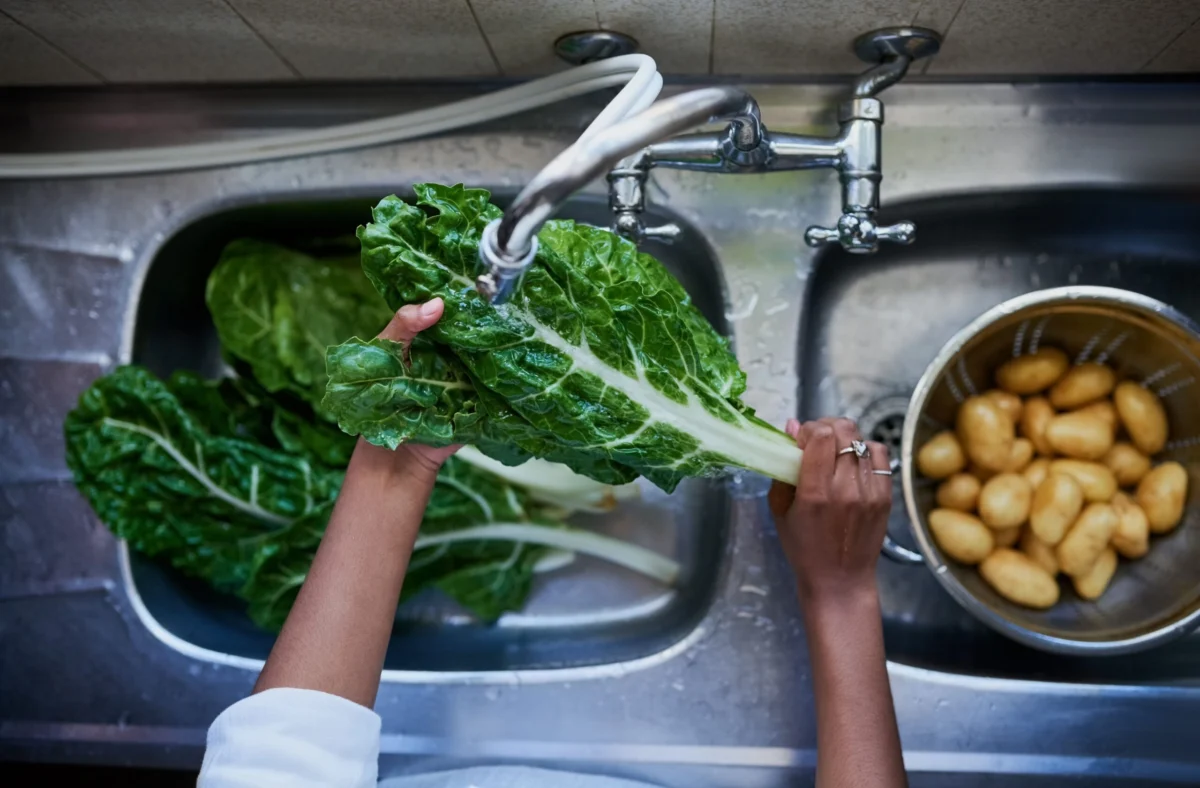
A major gastrointestinal health crisis is sweeping across the United States as health officials grapple with a widespread outbreak of cyclosporiasis. According to the latest surveillance data from the Centers for Disease Control and Prevention (CDC) and various state health departments, more than 1,600 individuals have fallen ill across 34 states. The outbreak, caused by the microscopic parasite Cyclospora cayetanensis, has prompted a multi-agency investigation involving the Food and Drug Administration (FDA) and local health authorities to identify the primary contaminated source within the national food supply chain.
Cyclosporiasis is a foodborne illness characterized by severe gastrointestinal distress. Patients typically report symptoms including "explosive" watery diarrhea, loss of appetite, weight loss, stomach cramps, bloating, increased gas, nausea, and fatigue. While rarely fatal, the infection can persist for weeks or even months if left untreated, often recurring in cycles that can lead to significant dehydration and physical exhaustion.
The Scope and Scale of the 2026 Outbreak
The current surge in cases has placed significant strain on public health resources. The Michigan Department of Health and Human Services (MDHHS) has been particularly active in reporting, as the state has emerged as a major cluster for the infection. Epidemiologists note that the number of reported cases likely represents only a fraction of the actual total, as many individuals with gastrointestinal symptoms may not seek medical attention or may not be specifically tested for Cyclospora.
The geographic spread is notably broad, affecting nearly three-quarters of the continental United States. This suggests a contamination event within a widely distributed commercial product rather than a localized environmental source. Historically, Cyclospora outbreaks in North America have been linked to imported fresh produce, including raspberries, basil, cilantro, snow peas, and various types of lettuce.
Federal Investigation and the Fast-Food Connection
A significant development in the investigation occurred last week when federal and state officials turned their attention toward major commercial food providers. The Washington Post reported that Taco Bell, a national fast-food giant, is currently under investigation to determine if its supply chain is linked to the multistate cluster.
In response to the growing number of illnesses, regional Taco Bell locations in several states proactively removed certain ingredients—most notably lettuce—from their menus. While the company has stated these actions were precautionary, the move underscores the difficulty of managing food safety during the height of the summer produce season. Investigators are currently performing "traceback" procedures, a complex process where officials work backward from the point of sale to the distributors and ultimately to the farms where the produce was grown.
Biological Profile of the Parasite
Cyclospora cayetanensis is a coccidian parasite that is unique among foodborne pathogens. Unlike many bacteria that can cause immediate illness, Cyclospora requires time outside of the host to become infectious. When the parasite is shed in the feces of an infected person, it is not yet capable of infecting another person. It must spend days or even weeks in the environment—typically in soil or water—to undergo a process called sporulation.
This biological requirement means that direct person-to-person transmission is highly unlikely. Instead, the parasite is almost always ingested through contaminated food or water. Because the parasite thrives in tropical and subtropical climates, many U.S. outbreaks are historically tied to produce imported from regions where the parasite is endemic. However, once the oocysts (the parasite’s eggs) contaminate a water source used for irrigation or a processing facility used for washing produce, the risk of a mass-casualty food safety event increases exponentially.
Chronology of the Crisis
The 2026 outbreak follows a pattern observed in previous years, though the volume of cases this season is particularly high.
- May 2026: The first sporadic cases were reported to the CDC. Initial investigations focused on local clusters, but no common link was established.
- June 2026: Case numbers began to climb rapidly. Health departments in the Midwest, particularly Michigan and Ohio, noted a surge in "unspecified" gastrointestinal illnesses that were later confirmed via stool samples to be cyclosporiasis.
- Early July 2026: The CDC officially declared a multistate outbreak. The number of affected states jumped from 12 to 25 within a ten-day period.
- Mid-July 2026: Taco Bell and other regional food service providers began pulling ingredients. The FDA initiated intensive sampling of leafy greens and herbs at major distribution centers.
- Present: The investigation remains ongoing. While lettuce and salad greens are the primary suspects in several states, no specific brand or grower has been issued a formal recall notice as of this writing.
Expert Guidance on Food Safety and Mitigation
To navigate the risks associated with the current outbreak, Bon Appétit consulted with Dr. Peter Chin-Hong, an infectious disease expert and professor at the University of California San Francisco School of Medicine. Dr. Chin-Hong provided a framework for understanding how consumers can protect themselves without completely abandoning fresh produce during the summer months.
High-Risk vs. Low-Risk Produce
Dr. Chin-Hong notes that while the CDC has not advised a total avoidance of fresh produce, certain items carry a higher statistical risk. Leafy greens, particularly pre-packaged bagged salads, and fresh herbs like cilantro and basil are frequent culprits because their complex surfaces provide many hiding spots for microscopic parasites.
Conversely, produce with thick rinds or skins that are removed before consumption—such as bananas, oranges, avocados, and melons—are considered lower risk. "Wash the outside of the thick-skinned produce and wash your hands before cutting into it," Dr. Chin-Hong advised, noting that contamination can be transferred from the skin to the flesh by a knife.
The Limitations of Washing
A common misconception is that vigorous washing or soaking produce in vinegar or baking soda solutions will eliminate the risk of Cyclospora. According to Dr. Chin-Hong, while washing helps remove physical dirt and may reduce the number of parasites, it is not a foolproof method for elimination. The parasite is notoriously "sticky" and can adhere to the crevices of fruits and vegetables. Vinegar and baking soda, while effective against some bacteria, do not reliably kill Cyclospora oocysts.
The Efficacy of Heat
The most reliable way to ensure produce is safe during an outbreak is through cooking. Normal cooking temperatures—including sautéing, steaming, roasting, and boiling—readily exceed the 158°F (70°C) threshold required to kill the parasite. For individuals in high-risk areas like Michigan, experts suggest opting for cooked vegetables over raw salads until the source of the outbreak is neutralized.
Impact on Vulnerable Populations
While healthy adults usually recover from cyclosporiasis with medical intervention, the disease poses specific risks to babies, young children, and the elderly. The primary concern is not the parasite itself, but the secondary effect of "explosive" diarrhea: rapid dehydration.
Dr. Chin-Hong suggests that parents in outbreak-heavy states may want to exercise extreme caution. "In a state with an active outbreak, it is reasonable to avoid raw leafy greens, herbs, and berries for babies and toddlers," he stated. If an infant or child shows signs of infection, such as lethargy, dry mouth, or a lack of wet diapers, immediate medical attention is required.
Fortunately, unlike some viral gastrointestinal illnesses, cyclosporiasis can be treated with a specific course of antibiotics. The standard treatment is a seven-to-ten-day regimen of trimethoprim-sulfamethoxazole (commonly known as Bactrim or Septra).
Public Health Infrastructure and Funding Challenges
The scale of the 2026 outbreak has reignited a debate regarding the funding of public health surveillance. Reports from Forbes and other outlets suggest that recent budgetary cuts to the CDC’s Division of Foodborne, Waterborne, and Environmental Diseases may have slowed the initial response to this outbreak.
Investigating a Cyclospora outbreak is a race against time. Because fresh produce has a short shelf life, the contaminated product is often consumed or discarded before investigators can test it. Robust funding is required to maintain the laboratory capacity and epidemiological staffing necessary to catch these events in their early stages. The 2013 Cyclospora outbreak, which lasted from June to August, serves as a historical benchmark for how long these events can persist when the source is not immediately identified and removed from the supply chain.
Broader Implications for the Food Industry
The ongoing investigation into Taco Bell and the broader produce supply chain highlights the vulnerabilities of modern food distribution. When a single processing plant or irrigation source is contaminated, the product can be shipped to dozens of states within days, making containment a logistical nightmare.
For the agricultural sector, these outbreaks result in significant economic losses. Beyond the direct cost of discarded inventory, there is a long-term "halo effect" where consumers avoid certain categories of produce long after the danger has passed. Industry analysts suggest that the current outbreak may lead to stricter federal mandates for water testing on farms and more transparent tracking systems that allow for faster "farm-to-fork" traceability.
As the summer progresses, health officials continue to monitor case counts closely. The outbreak is expected to taper off as temperatures cool in the fall, which naturally slows the maturation of the parasite in the environment. Until then, the medical community urges the public to remain vigilant, practice rigorous hand hygiene, and stay informed through official CDC and state health department bulletins.