Danny Garick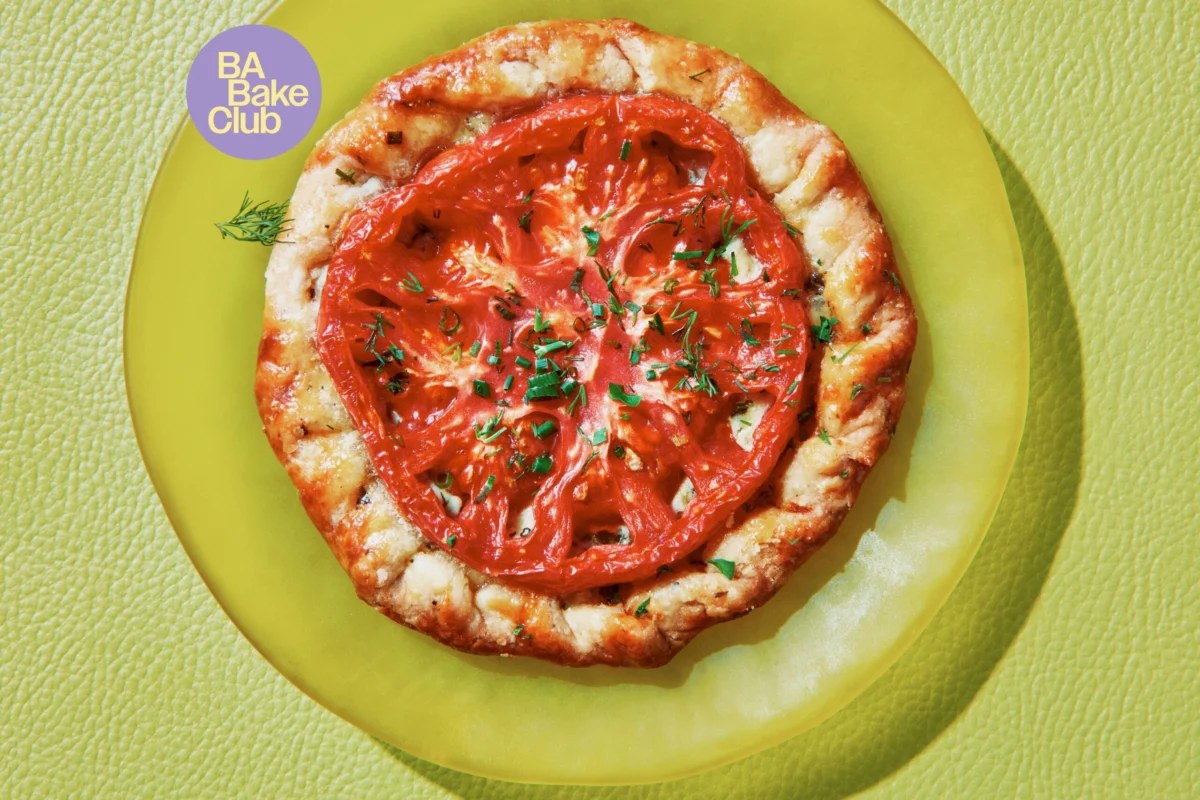
In a significant expansion of its digital and audio programming, the Bon Appétit Bake Club has welcomed its first-ever guest recipe developer, Rebecca Firkser, to headline its June culinary initiative. Firkser, a seasoned Test Kitchen editor and the author of the acclaimed cookbook Galette!, collaborated with Bake Club hosts and Senior Test Kitchen Editors Shilpa Uskokovic and Jesse Szewczyk to introduce the Tiny Tomato Galette. This partnership marks a strategic pivot for the Bake Club, moving toward specialized guest collaborations that highlight specific pastry techniques and seasonal ingredient applications.
The June focus on the galette—a freeform, open-faced pie—serves as a technical bridge for home bakers transitioning from the rigid structures of traditional pies to more versatile, rustic pastry forms. Firkser’s expertise in single-subject pastry development provides the Bake Club community with a deeper look into the structural integrity and flavor profiles of savory summer bakes.
The Technical Anatomy of the Galette
A central component of the Bake Club’s educational mission is defining the nuances between similar culinary forms. During the recent session, Firkser provided a comprehensive definition of the galette, tracing its etymological roots to the Old French term for a "flat cake." While the contemporary American interpretation often leans toward a fruit-filled rustic tart, the form is historically diverse. In various regions of France, a galette may refer to a buckwheat crepe, a large cookie, or even fried dough.
From a technical standpoint, Firkser differentiates the galette from the traditional American pie by its "one-entity" nature. Unlike a pie, which often requires separate preparation and blind-baking of a crust followed by the addition of a filling, a galette is assembled and baked as a single unit. This freeform approach eliminates the need for specialized pans, though Firkser notes that the dough can be adapted for use in skillets, tart pans, or even muffin tins for miniaturized versions.
The Bake Club’s June recipe specifically utilizes a hybrid dough that sits between a pate brisée (all-butter shortcrust) and a simplified puff pastry. By maintaining butter pieces at the size of a chickpea and utilizing a folding technique with a bench scraper, bakers can achieve "flaky layers" that mimic the lamination of more complex pastries without the requirement of a traditional butter block.
Culinary Engineering: Solving the "Soggy Bottom" Phenomenon
A recurring challenge in savory pastry, particularly when utilizing high-moisture ingredients like tomatoes, is the degradation of the bottom crust—commonly referred to in baking circles as a "soggy bottom" or "undercarriage." To address this, Firkser introduced a specialized moisture barrier composed of mayonnaise, Parmesan cheese, garlic, and fresh herbs.
The choice of mayonnaise is rooted in lipid science. Because mayonnaise is primarily an emulsion of oil and egg, it contains significantly less water than other creamy bases. When spread onto the raw dough, it creates a hydrophobic barrier that prevents the juices released by the tomatoes during the roasting process from saturating the pastry. This technique ensures that even after a high-heat bake, the bottom of the galette remains crisp and structurally sound.
Furthermore, Firkser emphasized the importance of the "under-color" in determining doneness. She advises bakers to move beyond the "golden brown" stage, aiming instead for a deep "cappuccino" hue. This level of caramelization, referred to in French pastry as bien cuit (well-cooked), is essential for the structural integrity of the galette. A key diagnostic test shared with the community involves "nudging" the galette on the sheet pan; if the pastry slides freely, the base has sufficiently dehydrated and set.
Chronology of Recipe Development and Inspiration
The development of the Tiny Tomato Galette was a multi-stage process that began during a Bake Club brainstorming session focused on summer seasonality. Firkser’s inspiration was partly drawn from the professional pastry landscape in New York City, specifically citing the tomato croissant at Radio Bakery. The goal was to translate the "elegant, soufflé-like" qualities of professional savory pastries into a format accessible to home cooks.
The decision to move from a single large galette to "tiny" individual portions was a deliberate pedagogical choice. While a large galette is traditional, individual portions provide a higher crust-to-filling ratio, further mitigating moisture issues and offering a more refined presentation. The process involves rolling the dough into a rectangular "marble counter" appearance, punching out six-inch rounds, and utilizing a "rope crimp" or empanada-style pleat to frame the tomato slices.
Community Engagement and Substitution Data
The Bake Club operates as a communal learning environment, utilizing platforms like Substack and email to gather data on how recipes perform in diverse home kitchens. Analysis of recent listener inquiries reveals several key areas of concern for the modern home baker:
- Ingredient Quality and Seasonality: While heirloom tomatoes are the gold standard for this recipe, Firkser confirmed through testing that "bodega-style" plum tomatoes or year-round Campari tomatoes are viable substitutes. The baking process concentrates the sugars in even lower-quality fruit, making the recipe resilient to varying ingredient standards.
- Dietary Restrictions and Aversions: Addressing a common aversion to mayonnaise, the Test Kitchen editors suggested alternatives such as ricotta, Boursin, or cream cheese. However, they noted that these dairy-based alternatives may alter the final texture due to their higher water and protein content compared to the oil-based mayonnaise.
- Gluten-Free Adaptations: For bakers utilizing gluten-free one-to-one flour blends, the Test Kitchen recommends monitoring hydration levels. Gluten-free blends often have higher absorption rates, potentially requiring additional liquid during the dough-mixing phase to prevent cracking during the pleating process.
The "Baker of the Month" segment highlighted the recipe’s flexibility for those with limited time. The June honoree, a baker from Texas, successfully executed the recipe in phases, demonstrating that the dough and filling can be prepared ahead of time—a critical factor for the Bake Club’s audience of busy home cooks.
Broader Impact on Food Media and Seasonal Trends
The collaboration with Rebecca Firkser reflects a broader trend in food media toward specialized, expert-driven content. Firkser’s background in digital media and her focus on budget-friendly, vegetarian cooking via her Substack, Nickel and Dine, aligns with current consumer interests in sustainable and economical home cooking. By focusing on a single, versatile form—the galette—the Bake Club provides a template that consumers can adapt to various ingredients, reducing food waste and increasing culinary confidence.
The "Galette Roulette" exercise conducted during the podcast session further illustrated the form’s versatility. The editors explored the theoretical application of unconventional ingredients, such as farro salads, hummus, and even candied spam, as galette toppings. This creative analysis suggests that the galette serves as a "culinary canvas," capable of supporting a wide array of flavors while maintaining a consistent technical foundation.
Looking Ahead: The July Transition
As the June cycle concludes, the Bake Club has announced its July recipe: the Sweet Corn Coconut Crunch Butter Mochi Cake, developed by Shilpa Uskokovic. This upcoming project shifts the focus toward the unique properties of glutinous rice flour and the hyper-seasonality of fresh corn.
Uskokovic noted that corn remains one of the few truly seasonal ingredients in the modern globalized food market. The July recipe aims to challenge the traditional boundary between savory and sweet, utilizing corn’s natural sugars in a dense, chewy mochi structure. This transition signifies the Bake Club’s ongoing commitment to exploring diverse textures and global baking traditions.
Conclusion
The inclusion of Rebecca Firkser as a guest developer has provided the Bon Appétit Bake Club with a sophisticated technical framework for summer baking. By addressing common pastry failures through scientific solutions—such as the mayonnaise moisture barrier and the bien cuit baking standard—the club continues to foster a community of "confident and curious bakers." As the program moves into the peak of summer, the focus remains on the intersection of technical precision and seasonal celebration.
Bakers are encouraged to share their results and technical queries via the Bon Appétit website and the Epicurious app, contributing to a growing database of home-baking analytics that will inform future recipe development and guest collaborations.