
 Prabowo Widodo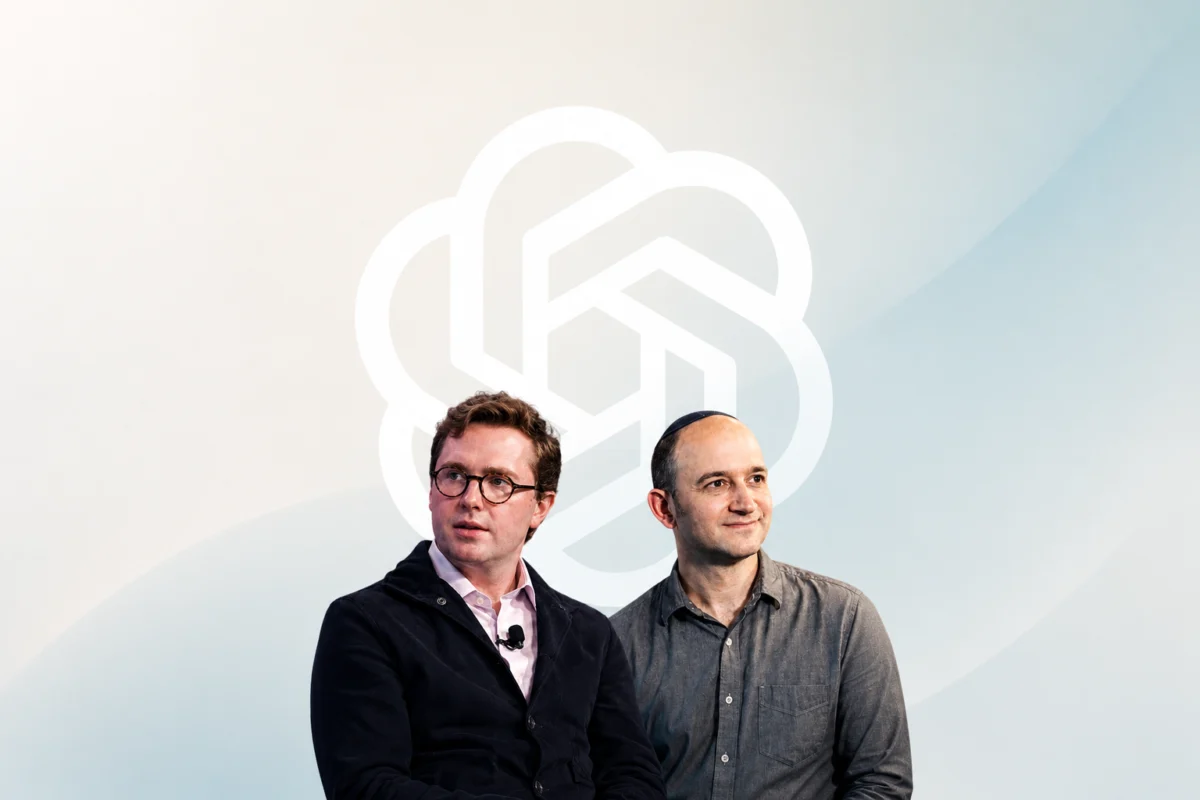
In a significant strategic move signaling its ambitions in both technological innovation and global policy influence, OpenAI has announced the recruitment of two prominent figures: Noam Shazeer, a pivotal architect of modern AI from Google DeepMind, and Dean Ball, a former AI policy official from the Trump White House. These high-profile hires underscore OpenAI’s aggressive talent acquisition strategy and its proactive approach to navigating the complex landscape of AI development and governance, particularly as the company reportedly prepares for a potential public offering or a substantial new funding round.
Noam Shazeer: A Foundational Mind Joins OpenAI
Noam Shazeer’s arrival at OpenAI marks a major coup, pulling one of the most influential researchers in artificial intelligence from Google’s formidable AI division. Shazeer, who announced his departure from Google on Wednesday, is widely recognized as a co-lead of Google’s Gemini project and the visionary founder of Character AI, an innovative AI role-playing startup. His career at Google spans two decades, beginning in 2000, punctuated only by a three-year hiatus during which he co-founded Character AI.
Shazeer’s return to Google two years prior was itself a testament to his value, reportedly involving a substantial $2.7 billion deal that granted the tech giant crucial access to Character AI’s pioneering technology. This earlier transaction highlighted Google’s strategic imperative to retain top-tier AI talent and integrate cutting-edge innovations. However, his latest move to OpenAI illustrates the intense, dynamic competition for leading minds within the rapidly evolving AI ecosystem.
Shazeer’s most profound contribution to the field is his co-authorship of the seminal 2017 paper, "Attention Is All You Need." This groundbreaking research introduced the Transformer architecture, a revolutionary neural network design that fundamentally reshaped the trajectory of artificial intelligence. The Transformer architecture, with its innovative "attention mechanism," enabled AI models to process entire sequences of data simultaneously, rather than sequentially. This paradigm shift dramatically improved the efficiency and capability of models in tasks like natural language processing, leading directly to the development of large language models (LLMs) such as OpenAI’s GPT series, Google’s Bard/Gemini, and Anthropic’s Claude. Its impact cannot be overstated; virtually every major generative AI application and research breakthrough in the past five years owes a debt to the Transformer. Shazeer’s role in this foundational work positions him as one of the architects of the generative AI era, making his transition to OpenAI a significant boost to its research and development capabilities.
Navigating Internal Controversies: Shazeer’s Google Tenure
Shazeer’s tenure at Google was not without its internal challenges, according to reports from The Information. Before his departure, he had reportedly engaged in discussions on internal messaging boards regarding politically sensitive topics, including transgender identity and the Israel-Gaza conflict. These discussions reportedly led to management intervening and deleting his posts, signaling a tension between individual expression and corporate policy within Google’s internal communications platforms.
The specifics of these incidents highlight a growing dilemma for technology companies, particularly those at the forefront of societal change like AI developers, regarding internal discourse on contentious political and social issues. Companies grapple with fostering open communication while maintaining an inclusive work environment and managing their public image. While the full context of these internal disputes remains proprietary, their occurrence raises questions about how OpenAI will integrate a researcher known for expressing strong opinions on sensitive topics. Whether these past controversies will influence his new role or OpenAI’s internal dynamics remains a point of observation for industry analysts, particularly given the increasing scrutiny on AI companies’ ethical frameworks and corporate cultures. OpenAI itself has faced internal debates regarding AI safety and alignment, suggesting a complex environment where such discussions might take on new dimensions.
The Broader AI Talent Wars: A Shifting Landscape
Shazeer’s move is the latest in a series of high-profile talent migrations across the leading AI laboratories, illustrating the fierce competition for expertise that characterizes the modern AI industry. The landscape is marked by a constant shuffling of top researchers and engineers between tech giants and innovative startups, including Google, OpenAI, Anthropic, and Meta. This dynamic environment reflects not only the scarcity of elite AI talent but also the strategic imperative for these companies to attract and retain the brightest minds to maintain their competitive edge.
The "AI talent war" is driven by several factors: the unprecedented demand for AI specialists, the rapid pace of technological advancement, and the potentially transformative impact of AI on various industries. Companies are willing to invest substantial resources, including lucrative compensation packages and unparalleled research autonomy, to secure individuals like Shazeer, whose contributions can directly translate into market leadership and groundbreaking innovation. His transition underscores OpenAI’s ability to attract world-class talent, even from established behemoths like Google, further solidifying its position as a dominant force in AI research and development.
Dean Ball: Shoring Up Policy Credentials
Concurrently with Shazeer’s recruitment, OpenAI is strategically enhancing its policy capabilities by bringing Dean Ball into its leadership. Ball, a seasoned professional with experience at the intersection of technology and government, will lead a newly formed team called "Strategic Futures." His background includes a significant stint in the Trump White House last year, where he played a crucial role in shaping and publishing "America’s AI Action Plan." This plan represented a key effort by the U.S. government to outline a national strategy for AI development, deployment, and governance, focusing on competitiveness, innovation, and ethical considerations. Following his time in the White House, Ball rejoined the Foundation for American Innovation (FAI) as a senior fellow, a techno-libertarian think tank known for its advocacy of free-market principles and limited government intervention in technological development.
Ball announced his new role on X (formerly Twitter) on Thursday, stating, "I am pleased and honored to announce that, on July 6, I’ll be joining OpenAI as leader of a new team called Strategic Futures. Our mandate will be to help the company’s leadership shape frontier AI policy." His appointment is effective July 6, indicating a swift transition to address critical policy challenges.
The Mandate of "Strategic Futures": Shaping Frontier AI Policy
Dean Ball’s "Strategic Futures" team will report directly to OpenAI’s Chief Strategy Officer, Jason Kwon. Ball described the team as a "small, high-agency team" with an expansive and critical mandate. In a detailed blog post, he outlined their core focus areas:
- Catastrophic Risk: This involves anticipating and mitigating extreme negative outcomes from advanced AI systems, such as loss of human control, widespread societal disruption, or existential threats. This area is a cornerstone of OpenAI’s long-term safety research and reflects a growing concern among leading AI developers and policymakers.
- Recursive Self-Improvement: This refers to the hypothetical scenario where AI systems become capable of improving their own intelligence and capabilities autonomously, potentially leading to rapid and unpredictable advancements. Understanding and managing the implications of such a development is crucial for ensuring human oversight and control.
- Labor Market Impact: As AI systems become more sophisticated, their potential to automate tasks across various sectors raises significant questions about employment, job displacement, and the need for new economic models or retraining initiatives. OpenAI, as a leading developer of these technologies, is keen to contribute to responsible policy solutions.
- Relationship between Frontier Labs, Governments, and Society: This broad mandate encompasses fostering constructive dialogue and collaboration between AI developers, national governments (especially the U.S. Federal Government), and the broader public to ensure that AI development aligns with societal values and goals. This includes advising on regulatory frameworks, international cooperation, and public engagement.
The "Strategic Futures" team will address both public-facing policy initiatives and internal governance structures. Ball emphasized the critical importance of internal governance, noting that "almost by necessity," AI labs will have to lead on AI governance decisions. He elaborated, "In other words, internal governance will be more central to the future of AI than most people realize." This perspective highlights the belief that given the rapid pace of AI development and the complexity of its implications, industry leaders must proactively establish ethical guidelines, safety protocols, and responsible development practices from within, often ahead of legislative action. This proactive stance is seen by many as essential for building trust and ensuring the responsible evolution of AI.
Geopolitical Chessboard: OpenAI’s Strategic Positioning
Ball’s decision to join OpenAI comes at a particularly fraught time for the AI industry, characterized by increasing government scrutiny and intervention. OpenAI, widely considered an AI favorite within the current U.S. administration, appears to be strategically consolidating its "insider status" as competitors face regulatory hurdles.
A recent example of this dynamic is the situation involving Anthropic, another leading AI research firm. Late last week, reports indicated that the U.S. government, under President Donald Trump, ordered an export control ban on Anthropic’s latest models, Fable 5 and Mythos 5. This unprecedented move forced Anthropic to withdraw these advanced models entirely to avoid non-compliance with government regulations. While the specific reasons for the ban remain under wraps, such actions typically stem from national security concerns, dual-use technology considerations, or perceived risks associated with advanced AI capabilities falling into adversarial hands.
The export ban on Anthropic’s models serves as a stark reminder of the significant influence governments can wield over AI development and deployment. For companies like OpenAI, which are operating at the cutting edge of this transformative technology, having strong policy credentials and direct lines of communication with government officials is paramount. Ball’s hiring can be seen as a strategic move to fortify OpenAI’s relationship with the U.S. government, ensuring that the company is well-positioned to navigate regulatory challenges, influence policy discussions, and potentially avoid the kind of restrictions faced by its competitors. It represents a proactive measure to lock in a favorable regulatory environment while a rival is effectively "squeezed" by government intervention, a clear signal to investors and policymakers alike about OpenAI’s sophisticated approach to risk management and strategic influence.
OpenAI’s Strategic Vision: Innovation and Responsible Leadership
The dual hires of Noam Shazeer and Dean Ball underscore a multifaceted strategic vision for OpenAI. Shazeer’s arrival significantly enhances the company’s research horsepower, adding a luminary whose foundational work directly underpins the generative AI revolution. His expertise will be invaluable in pushing the boundaries of AI capabilities, potentially leading to the next generation of breakthroughs that will define the industry. This investment in top-tier technical talent reinforces OpenAI’s commitment to being at the absolute forefront of AI innovation.
Simultaneously, Ball’s appointment and the creation of the "Strategic Futures" team signal OpenAI’s deep commitment to responsible AI development and proactive engagement with global policy. By bringing in a former White House official with a robust understanding of government operations and techno-libertarian perspectives, OpenAI aims to shape the regulatory landscape rather than merely react to it. This proactive policy engagement is crucial for managing the myriad risks associated with advanced AI, from ethical concerns and societal impact to national security implications. It positions OpenAI not just as a technology leader but also as a thought leader in the critical discourse surrounding AI governance.
As OpenAI continues its rapid growth and reportedly considers a public debut, these strategic hires are critical. They project an image of a company that is not only innovating at an unparalleled pace but also taking seriously its responsibility to guide the future of AI in a safe, ethical, and strategically sound manner. The confluence of groundbreaking technical talent and astute policy leadership positions OpenAI strongly in a competitive and increasingly regulated global AI arena.
TechCrunch has reached out to OpenAI for additional information regarding these significant leadership changes and the strategic implications of these hires. The industry awaits further details on how these new leaders will shape the future trajectory of one of the world’s most influential AI companies.









