Jono Maryono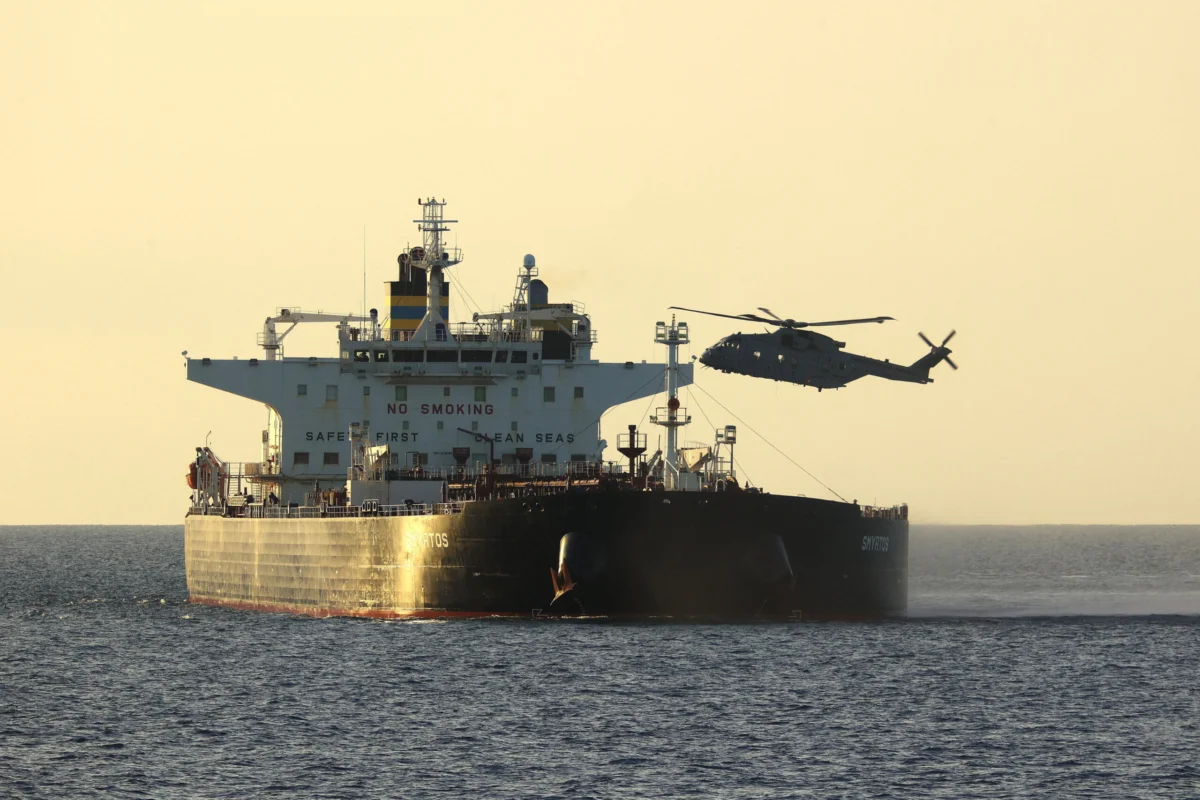
British forces have successfully intercepted and seized a Russian-linked oil tanker suspected of breaching international sanctions while transiting the English Channel on Sunday. The operation, described by Prime Minister Keir Starmer as a significant setback for Moscow’s efforts to finance its ongoing military campaign in Ukraine, marks a pivotal moment in the West’s strategy to choke off revenue streams supporting the Kremlin. The tanker, identified as the Smyrtos, was carrying approximately 700,000 barrels of Russian crude oil when it was boarded by Royal Marines commandos and officers from the National Crime Agency (NCA).
"This successful operation delivers yet another blow to Russia and reminds those fuelling [Russian President Vladimir] Putin’s war in Ukraine that we will not let them hide," Starmer stated in a post on the social media platform X. The boarding and detention of the Smyrtos is the first UK-led operation to seize a vessel belonging to Russia’s so-called "shadow fleet" – a vast network of tankers deployed to circumvent Western sanctions imposed after Russia’s full-scale invasion of Ukraine in February 2022.
Following the meticulously planned raid, an Indian national, believed to be a member of the crew, was arrested on suspicion of sanctions offences. The United Kingdom Ministry of Defence (MoD) confirmed the seizure of the tanker, emphasizing the collaborative effort between military and law enforcement agencies.
The Interception: A Dawn Raid in the Channel
The operation unfolded in the pre-dawn hours of Sunday, with Royal Marines commandos rappelling onto the Smyrtos from Chinook helicopters. The boarding was supported by a coordinated effort involving other military aircraft, a Royal Navy frigate, and a minehunter, underscoring the complexity and seriousness with which the mission was undertaken. According to the MoD, the operation lasted approximately six hours.
The Smyrtos, sailing under a Cameroonian flag, had departed the Russian Baltic port of Ust-Luga on June 5 and was reportedly en route to Port Said in Egypt. Vessel-tracking data indicates the tanker is owned by Zhao Yao Shipping Ltd, a company registered in Hong Kong, which has been linked to several other sanctioned tankers. Its management company is reportedly based in the Indian state of Tamil Nadu.
The 24 crew members aboard the Smyrtos, comprising Georgian and Indian nationals, remained on the vessel, which has since been anchored off the Dorset coast. The tanker is slated to be moved to England’s south coast for further monitoring, with officials emphasizing the importance of ensuring no environmental or safety concerns arise.
The successful seizure occurred even as a Russian warship, the Admiral Grigorovich, was reportedly in the vicinity. This frigate has been a frequent presence in the English Channel since April, often escorting Russian tankers. The exact proximity of the Admiral Grigorovich to the Smyrtos at the moment of the raid remains unclear. In the immediate aftermath of the Smyrtos interception, at least six other tankers reportedly altered their course, diverting away from the English Channel, suggesting a ripple effect of caution and apprehension among vessels operating within this strategic maritime corridor.
Ukrainian President Volodymyr Zelenskyy lauded the UK’s action, thanking the British government for "taking this important step against Russia’s oil fleet." His statement on X highlighted the significance of such measures in curtailing Russia’s financial capacity for its war efforts. Russia has not yet issued any public statement regarding the incident.
The Shadow Fleet: Russia’s Circumvention Strategy
The deployment of the "shadow fleet" is a key tactic by Russia to circumvent stringent Western sanctions designed to cripple its oil export revenue, a critical funding source for its invasion of Ukraine. Britain, alongside other Western nations, has implemented bans on vessels linked to this fleet entering its ports and prohibits its companies from providing insurance, brokerage, or financial services to ships transporting Russian oil. These sanctions aim to isolate Russia financially and limit its ability to fund its military operations.
Alexander Lord, a defence analyst at the London-based intelligence firm Sibylline, explained that while sanctions have undeniably increased costs and complexities for Moscow, they have not entirely halted Russia’s oil exports. "Russia has a significant customer base and continues to trade its oil at a heavy discount, particularly to countries such as India and China," Lord stated. He added, "The sanctions are undoubtedly causing problems for the Russian economy. But we are now well into the fifth year of the full-scale invasion [of Ukraine], and Russia is still exporting large quantities of oil."
Lord elaborated on Russia’s adaptive strategies: "Russia is constantly trying to find loopholes to protect its fleet, using shadow-fleet vessels, changing names and ownership structures to circumvent sanctions and investigations." This network, estimated to comprise hundreds of tankers, has become instrumental in Russia’s ongoing ability to generate revenue from its vast oil reserves.
The Rationale Behind the UK’s Timely Action
The interception of the Smyrtos begs the question of why such a decisive action has been taken now, following a period where numerous sanctioned vessels have traversed UK waters. The move aligns with an announcement made by Prime Minister Starmer in March, empowering UK authorities to stop, board, and detain sanctioned vessels transiting British waters. This legislative and operational framework provides the legal basis for such interdictions.
The UK Ministry of Defence has previously stated that sanctions have been imposed on over 500 vessels linked to Russia’s shadow fleet, contributing to a significant decline in Russian oil and gas revenues. Reports indicate that in 2025, these revenues saw a 24 percent decrease compared to the preceding year, a testament to the cumulative impact of Western sanctions.
Defence analyst and historian Peter Caddick-Adams noted that the authority for such operations has been in place since March. "That month, Starmer agreed that British armed forces and law enforcement could stop, board and detain sanctioned shadow-fleet vessels in accordance with international law," Caddick-Adams explained. "That legal framework has sat in place for 11 weeks. In those 11 weeks, more than 200 sanctioned tankers sailed through Britain’s exclusive economic zone. Unchecked. Unchallenged."
The delay in initiating these operations, according to UK media reports, may have been influenced by legal complexities and the potentially substantial costs associated with storing seized vessels. This UK action is part of a broader, coordinated international effort to dismantle the shadow fleet. Lord pointed out that the United States, with assistance from the Royal Navy, had previously seized a Russia-linked tanker off Scotland in January. "That operation marked the beginning of a new phase of shadow-fleet interdictions," he said, adding, "It created a clear precedent for subsequent boarding actions. Shortly afterwards, there was a flurry of activity around the legal justification for the UK to act unilaterally."
Other European nations have also been active in intercepting vessels involved in sanctions evasion. France, for instance, detained the tanker Grinch in January and the Deyna in March, both suspected of transporting sanctioned Russian oil. Finland, Sweden, and Estonia have similarly intensified inspections and enforcement actions against vessels believed to be aiding Russia in circumventing sanctions.
However, Russia has contested the legal basis for such actions by France and Britain, arguing that they contravene the UN Convention on the Law of the Sea. The UK and France maintain that their domestic legislation provides sufficient justification for these interdictions, a legal dispute that could persist for years.
Implications for Russia’s Oil Exports and Global Shipping
The seizure of the Smyrtos has been warmly welcomed by Ukraine, with President Zelenskyy expressing gratitude to Prime Minister Starmer and the British people for their "principled resolve." Zelenskyy reiterated that Russia’s ability to wage war is directly linked to its oil and gas revenues, stating, "It was Russia’s hubris, fuelled by high oil and gas revenues, that paved the way for this war, and every decision by partners that deprives Russia of money also limits the war itself."
While analysts suggest that this single seizure is unlikely to cause a significant disruption to Russia’s overall oil export volumes, it is expected to increase operational costs and potentially force some vessels to adopt longer, more circuitous routes to avoid detection and interdiction. The English Channel is a vital artery for global shipping, and its avoidance adds considerable distance and complexity to voyages. For instance, bypassing the Channel from Russia’s Baltic ports to reach the Suez Canal adds approximately 926 kilometers (500 nautical miles) to the journey. This necessitates traversing the North Atlantic, a route known for its more challenging weather conditions, leading to higher operational costs and increased risks.
"I don’t think this changes the broader picture," Lord commented. "Ust-Luga on the Baltic Sea, near St Petersburg, will remain a major destination and vessels will continue transiting that route. Russia’s response is likely to be asymmetric. There is a chance Russian ships will alter their sailing routes. We have already seen examples of vessels taking the longer route around the UK in an effort to reduce risk."
The Prospect of Russian Retaliation
The question of whether Russia might retaliate for such actions is a pertinent one. However, analysts suggest that the likelihood of a significant backlash is relatively low. Lord noted that Russia has historically shown limited direct response to similar seizures carried out by French authorities.
Caddick-Adams echoed this sentiment, downplaying the probability of direct retaliation. "There have been no repercussions against other nations boarding shadow-fleet tankers, and none are expected against the UK," he stated. He further characterized the shadow fleet as largely comprising ageing and poorly maintained vessels, specifically designed to evade sanctions through mechanisms such as false registrations, limited insurance coverage, and concealed operational movements.
"The shadow fleet is used to avoid sanctions against Russian-generated oil and oil products," Caddick-Adams concluded. "This operation simply makes it more difficult for Moscow to move its oil around the globe." The sustained pressure exerted through such interdictions, combined with other financial and diplomatic measures, forms a comprehensive strategy aimed at diminishing Russia’s capacity to sustain its military actions and ultimately influence its strategic calculus. The interception of the Smyrtos stands as a tangible demonstration of this commitment by the United Kingdom and its allies.