Prabowo Widodo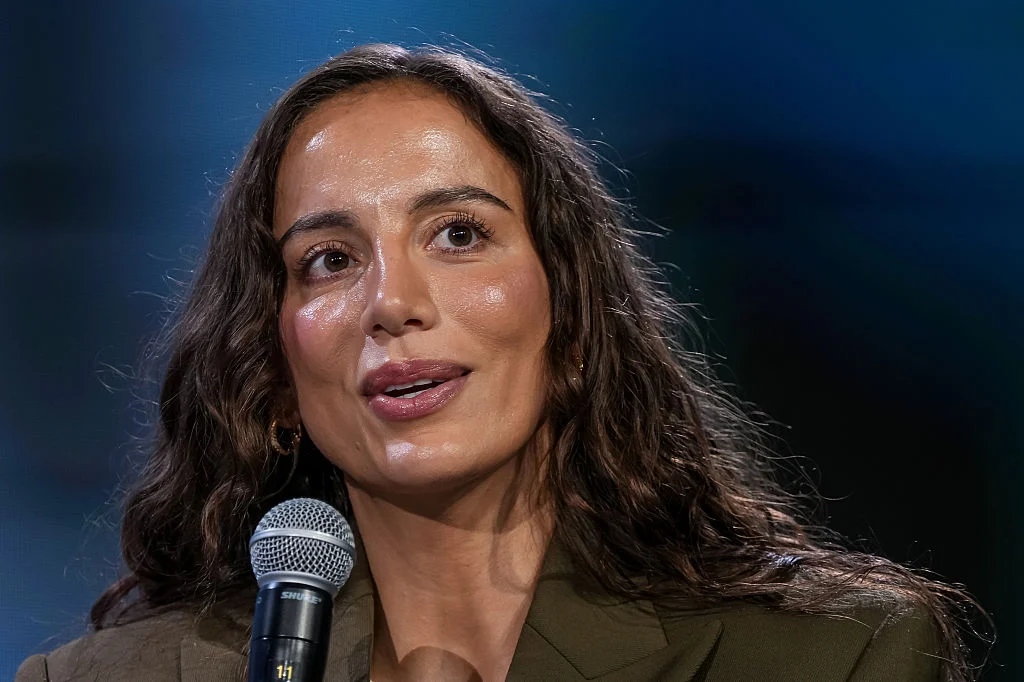
Mira Murati, a figure often operating behind the scenes despite her pivotal roles in the artificial intelligence landscape, made a highly anticipated return to the public stage with a Bloomberg interview in San Francisco, marking her first significant media appearance in approximately 18 months. As the former Chief Technology Officer of OpenAI and now the CEO of her own venture, Thinking Machines Lab (TML), Murati has historically maintained a low profile, preferring to let her work speak for itself rather than engaging in extensive public discourse. Her recent emergence, however, signifies a deliberate strategic shift, aimed at positioning TML in an increasingly crowded and competitive AI market and offering a rare glimpse into her perspective on the industry’s most pressing challenges.
Mira Murati’s Emergence: A Strategic Reintroduction
Murati’s career trajectory is deeply intertwined with the foundational advancements of modern AI. Before co-founding Thinking Machines Lab, she spent six impactful years at OpenAI, rising to the position of Chief Technology Officer. In this role, she oversaw the development and deployment of groundbreaking models like GPT-3, DALL-E 2, and the initial versions of ChatGPT, which collectively catapulted generative AI into mainstream consciousness. Despite her instrumental contributions, Murati was rarely the public face of the company, a role often occupied by co-founder and CEO Sam Altman. Her public appearances were typically confined to technical presentations or carefully curated discussions, maintaining an aura of quiet competence.
The decision to step into the media spotlight now, after a year and a half of intense, largely covert development at Thinking Machines Lab, is not coincidental. It reflects a critical juncture for TML, which has been diligently focused on securing capital, assembling a world-class team of researchers, and bringing its first product, Tinker, to market. Tinker, an API designed for fine-tuning open-source AI models, addresses a niche yet crucial need in the developer ecosystem, enabling greater customization and control over powerful AI tools. However, in the rapidly evolving AI landscape, sustained silence, even when productive, can lead to diminished returns on attention and investment. The current environment demands visibility, especially when vying for top talent, discerning customers, and crucial investor interest.
Thinking Machines Lab: Unveiling the Next Generation of AI Interaction
At the core of Murati’s strategic re-emergence is the unveiling of what Thinking Machines Lab is calling "interaction models." This concept represents a profound departure from the conventional prompt-and-response dynamic that currently defines the vast majority of AI products. Murati described these models as fundamentally different AI interfaces, designed to process continuous streams of multimodal data – audio, text, and video – in near real-time, specifically at 200-millisecond intervals.
Redefining Human-AI Communication
The vision behind interaction models is ambitious: to create AI systems that can genuinely understand the nuances of human communication. This includes not just the explicit words spoken or typed, but also the subtle cues like interruptions, mid-thought corrections, changes in tone, and even thoughtful pauses. By processing these intricate elements in continuous streams, TML aims to build AI that can engage in more natural, fluid, and context-aware conversations, moving beyond the turn-based, transactional interactions common today. Imagine an AI assistant that anticipates your needs, understands unspoken intentions, and adapts its responses dynamically, much like a human interlocutor. This approach promises to unlock a new paradigm of human-computer interaction, potentially revolutionizing fields from customer service and education to creative collaboration and personal assistance. Murati, however, was careful to frame this as a foundational "first step," acknowledging the immense developmental hurdles and declining to offer a specific release date, underscoring the complexity and nascent stage of this pioneering technology.
Navigating a Hyper-Competitive Landscape
Thinking Machines Lab operates within an AI ecosystem characterized by intense competition and rapid innovation. The market for talent, customers, and media attention is dominated by established giants and well-funded challengers. OpenAI, Murati’s former employer, remains a constant fixture in the news cycle, driven by continuous product updates, strategic partnerships, and ongoing research breakthroughs. Anthropic, another leading AI research company, has garnered significant momentum and substantial investment, with its focus on "constitutional AI" and safety-oriented models capturing widespread industry interest. Elon Musk’s xAI, which recently announced its integration into SpaceX in anticipation of a massive public offering, exerts its own considerable gravitational pull on investor attention and top engineering talent.
These competitors are not merely developing similar technologies; they are aggressively vying for the same limited pool of elite AI researchers and engineers. The strategic implication for TML is clear: to survive and thrive, it must articulate a compelling vision and demonstrate tangible progress. Staying "heads down" for too long, no matter how productive, risks being overshadowed by the sheer volume of news and marketing from better-resourced rivals. Murati’s Bloomberg appearance served as a crucial initial volley, a calculated move to reassert TML’s presence and highlight its unique approach in this high-stakes environment.
The War for Talent and Organizational Dynamics
The intense competition extends directly to the acquisition and retention of talent, a subject Murati addressed when pressed on the recent departures of several high-profile researchers from Thinking Machines. The AI industry is notorious for its "talent war," where top researchers and engineers command "nine-figure packages" – compensation figures that have become standard currency in the scramble for expertise. Murati downplayed the significance of these departures, characterizing them as normal organizational volatility, albeit compressed into months rather than years, given the accelerated pace of building a frontier AI lab from the ground up.
She acknowledged that while astronomical compensation packages certainly "capture people’s imaginations," they rarely tell the whole story. This suggests a more nuanced understanding of talent motivation, implying that factors like mission, intellectual challenge, and organizational culture play equally significant roles. With a touch of characteristic dry humor, Murati quipped, "When I wake up in the morning, I am not thinking about how to kill the competitor," a statement that, while eliciting audience laughter, underscored her focus on internal innovation and product development rather than cutthroat rivalry. This stance reflects a strategic choice to differentiate TML not just through its technology, but also through its ethos and work environment, aiming to attract talent aligned with its long-term vision rather than solely by financial incentives.
Reflecting on the OpenAI "Blip": Leadership Under Pressure
A significant portion of the interview naturally gravitated towards the dramatic events of November 2023 at OpenAI, an episode internally dubbed "the blip," when Sam Altman was abruptly fired by the board, and Murati found herself thrust into the role of interim CEO. This chaotic week captivated the tech world, revealing the fragile governance structures and immense internal pressures within one of the world’s most influential AI companies.
The Crisis of Trust and Governance
Murati recounted feeling a profound clarity about her decisions during those tumultuous five days. Her guiding principle, she stated, was the unwavering commitment to "protecting the mission and the team." From her perspective, this through-line made her choices seem "obvious," even as the situation appeared to be "falling apart from the outside." She firmly believes that OpenAI would have "imploded" had it not been for her leadership and involvement throughout that strange period and its immediate aftermath.
However, her reflection was not without a critical self-assessment. Murati acknowledged a crucial distinction between "clarity of intent" and "clarity about consequences." In retrospect, she stated she would have pushed harder for "more information, a better transition plan, and more transparency." This admission speaks volumes about the opacity and lack of clear communication that characterized the board’s initial actions. Notably, when asked directly whether she still trusts her former boss, Sam Altman, Murati artfully sidestepped the question. Instead, she pivoted to a broader, more profound concern that she revisited multiple times during the interview: the "concentration of consequential decisions in too few hands" across the entire AI industry, not just at OpenAI.
This concern transcends individual personalities, extending to the fundamental structures of governance. Murati’s worry, she articulated, is less about the "character of any individual leader" (though she conceded that individual character certainly matters) and more about the "absence of structural checks." Her analysis suggests that even "good people make bad calls" and "well-intentioned organizations drift" without robust oversight and diverse perspectives. Her critique points to a systemic issue: "Too much attention has been paid to virtue and too little to governance." This powerful statement serves as a call for greater institutional accountability, advocating for mechanisms that ensure ethical development, mitigate risks, and distribute decision-making power more equitably within companies shaping humanity’s future. Her perspective, born from direct experience at the epicenter of an industry-defining crisis, adds significant weight to ongoing discussions about AI safety, ethics, and corporate responsibility.
Shaping AI’s Future: A Call for Deliberate Stewardship
The conversation broadened to encompass the future of AI itself and its profound implications for humanity. The discourse around AI has grown increasingly polarized, oscillating between visions of utopian empowerment and dystopian displacement, with concerns ranging from mass job losses to the potential for AI-enabled creation of chemical weapons.
Murati, who was born in Albania and speaks with a subtle Eastern European accent, offered a measured and pragmatic response. She firmly pushed back against the framing of either "inevitable dystopia or inevitable utopia," arguing that neither outcome is predetermined. Instead, she emphasized that the present moment is the critical period that will decisively shape the trajectory of AI’s future. This perspective places a heavy onus on current developers, policymakers, and society at large to make responsible choices. She reiterated, not for the first time during the interview, that if humans "take their hands off the wheel too soon," the future will undoubtedly look "very different, and not better." This statement underscores a core tenet of her philosophy: human agency and deliberate stewardship are paramount in navigating the complex ethical and societal challenges posed by advanced AI. Her warning is a powerful reminder that the development of AI is not a passive process but an active creation that requires constant vigilance, ethical consideration, and responsible governance to ensure it serves humanity’s best interests.
Conclusion: A Calculated Step Forward
Mira Murati’s strategic re-emergence through the Bloomberg interview was more than just a public relations exercise; it was a carefully calculated move to assert Thinking Machines Lab’s unique vision and its role in shaping the next generation of AI. By unveiling the ambitious concept of "interaction models," she positioned TML at the forefront of redefining human-AI communication, aiming for a more intuitive and context-aware experience. Her candid reflections on the OpenAI "blip" provided invaluable insights into the internal dynamics of a frontier AI lab under duress and, more significantly, underscored her profound concerns about governance and the concentration of power within the industry.
This interview served as a powerful signal to the market, investors, and top talent: Thinking Machines Lab is not merely another AI startup but a serious contender with a differentiated approach and a leader deeply committed to responsible innovation. Murati’s measured yet firm stance on the future of AI, emphasizing human agency and the need for structural checks, reinforces her reputation as a thoughtful leader navigating one of the most transformative technological shifts in history. As TML continues its journey, its ability to execute on the promise of interaction models and Murati’s ongoing advocacy for robust governance will undoubtedly shape not only its own destiny but also contribute significantly to the broader discourse on how humanity coexists with increasingly intelligent machines. The industry, and indeed the world, will be watching closely to see how this calculated step forward translates into tangible progress and lasting impact.