Layla Zulfa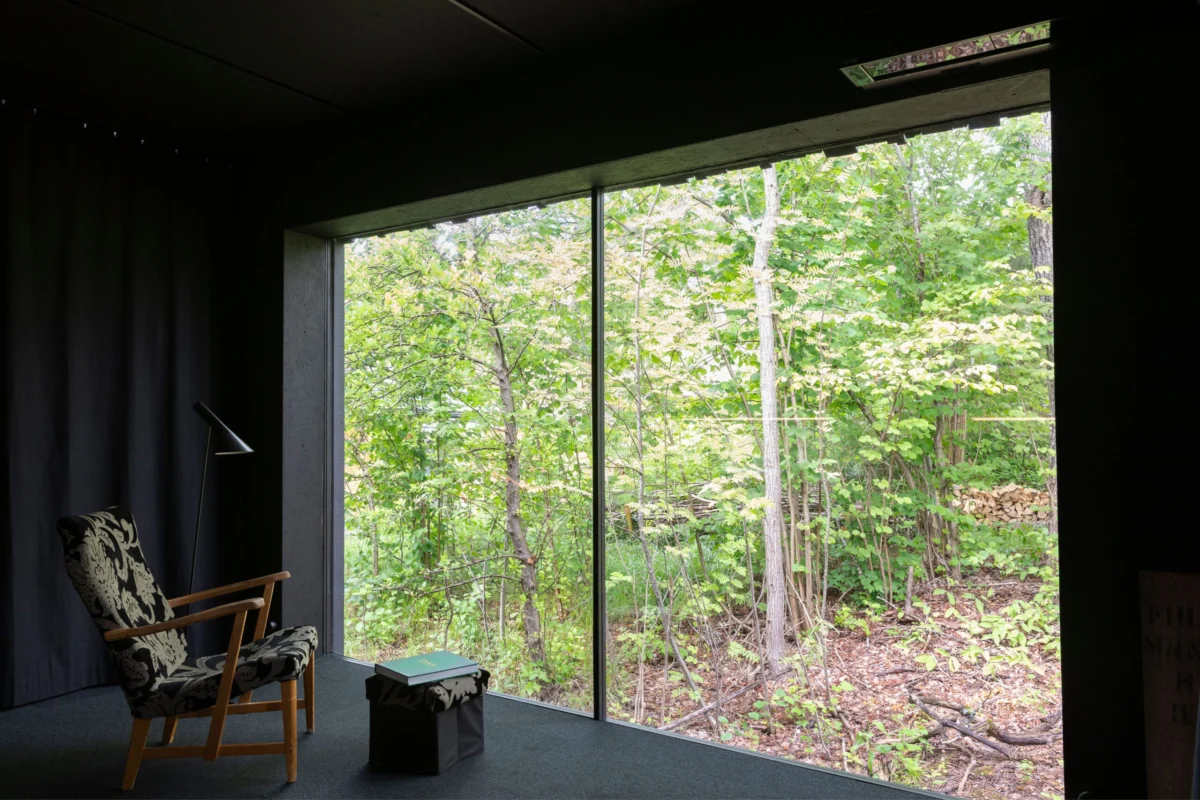
In the quiet landscape of Lohja, situated approximately 40 miles from the Finnish capital of Helsinki, a 365-square-foot structure has emerged as a radical prototype for the future of human habitation. Known as the Tiny House Shadow, this matte black, avant-garde dwelling is not merely an architectural statement but a calculated response to the converging crises of climate change and global demographic shifts. Conceived by Matti Kuittinen, an architect and professor at Aalto University, the project serves as a tangible manifestation of years of research into sustainable construction, modularity, and the circular economy.
The Tiny House Shadow represents a departure from traditional building methodologies, prioritizing mobility and the use of recycled materials over permanence and resource-intensive luxury. As the construction industry faces mounting pressure to decarbonize, Kuittinen’s design offers a glimpse into a world where homes are manufactured with the precision of industrial products while maintaining a minimal ecological footprint.

The Architect’s Mandate: Housing Two Billion People Sustainably
The genesis of the Tiny House Shadow lies in a stark mathematical reality. According to projections cited by Professor Kuittinen, the global population is on a trajectory that will require the construction of nearly two billion new homes by the end of the 21st century. Simultaneously, the building sector—currently responsible for approximately 40% of global energy-related carbon emissions—must reduce its total emissions by 80% to 90% to align with international climate targets.
"These imperatives are fundamentally incompatible under our current construction paradigms," Kuittinen warns. "This is why we need to consider radically different housing and construction solutions." The Shadow project is the culmination of a collaboration between Kuittinen and several prominent Scandinavian industrial partners, including Aulis Lundell, Vesivek, and the steel manufacturer SSAB. Together, they sought to create a structure that addresses the "emission gap" by rethinking every component of the residential build, from the structural frame to the interior finishes.
Material Innovation: The Rise of Fossil-Free Steel
Central to the Tiny House Shadow’s sustainability profile is its use of cutting-edge materials. The facade of the building is constructed using SSAB Zero™, a specialized steel product that is virtually free of fossil carbon emissions. This material is produced using recycled scrap metal and processed with fossil-free electricity and biogas, representing a significant leap forward for an industry traditionally reliant on coal-fired blast furnaces.

The choice of steel is both functional and environmental. "Steel is an excellent material for a building designed to be moved and entirely prefabricated," Kuittinen explains. "It offers a unique combination of lightness and durability, allowing for a modular design that can be dismantled and transported without compromising structural integrity."
The environmental impact of these material choices is quantifiable. The Tiny House Shadow utilizes 56% recycled materials across its entire construction. By prioritizing salvaged and repurposed resources, the build requires 85% fewer raw materials than a conventional house of similar utility. This resource efficiency alone reduces the structure’s overall carbon footprint by 43%, setting a new benchmark for low-impact residential design.
A Chronology of the Circular Economy
The development of the Tiny House Shadow followed a rigorous timeline of research and prototype testing. The project began as a theoretical exploration at Aalto University, where Kuittinen and his team analyzed the life-cycle assessments of various building materials. Following the research phase, the design was finalized in collaboration with Aulis Lundell, a company specializing in light-gauge steel framing.

The construction of the prototype took place in a controlled factory environment, emphasizing the benefits of prefabrication. By building the home off-site, the team was able to minimize waste, reduce transport emissions for individual components, and ensure high-precision assembly. Once completed, the structure was moved to its current location in Lohja, where it serves as both a private residence and a living laboratory for sustainable living.
Throughout its existence, the Tiny House Shadow has been featured at various international construction and design fairs. Its purpose at these events is to demonstrate to developers and policymakers that high-density, low-emission housing is not a distant possibility but a current technological reality.
Interior Design: Minimalism and Repurposed Resources
The interior of the Tiny House Shadow is as innovative as its exterior. The design philosophy is deeply rooted in minimalism, but not merely as an aesthetic choice. Here, minimalism is a functional strategy to reduce energy consumption and resource use. The interior surfaces tell a story of circularity:

- Floors: Crafted from recycled plastic, providing a durable and moisture-resistant surface suitable for the Finnish climate.
- Ceilings: Fashioned from repurposed old tires, demonstrating a creative use for a notoriously difficult-to-recycle waste product.
- Insulation: Made from recycled glassware, offering high thermal performance to keep the home warm during sub-zero Nordic winters.
- Windows: Salvaged from decommissioned buildings, preventing high-quality glass and frames from entering landfills.
The layout is inspired by the Japanese concept of "capsule" living, optimized for efficiency. Despite its small footprint, the home includes a mini-kitchen with open shelving, a cozy bedroom pod, and even a 22-square-foot wood-fired sauna—a nod to Finnish cultural traditions. Movable partitions and sliding doors allow the space to be reconfigured based on the time of day or the needs of the resident, proving that small-scale living does not require a sacrifice of comfort.
The "Shadow" Philosophy: Impermanence and Light
The name "Tiny House Shadow" is a literary reference to Jun’ichiro Tanizaki’s 1933 essay, In Praise of Shadows. In his work, Tanizaki argues for an appreciation of darkness, simplicity, and the subtle beauty of natural materials, contrasting it with the harsh, artificial brightness of modern Western industrialization.
In the context of Kuittinen’s project, "shadow" also refers to the home’s impermanence. Unlike traditional real estate, which is rooted in the earth and intended to last for centuries, the Shadow is designed to leave a light mark on the land. Its mobility and the fact that it can be entirely dismantled mean that it does not permanently alter the site it occupies. This "shadow-like" existence reflects a broader shift in architectural thought toward "buildings as banks of materials"—structures that can be deconstructed and reused at the end of their life cycle rather than demolished.
.jpg)
Quantitative Impact and Resident Experience
The environmental benefits of the Tiny House Shadow extend beyond its construction phase to the daily lives of its inhabitants. Data collected from the prototype suggests that a resident living in the Shadow reduces their personal carbon footprint by 53% compared to living in a conventional Finnish apartment or house.
This reduction is achieved through several factors:
- Lower Energy Demand: The small volume of the house requires significantly less energy for heating and lighting.
- Resource Consciousness: The absence of high-energy appliances, such as dishwashers, encourages a more mindful approach to resource consumption.
- Space Efficiency: By condensing living functions into 365 square feet, the "hidden" emissions associated with maintaining and furnishing large, underutilized rooms are eliminated.
Kuittinen argues that this lifestyle shift is essential for meeting global climate goals. "Living in a tiny house is more about rethinking what we really need to live well—and how we can still build without destroying the planet," he states.

Industry Reactions and the Path Toward Scalability
The Tiny House Shadow has garnered significant attention from the Scandinavian construction industry. Partners like SSAB view the project as a vital showcase for their fossil-free steel initiatives. As carbon taxes increase across the European Union, the demand for materials like SSAB Zero™ is expected to surge, making the Shadow a precursor to a much larger market trend.
Aulis Lundell, the primary construction partner, has noted that the modular nature of the Shadow makes it an attractive option for "infill" housing in urban areas where space is at a premium. By placing these units on vacant lots or atop existing buildings, cities can increase density without the carbon-intensive process of large-scale excavation and concrete pouring.
However, challenges remain. Current zoning laws in many regions are not yet equipped to handle mobile, modular dwellings. Critics also point out that while tiny houses work well for individuals or couples, they may not be a universal solution for larger families. Kuittinen acknowledges these limitations but maintains that the principles of the Shadow—recycled materials, modularity, and fossil-free steel—can and should be applied to larger multi-family developments.

Broader Implications for the Modern Age
The Tiny House Shadow stands as a testament to the possibility of a "decarbonized" residential sector. It challenges the traditional notion of the home as a permanent, static investment, proposing instead a flexible, resource-efficient tool for living. As the world grapples with the need to house billions more people while simultaneously slashing emissions, the lessons learned in Lohja may provide the blueprint for the next century of architecture.
By integrating industrial innovation with philosophical simplicity, Matti Kuittinen has created more than just a house; he has created a proof of concept for a circular economy. The Tiny House Shadow suggests that the future of housing is not found in more space or more materials, but in the intelligent, respectful use of what we already have. In the shadows of this matte black structure lies a bright possibility for a more sustainable human presence on Earth.