Reynand Wu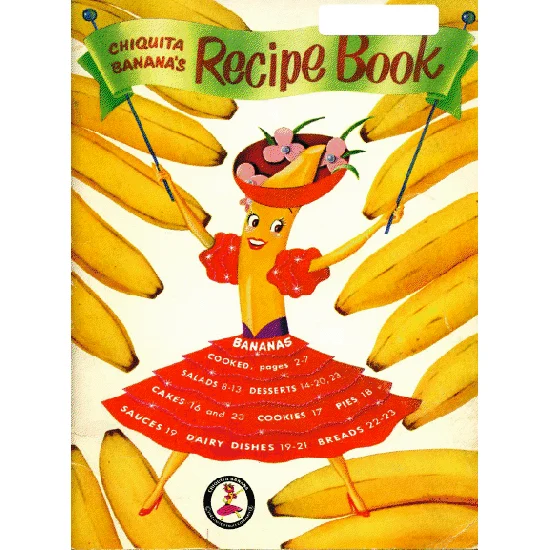
Over the course of the past year, M&M’s mascots have found themselves at the center of a swirling maelstrom of news cycles, social media debates, and even Super Bowl commercials, transcending their traditional role as mere confectionery spokescharacters. The saga began in earnest in January 2022, when Mars Wrigley, the confectionery giant behind the iconic chocolate candies, announced a significant rebranding initiative for its beloved M&M’s "Spokescandies." This effort, explicitly framed by the company as a push toward more inclusive marketing, involved subtle yet impactful design alterations to the characters. Most notably, the brown M&M was given shorter, more sensible heels, and the green M&M’s signature go-go boots were replaced with sneakers, a move intended to modernize their appeal and foster a sense of belonging among a broader audience.
The company’s stated rationale for these changes was to create a more "dynamic, progressive world" where everyone feels represented, emphasizing personality over physical appearance. Grant Reid, then CEO of Mars, Incorporated, articulated that the goal was to "evolte M&M’s to reflect the more modern, progressive world we live in." This initiative was part of a broader trend among major corporations to align their brands with contemporary values of diversity, equity, and inclusion, recognizing a growing consumer base that demands social responsibility from the companies they patronize. Marketing data from the past decade consistently indicates that brands perceived as authentic and inclusive tend to foster stronger consumer loyalty, particularly among younger demographics.
What followed, however, was a torrent of unforeseen outrage and fervent debate, demonstrating the unexpected sensitivities surrounding even the most innocuous of cultural symbols. The changes, particularly to the green M&M, ignited a firestorm across various media platforms. Conservative media personality Tucker Carlson swiftly emerged as the most vocal face of the backlash. On his widely watched Fox News program, Carlson derided the redesign, stating, "M&M’s will not be satisfied until every last cartoon character is deeply unappealing and totally androgynous." His commentary framed the corporate decision as an attack on traditional gender norms and an unwelcome intrusion of "wokeness" into popular culture.
Carlson was not alone in expressing dismay, albeit from different perspectives. In a Rolling Stone article titled, "Let the Green M&M Be a Nasty Little Slut," senior writer EJ Dickson critiqued the changes from a viewpoint that, while seemingly aligned with Carlson in its opposition to the redesign, fundamentally differed in its reasoning. Dickson argued, "The green M&M has spent decades building her brand as a horny, sexy bitch, and for what? For her creators to give her Larry David footwear in the name of feminism?" This reaction highlighted a nuanced segment of public opinion that, while also resistant to the changes, saw them as stripping away an established, albeit overtly sexualized, aspect of the character’s identity rather than promoting genuine inclusivity.
The controversy continued to simmer, intensifying in September 2022 with the debut of a new M&M character: the purple M&M. Introduced as the brand’s first new female character in a decade, the purple M&M was designed to represent "acceptance and inclusivity," with a personality described as quirky, self-aware, and authentic. Her introduction, however, merely provided fresh ammunition for critics. Carlson reignited his "culture war" against the candy brand, interpreting the new character and previous changes through a highly critical lens. On FOX News, he remarked, "The green M&M got her boots back, but apparently is now a lesbian maybe? And now there’s a plus-sized, obese purple M&M." These comments, while dismissed by many as nonsensical and inflammatory, underscored a broader societal tension surrounding gender representation and body image, particularly when refracted through the prism of media polarization.
The culmination of this prolonged public relations battle arrived in January 2023, when Mars Wrigley announced a temporary suspension of its beloved "Spokescandies" from all marketing campaigns. Citing the unexpected intensity of the backlash, the company declared a need for a "break" from the mascots, acknowledging that "even a candy’s shoes can be polarizing." In a strategic pivot, Mars Wrigley announced that comedian Maya Rudolph, known for her versatile and universally appealing humor, would temporarily assume the role of the brand’s chief "Spokesperson." This move was widely interpreted as an attempt to de-escalate the controversy and inject a dose of lightheartedness into the brand’s public image, steering clear of the perceived divisiveness associated with the animated characters.
However, the hiatus proved short-lived. By April 2023, the M&M’s "Spokescandies" made a triumphant return, appearing alongside Maya Rudolph in a Super Bowl commercial that subtly acknowledged the previous controversy. The commercial depicted Rudolph struggling to fill the shoes of the beloved mascots, ultimately leading to their reinstatement. This swift reversal indicated Mars Wrigley’s recognition of the enduring power and appeal of its established brand characters, even amidst intense public scrutiny.
Sexualization of Women in Media and Branding: A Historical Perspective
The M&M’s controversy is not an isolated incident but rather a contemporary manifestation of a long-standing pattern in advertising: the gendered and often sexualized portrayal of commercial food products and brand mascots. This historical context is crucial for understanding the depth of the reactions observed. One prominent historical example is the Chiquita Banana. In the 1940s, the Chiquita Banana character, the world’s first branded fruit, made her debut. The original Miss Chiquita Banana was explicitly racialized and sexualized, crafted to appeal to the prevailing American market sensibilities of the era. Her femininity was overtly emphasized and oversexualized through flirtatious winking and eye-rolling, alongside her frilly dresses and bright red lipstick, embodying a caricature of Latin American femininity designed for mass consumption.
M&M’s, too, has historically employed a similar strategy by sexualizing its female spokescandies. The hypersexualization of characters like the green M&M has been evident not only in their attire—or lack thereof—but also in the erotic undertones of the commercials in which they have been featured. The green M&M, in particular, has been depicted in suggestive scenarios, including pole dancing, stripping, and fondling chocolate, among other overtly sexual acts. What’s more, male M&M characters have frequently been shown ogling her in the background, a common trope that reinforces the pervasive nature of the male gaze in media. This concept, widely discussed in feminist media theory, describes how women are often depicted in visual arts and literature from a masculine, heterosexual perspective that presents and represents women as passive "objects" of male sexual desire, rather than as active subjects. Such portrayals contribute to a societal environment where women’s primary value is often perceived through their physical attractiveness to men.
Emphasized Femininity and the Male Gaze in Public Discourse
The academic concept of emphasized femininity provides a crucial lens through which to analyze the public outrage surrounding the M&M’s redesign. Emphasized femininity refers to a range of traditional feminine norms that encourage women to accommodate men’s sexual appetites and desire for control. This framework legitimizes existing gender hierarchies and perpetuates various forms of oppression by prescribing a narrow, often subservient, role for women. When female characters, even animated candy mascots, deviate from these "stereotypical cultural notions" of emphasized femininity—for instance, by becoming less conventionally attractive or overtly "sexy"—it often triggers a defensive reaction among those who subscribe to ideals of hegemonic masculinity.
The backlash against the M&M’s changes illustrates this dynamic vividly. Critics, particularly those from conservative media, expressed anger and a sense of threat, perceiving that their sexual desires were not being satisfied, even by fictional candy mascots. This reaction, seemingly disproportionate to the actual changes, reveals a deeper societal expectation that women, real or imagined, should conform to male expectations of attractiveness and submissiveness. It highlights how women, when they possess characteristics deemed "masculine" or deviate from prescribed feminine roles, face the prospect of being labeled "socially undesirable." Carlson’s provocative statement, "When you’re totally turned off, we’ve achieved equity," encapsulates this sentiment, suggesting that any move towards gender equity that challenges traditional male comfort or desire is inherently negative.
In patriarchal societies, when a woman exhibits defiance, authority, or independence, men may feel threatened unless they can stigmatize and "feminize" their behavior, often through derogatory labels. When a woman steps outside the bounds of being a "good girl," she risks being branded a "bitch," a "lesbian," or a "slut." The M&M’s controversy, therefore, serves as a stark microcosm of larger societal pressures, where the value of women, even in symbolic form, is often predicated on their subservience to the male gaze and their adherence to traditional gender roles.
Impact of Hypersexualization on Young People and Societal Norms
The pervasive hypersexualization of women in media, including seemingly innocuous examples like candy mascots, has profound and detrimental effects on young people. Adolescents’ constant exposure to a sexualized media environment leads them to internalize the idea that women are primarily sex objects. When young girls and women repeatedly see their bodies objectified, they can begin to internalize the damaging notion that their physical appearance and sexual appeal are the most valuable aspects of their identity. This can lead to self-objectification, body image issues, and a diminished sense of self-worth if they do not meet idealized, often unattainable, societal beauty standards. They may become acutely aware that they are seen as "sexual playthings waiting to please men’s sexual desires," fostering feelings of inadequacy and pressure to conform. The fact that even children’s candy is subjected to such sexualized narratives does not go unnoticed, subtly shaping their understanding of gender roles and value from a young age.
The outrage generated by something as seemingly trivial as a change in a female M&M’s shoe sends a powerful and troubling message. While the notion of a "culture war" waged against M&M’s is undeniably ludicrous on its surface, the underlying implications are serious and far-reaching. Words, especially from prominent media figures, carry significant weight and can reinforce harmful stereotypes and expectations. The controversy underscores the persistent struggle against the commodification and sexualization of women for profit, whether in advertising or broader media. It highlights the urgent need for prominent figures to recognize that the oppression and objectification of others are not punchlines or fodder for political point-scoring but rather serious issues with real-world consequences for individuals and society at large.
The M&M’s mascot saga serves as a compelling case study in the complexities of modern branding, corporate social responsibility, and the ongoing "culture wars." It demonstrates how attempts at inclusive marketing can inadvertently trigger intense public debate, revealing deep-seated societal anxieties about gender, identity, and change. Brands like Mars Wrigley face the delicate challenge of evolving their imagery to reflect contemporary values without alienating traditional consumer bases or becoming entangled in highly polarized ideological battles. Ultimately, the controversy reminds us that even the most seemingly innocuous cultural symbols are imbued with meaning and can become battlegrounds for broader societal conversations about who we are and who we aspire to be. The journey of the M&M’s mascots continues, undoubtedly watched closely by marketers, cultural critics, and consumers alike, as a barometer of our evolving social landscape.