Reynand Wu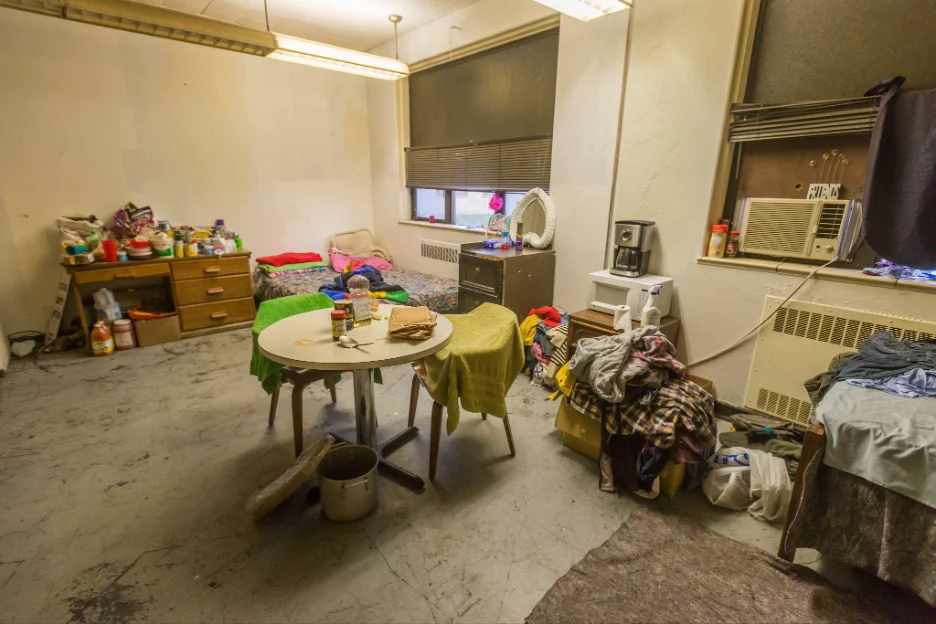
Migrant labor is the hidden bedrock of U.S. agriculture, an essential and constant force that fuels the nation’s food supply. Yet, the individuals performing this arduous work often remain socially and spatially invisible, deliberately tucked away from public view. This invisibility is not merely a consequence of their transient lifestyle but a systematic design embedded in the very infrastructure of their housing. Employers frequently site worker accommodations behind dense groves, far from main thoroughfares, or on private land secured by locked gates. These locations are inherently difficult for workers to access independently, and equally challenging to leave, fostering an environment ripe for control and isolation.
The firsthand accounts of migrant workers consistently paint a grim picture of their living conditions. Many describe enduring grueling, often six or seven-day workweeks in fields and orchards under extreme weather conditions, only to return to dormitories or cabins located in remote areas, far removed from towns or services. These shared spaces often lack fundamental elements of privacy, comfort, or dignity. Workers are frequently housed in cramped quarters with shared beds, minimal personal space, communal bathrooms, and often bare, inadequate kitchen facilities. Such arrangements are not random; they are a structural reflection of a system that, while dependent on this labor, simultaneously seeks to render its human cost unseen and unheard.
The Spatial Production of Invisibility
The spatial segregation of migrant workers has deep historical roots and serves a clear functional purpose within the agricultural economy. By situating housing in isolated areas, employers effectively limit workers’ access to external resources, community support, and independent transportation. This design makes it challenging for workers to seek medical care, legal advice, or even basic necessities without employer assistance, thereby increasing their reliance and vulnerability. The visual evidence, such as photographs depicting rows of identical, spartan cabins with narrow beds and small windows, underscores this intentional design. These images are more than mere documentation; they serve as critical evidence, illustrating a system meticulously constructed to marginalize the very people who sustain it. The architecture itself becomes a silent enforcer of social stratification, a physical manifestation of a labor strategy that prioritizes control and cost-efficiency over human well-being.
Historically, the reliance on a transient and often vulnerable labor force has been a defining feature of American agriculture. From the "Okies" of the Great Depression, immortalized by Dorothea Lange’s stark photographs, to the Bracero Program of the mid-20th century, which brought Mexican farmworkers to the U.S. under temporary contracts, the provision of employer-controlled housing has been a consistent element. Today, the H-2A temporary agricultural visa program continues this legacy, allowing U.S. agricultural employers to bring foreign workers to the country for seasonal or temporary farm jobs. A critical component of the H-2A program mandates that employers provide housing to these workers, often at no cost. While intended to ensure basic shelter, this provision inadvertently centralizes control over workers’ living arrangements with their employers, creating a significant power imbalance.
Legal Frameworks and Enforcement Challenges
The U.S. Department of Labor (DOL) sets minimum standards for H-2A worker housing, covering aspects like space per person, sanitation, kitchen facilities, and safety. However, the enforcement of these standards is a perpetual challenge. DOL conducts inspections, but these are often reactive rather than proactive, triggered by complaints that workers are frequently afraid to make. Labor advocacy groups consistently report that violations are widespread, ranging from overcrowding and unsanitary conditions to lack of potable water and inadequate heating or cooling, particularly critical given the extreme temperatures often endured during agricultural work.
For instance, a 2022 report by the Economic Policy Institute highlighted persistent issues within the H-2A program, including inadequate housing conditions, wage theft, and a lack of access to legal recourse for workers. The report noted that while regulations exist, the imbalance of power between employers and highly dependent H-2A workers often prevents effective enforcement. Workers, many of whom are indebted to recruiters or fear deportation, are often reluctant to report abuses, allowing substandard conditions to persist. The threat of losing not just a job but also one’s housing and legal status in the U.S. creates an immense barrier to seeking justice.
The Sociological Lens: Space as a Tool of Power
Sociology offers a critical framework for understanding these housing structures not merely as substandard accommodations, but as a deliberate manifestation of a structural problem. Through the lens of conflict theory, society is viewed as developing and changing based on struggles over power and resources. In the context of migrant labor, this struggle is overtly visible in the organization and control of housing. When employers control housing, every complaint, every attempt to assert autonomy, becomes a significant risk. Speaking up can lead not only to job loss but also to immediate displacement, potentially triggering a cascade of negative consequences including deportation. This design inherently limits worker autonomy and fosters silence. The fewer choices an individual has, the more easily they can be controlled.
Expanding on this, Henri Lefebvre’s concept of the "production of space" provides profound insight. Lefebvre argued that space is not a neutral container but is socially produced, shaped by those with the authority and power to determine how people live within it. This production of space in migrant housing is not driven by considerations of comfort, fairness, or optimal function for the inhabitants. Instead, the arrangement and social production of these spaces explicitly reflect the interests of those in control – the employers. The shape of a room, the distance between housing units, and the overall layout of a facility are not random architectural choices; they reflect and reinforce existing power relationships. They are designed to manage, contain, and control the labor force.
Similarly, Michel Foucault’s work on how institutions use architecture to enforce discipline is highly relevant. In migrant housing, space itself signals control, often without the need for visible bars or guards. While these dormitories may meet the minimum legal standards for shelter, these standards are frequently barely above what might be considered acceptable for a prison cell. The architecture, by its very design – shared, cramped quarters, lack of privacy, and communal facilities – dehumanizes individuals. In doing so, it exerts a powerful form of control. The constant awareness of being in a shared, monitored space, devoid of personal sanctuary, discourages dissent and fosters compliance.
The Human Cost: Beyond Bricks and Mortar
The psychological and social toll on workers living under these conditions is immense. The personal accounts of individuals, though anonymized for safety, are strikingly similar: a worker describing his bunk so close to the next that he could hear every breath of the man above him; a wife lamenting rules that prevented her from living with her husband, despite being married, making them feel perpetually monitored and afraid to speak out. These "homes" are fundamentally not theirs; the system ensures this through legal ownership, remote location, and the implicit threat of eviction.
The implications extend far beyond individual discomfort. Crowded living conditions are a significant public health risk, facilitating the rapid spread of infectious diseases, as tragically demonstrated during the COVID-19 pandemic. Mental health issues, including anxiety, depression, and post-traumatic stress, are prevalent among migrant workers, exacerbated by isolation, fear, and the constant pressure of their working and living environments. Access to healthcare is often limited due to remote locations, lack of transportation, language barriers, and fear of repercussions for taking time off work. This creates a cycle of poor health outcomes that further entrenches vulnerability.
Furthermore, the social invisibility perpetuated by these housing practices prevents broader societal understanding and empathy. When the people who pick our food are literally out of sight, they are often out of mind. This detachment makes it easier for consumers and policymakers to overlook the systemic issues at play and resist calls for more equitable labor practices and housing standards.
Towards Greater Visibility and Systemic Change
The situation facing migrant farmworkers is not simply a "housing crisis" in the conventional sense. It is, at its core, a sophisticated labor strategy. The isolated camps and inadequate dormitories are not temporary accidents but rather long-term, calculated solutions to a problem that many in power appear unwilling to genuinely fix: the need for cheap, compliant labor.
Addressing this complex issue requires a multi-faceted approach. Stronger, more proactive enforcement of existing labor and housing laws is paramount, coupled with increased funding for regulatory bodies like the DOL and OSHA. Crucially, mechanisms must be established to protect workers who report abuses from retaliation, ensuring that complaints can be made without fear of job loss or deportation. This could include expanding whistleblower protections and providing independent legal aid services easily accessible to workers.
Beyond enforcement, there must be a societal shift towards greater recognition of the dignity and essential nature of agricultural labor. This involves policy changes that move beyond minimum standards to truly humane housing, potentially exploring models that decouple housing from employment to reduce employer control. Investment in community-based housing initiatives, robust public transportation in rural areas, and comprehensive social services for migrant families could offer alternatives to the current employer-dominated system.
As scholars, policymakers, and citizens, it is our collective responsibility to bring these deliberately obscured designs to light. We cannot hope to change what we refuse to see. By understanding the intricate ways in which space is produced to control and marginalize, we can begin to dismantle the invisible architecture that sustains exploitation and build a more just and equitable agricultural system for all. The health of our food system, and indeed our society, depends on it.