Layla Zulfa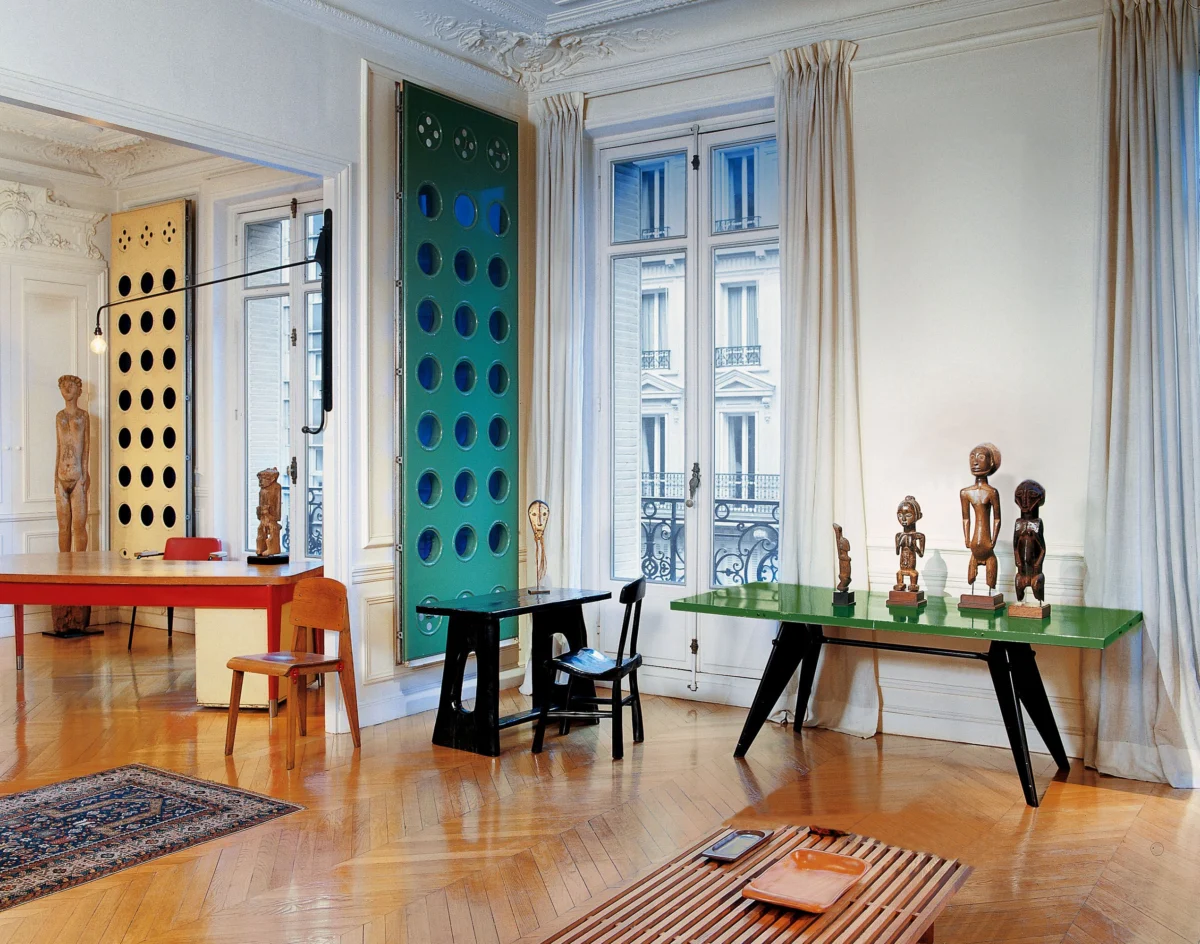
In the annals of 20th-century design, few figures bridge the gap between industrial engineering and high-art aesthetics as seamlessly as Jean Prouvé. While the French architect and designer is today celebrated for his "demountable houses" and utilitarian furniture that command millions at auction, his journey began in the heat of a blacksmith’s forge. In 1925, long before he became a pioneer of pre-fabricated housing, Prouvé was a young craftsman tasked with creating two massive wrought-iron doors for the Pavilion de Nancy at the Exposition Internationale des Arts Décoratifs et Industriels Modernes in Paris. This event, which served as the formal christening of the Art Deco movement, functioned as a crucible for Prouvé’s evolving philosophy. Exposed to the burgeoning modernist vernacular of the era, he transitioned from the decorative traditions of ironwork to a lifelong technical obsession with a more industrial medium: strong, malleable sheet steel.
By 1929, only four years after the Paris Exposition, Prouvé had fully abandoned the ornamental for the functional. He began integrating sheet steel into a wide array of architectural components, including doors, partitions, windows, and even elevator shafts. His vision was not merely to use steel as a decorative accent but to treat it as a fundamental building block that could be mass-produced. This industrial approach would eventually define his career, leading to the creation of residences, municipal buildings, ocean liners, and temporary structures that functioned like machines—streamlined, efficient, and modular.
The Technical Evolution of Ateliers Jean Prouvé
The core of Prouvé’s innovation resided in his factory near Nancy, France, known as Ateliers Jean Prouvé. From the early 1930s until 1953, this facility served as a laboratory for "tactical" architecture. Prouvé’s methodology was distinct from his contemporaries like Le Corbusier; while others focused on the theoretical "machine for living," Prouvé was a "constructeur"—a builder who understood the physical properties of his materials as intimately as a mechanic understands an engine.
The materials used at the Nancy factory evolved alongside global industrial trends. Initially, sheet steel was the primary medium, chosen for its structural integrity and ability to be folded and welded into rigid forms without the need for heavy frames. Following World War II, as aluminum production surged and the material became more accessible, Prouvé integrated this lighter metal into his designs. The transition was not merely aesthetic; it was a response to the logistical demands of the era. Many of his components featured signature porthole windows, a design choice that served multiple purposes: they invited natural light into the structures, reduced the overall weight of the metal panels, and provided a distinct nautical aesthetic reminiscent of the ocean liners he admired.

Weight reduction was a critical factor for Prouvé’s "relief structures." These were pre-fabricated buildings designed to be transported easily to remote locations or war-torn regions. In many instances, these structures were intended to be dropped on-site by aircraft, requiring a level of durability and lightness that only precision-engineered sheet metal could provide.
Chronology of a Modernist Visionary
To understand the trajectory of Prouvé’s influence, one must look at the specific milestones that defined his output. The following timeline outlines the shift from local craftsmanship to international architectural significance:
- 1924: Jean Prouvé opens his first workshop in Nancy, specializing in wrought iron.
- 1925: Participation in the Exposition Internationale des Arts Décoratifs et Industriels Modernes, marking his shift toward modernism.
- 1931: Establishment of "Ateliers Jean Prouvé," focusing on the mass production of furniture and architectural elements.
- 1939–1945: During World War II, Prouvé focuses on the development of demountable barracks for the French army and temporary housing for refugees.
- 1947: The Maxéville factory is established, allowing for larger-scale production of the "6×6" and "6×9" demountable houses.
- 1953: Following financial disputes with shareholders, Prouvé is forced to leave his factory, losing control of his production facility.
- 1954: Construction of the Maison Prouvé, his personal residence built on a challenging hillside in Nancy using surplus materials and "cast-offs."
- 1971: Prouvé chairs the jury that selects Renzo Piano and Richard Rogers to design the Centre Pompidou in Paris, signaling his lasting influence on high-tech architecture.
Post-War Utility and the Demountable House
The most significant application of Prouvé’s industrial philosophy occurred in the immediate aftermath of World War II. France faced a catastrophic housing shortage, and the Ministry of Reconstruction looked to industrial solutions to provide rapid shelter. Prouvé responded with his demountable houses—structures that could be assembled by a handful of men in a single day.
These houses were the epitome of his "catalog of parts" approach. Utilizing a central portal frame for support, the houses did not require deep foundations, making them ideal for the rugged terrain of a recovering nation. Despite their brilliance, these structures were often viewed by the public as temporary "shacks" rather than permanent homes. Consequently, only a limited number were produced, and many were eventually scrapped or forgotten. It was only decades later that architectural historians and collectors recognized these structures as masterpieces of 20th-century modular design.
The Personal Manifesto: Maison Prouvé
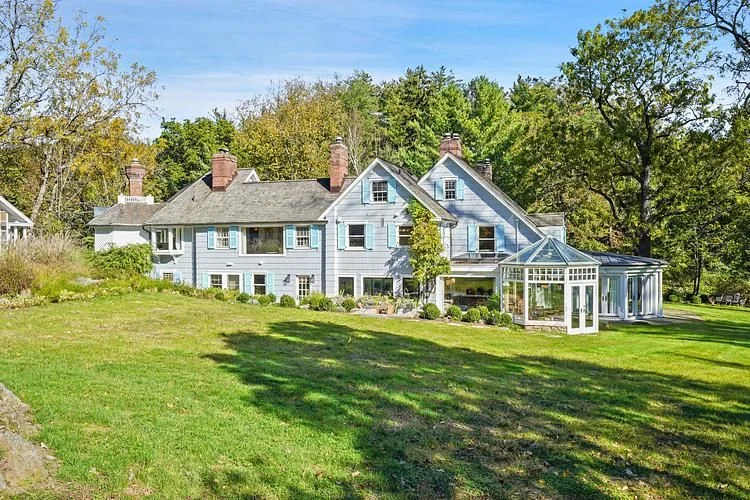
The year 1953 marked a painful turning point in Prouvé’s career. A lack of capital led to a takeover of his factory by Aluminium Français, and the "constructeur" found himself barred from his own workshop. In the wake of this professional exile, a cash-strapped Prouvé turned his attention to his own domestic needs. Using rejected components and cast-offs from his former factory, he built his own home in the hills overlooking Nancy.

Patrick Seguin, a prominent gallerist who has spent decades championing Prouvé’s work and collaborating with his estate, describes the house as a "personal manifesto." In this structure, doors, windows, and panels originally designed for mass-produced schools or hospitals were reintegrated into a warm, domestic setting. The house proved that industrial materials did not have to be cold or impersonal; when handled with Prouvé’s sensitivity to light and site, they could create a space of profound serenity and architectural integrity.
The Collector Market: From Utility to High Art
In the 21st century, the perception of Prouvé’s work has undergone a radical transformation. What was once considered "utilitarian surplus" is now among the most coveted material in the global design market. The scarcity of original components produced during his lifetime has driven prices to unprecedented levels. Original demountable houses, which were sold for the price of scrap metal in the 1960s, now fetch millions of dollars at auction houses like Christie’s and Sotheby’s.
This shift has created a unique niche in the interior design world. Prominent collectors and architects are increasingly sourcing original Prouvé components—doors, partitions, and windows—to integrate into modern luxury projects. In a soaring Manhattan apartment designed by AD100 designer Steven Volpe, an integrated Prouvé door serves as a functional centerpiece. Similarly, the luxury fashion brand The Row utilized Prouvé elements in their Paris boutique, blending the architect’s industrial grit with high-fashion elegance.
The institutional recognition of Prouvé’s work further cements his status. Major museums, including the Museum of Modern Art (MoMA) in New York and the Centre Pompidou in Paris, hold significant collections of his architectural fragments. These institutions treat a Prouvé door not just as a piece of hardware, but as a sculptural artifact that represents a pivotal moment in the history of human habitation.
Material Integrity and Modern Resonances
The enduring appeal of Prouvé’s work lies in its "material integrity," a term frequently cited by designers who work with his fragments. Unlike contemporary mass-produced items that often hide their construction, Prouvé’s work is honest. Every weld, every fold in the steel, and every bolt is visible, telling the story of how the object was made.

Steven Volpe, reflecting on the use of these historical fragments in modern interiors, emphasizes that they are far from decorative. "These fragments carry history, material integrity, and a modernist vision that still resonates today," Volpe explains. This resonance is particularly relevant in the current architectural climate, where there is a renewed interest in pre-fabrication, sustainability, and the adaptive reuse of industrial materials. Prouvé’s work provides a blueprint for how we might build in a world with diminishing resources: with efficiency, modularity, and an unwavering respect for the raw properties of metal.
Analysis of Broader Implications
The legacy of Jean Prouvé extends beyond the auction block. His work predicted the "High-Tech" architectural movement of the 1970s and 80s, influencing figures such as Norman Foster and Richard Rogers. By proving that industrial processes could produce soulfully designed environments, he challenged the traditional boundaries between the architect and the factory worker.
Furthermore, Prouvé’s focus on "tactical" architecture—structures that can be deployed quickly and adapted to different climates—remains a vital area of study for contemporary architects addressing the global housing crisis and climate displacement. While his components may now be the province of wealthy collectors, the principles behind them—lightweight construction, ease of transport, and modular flexibility—are more necessary now than they were in 1925.
As the design world continues to look backward to move forward, Jean Prouvé stands as a reminder that true innovation often comes from a "crush" on a single material and the courage to rethink the very doors through which we enter our homes. His transition from the wrought iron of the Art Deco era to the sleek, portholed steel of the mid-century represents not just a change in style, but a fundamental shift in how humanity conceives of the built environment: as a mass-produced, yet deeply personal, endeavor.