Ana Megawati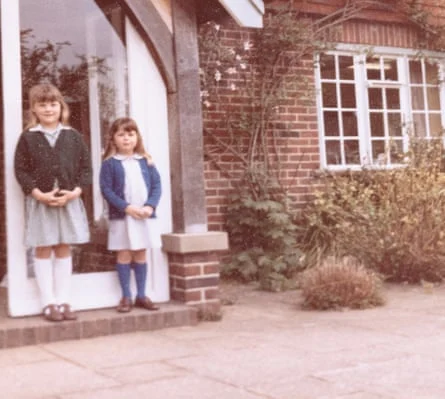
The intricate tapestry of sibling relationships often presents a profound paradox: individuals raised within the same family, sharing fundamental life experiences, invariably emerge with distinct and often divergent childhoods. This phenomenon, while commonly attributed to birth order theory, is in fact a complex interplay of numerous environmental, psychological, and social factors that shape each child’s unique developmental trajectory.
Beyond Birth Order: The Intricacies of Family Dynamics
Birth order theory posits that a child’s position in the family hierarchy significantly influences personality and potential. Firstborns, for instance, are often perceived as entering an adult-centric world, exposed to mature language and behaviour, and receiving undivided parental attention from anxious yet eager first-time parents. Their infancy is markedly different from that of subsequent children. Second-borns typically find a toddler as a primary role model, ally, or nemesis, often inheriting rather than receiving new possessions, and inherently sharing parental attention with an older sibling. Parents, by this stage, are often more experienced but also more fatigued. Youngest children frequently benefit from the most relaxed, albeit most exhausted, parental approach, often being afforded greater leniency.
While birth order offers a compelling initial framework, it provides an incomplete explanation for the nuanced ways siblings grow up "together apart." A comprehensive understanding necessitates a deeper examination of the multifaceted elements underpinning familial roles. These include the prevailing home environment, the stability and nature of the parents’ relationship, their professional pressures, and the specific expectations placed on each child due to gender, aptitude, or additional needs. Furthermore, profound family traumas, such as the loss of a child, can irrevocably alter the landscape of a family, shaping the remaining children’s experiences in unique and often deeply personal ways.
The Subjectivity of Shared History and the "Slipperiness of Memory"
A significant challenge in reconciling sibling narratives stems from the inherent "slipperiness of memory," which is often imbued with powerful emotions. Human memory is not a perfect recording device; it is reconstructive, influenced by present feelings, biases, and the desire to frame one’s own story in a particular light. Individuals tend to cling most fiercely to memories where they perceive themselves as innocent, victimized, or singularly impacted. This subjective framing often leads to profoundly different recollections of the same events, making it difficult to construct a coherent, agreed-upon family history.

When siblings attempt to piece together their pasts, the revelation of these parallel, yet distinct, histories can be disorienting. Hearing another’s version of events often compels a strange recalibration, prompting individuals to reconsider their own starring role in the family saga. This process, while potentially painful as it challenges long-held personal narratives, is crucial for fostering deeper understanding and empathy among siblings.
A Case Study in Familial Divergence: The Carr Sisters
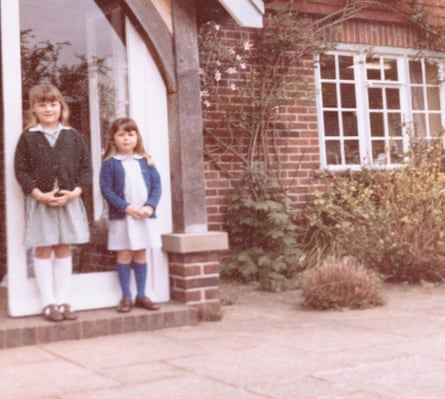
The experiences of Catherine Carr, a middle child in a trio of sisters, powerfully illustrate these dynamics. Born 22 months after her older sister, Bex, and six years before her youngest sister, CJ, Carr’s early childhood was marked by a seemingly conventional family structure. In 1984, when Carr was six and CJ just months old, the family relocated from the UK to the Netherlands, settling near the sea in Scheveningen. For approximately six years, the sisters attended the local British school, experiencing a shared environment.
However, this shared reality was dramatically fractured when Carr was 11. Her mother moved out, taking CJ with her to live in a nearby town with a new partner. Bex and Carr remained with their father for another year before returning to the UK with him. This period initiated a profound divergence in their childhoods. Both parents subsequently remarried, introducing step-parents and step-siblings. With each parent’s new spouse bringing two children, the original trio of sisters became part of a complex blended family of seven children, geographically separated across two countries.
This specific chronology underscores how swiftly family units can transform and how individual experiences within that transformation vary significantly based on age and immediate circumstances. Carr’s experience of her mother leaving at 11 was distinct from CJ’s, who, at six, lost not only her home and father but also her older sisters. Bex, at 13, faced yet another set of challenges related to her developmental stage. The ways in which each sister was "permitted" to grieve or adapt to the situation were often dictated by their birth order and perceived maturity, overlooking the unique vulnerabilities each age presented.
The "Non-Shared Environment" and Its Long-Term Impact
The physical separation of the Carr sisters served as a stark, uncontrolled experiment in the "non-shared environment" theory. This theory posits that even siblings sharing genetics and a home experience many unique elements within their specific environments. They interact differently with parents, encounter distinct teachers and peer groups, and face unique personal challenges. In the Carr sisters’ case, the non-shared environment was amplified by geographical distance and differing household compositions.
During the 1990s, the lack of ubiquitous digital communication tools meant maintaining close relationships across countries was exceptionally challenging. There was no internet, email, or instant messaging. Photographs required physical development and postage. This logistical barrier meant the sisters missed out on the "mundane glue" of daily sibling interaction—the arguments over the TV remote, the shared snacks, the unremarkable Sunday afternoons spent together. This absence created vast spaces between their realities, from trivial differences like unfamiliar biscuit brands and washing powder scents in each other’s homes, to profound discrepancies like living with only one parent in a different country. They couldn’t easily discuss their daily lives, teachers, or friends during visits, leading to "missed stitches" in the fabric of shared memories that typically binds siblings.
Psychological research consistently highlights the importance of these mundane, everyday interactions in forging strong sibling bonds and a shared sense of identity. The absence of such common experiences can leave a void, making it harder for siblings to "go fishing" in a reservoir of collective memories as adults. Studies on the long-term effects of parental divorce indicate that while siblings may share the trauma, their coping mechanisms and the specific impacts on their development can vary widely depending on their age at the time of separation, their relationship with each parent, and the subsequent family structures.
The analogy of families forming along rivers illustrates this concept: children are placed onto a rolling stream, but the conditions of the water change with time. Parents age, their financial situations fluctuate, illnesses may strike, and family structures evolve through separation or remarriage. New members enter, old ones depart, and the environment itself shifts. This constant flux ensures that each child, even those born relatively close in age, navigates a distinct "river" of experience. For instance, the sudden death of a parent, while a shared trauma, impacts a 19-year-old university student differently from a 17-year-old preparing for school exams at home. Their individual coping mechanisms and the stories they construct around the tragedy will diverge, united in grief but unique in experience.
Reconciling Narratives: The Adult Sibling Journey
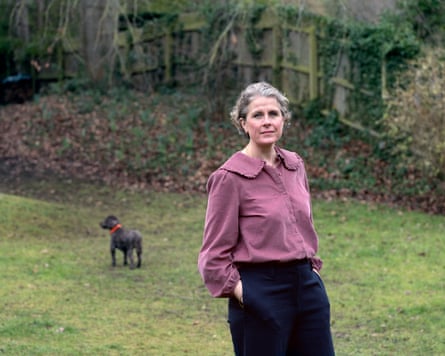
For siblings who have experienced significant divergence, the process of consciously sketching out their pasts for each other as adults becomes crucial. Now in their 40s, the Carr sisters have undertaken this challenging work, striving for a comprehensive understanding of each other’s perspectives. This often involves the painful realization that parallel histories exist with equal vividness in each sister’s mind, leading to exclamations of "I had no idea. I’m so sorry. I never knew."
Even in families without such dramatic disruptions, sharing memories can be fraught. Each sibling experiences childhood from a unique vantage point—as the oldest, middle, or youngest. While this provides an intimate, unparalleled understanding of family dynamics, it also means perspectives are inherently subjective. As sibling therapist Erin Runt explains, "No one else has that really intimate knowledge of those early years of your life, nobody else understands the nuance of it. They’re the only person who can go back and be like, ‘Was Dad always cranky?’ ‘Were you always the golden child?’… And even if they had an alternate interpretation, they were still there. So if you’re trying to figure out the truth, in so far as there is such a thing, there are so few people in this world who can help you do that."
Yet, this process is inherently imperfect. A sibling’s perspective, like a camera filming from another part of the room, captures certain cues while missing others that an individual may have zoomed in on. The result is often a distortion of one’s long-replayed "faithful record of events." A childhood fear of the ocean, rooted in a terrifying encounter with waves at age three, might be incomprehensible to an older brother who, on the same day, happily paddled in shallows where the waves barely reached his shins. Both realities are true simultaneously.
From Vertical to Horizontal: Evolving Sibling Bonds
The hierarchical bonds formed in childhood, often determined by age, naturally flex and evolve as circumstances change and siblings mature. For many, the transition from playmates to teens and then to fully formed adults independent of parental influence involves a gradual shift from a vertical relationship—where one is "bigger" or "smaller," "ahead" or "behind"—to a more horizontal, peer-like connection. This transformation is significantly aided by open communication and the willingness to revisit and understand divergent pasts.
Revisiting shared challenges as adults, with a more mature perspective, can be profoundly revealing. It allows for a collaborative pruning and editing of memories, often with less emotional intensity than in younger years. The goal is not necessarily to arrive at a single, definitive truth, but to honor each person’s "truth" and move forward with greater mutual understanding. This process can help nudge relationships towards an even-handed friendship, providing a unique sense of belonging and intimacy.
The consolation derived from adult sibling relationships is profound, especially in a world that often feels increasingly complex and confusing. Despite being imperfect keepers of each other’s histories, siblings represent an unparalleled continuity. The prospect of knowing and loving a sister for 70 or 80 years underscores the singular endurance of these bonds.
Gatherings like the 50th birthday celebration for Catherine Carr’s older sister, where both parents, their spouses, all partners, step-siblings, children, and even pets convene, demonstrate the enduring resilience of these complex family units. Such moments, glittering with memories of past joys, signify that new chapters are constantly being added to the family story.
The challenges inherent in these relationships, particularly those forged across diverse experiences, ultimately strengthen the bonds. The ability to talk about the past and shape a shared vision for the future helps create sturdy foundations, capable of weathering the inevitable difficulties of aging parents and future grief. This conscious effort allows siblings to transition from childhood playmates to independent adults, eventually forging meaningful rapport strong enough to navigate life’s subsequent chapters—together.