Reynand Wu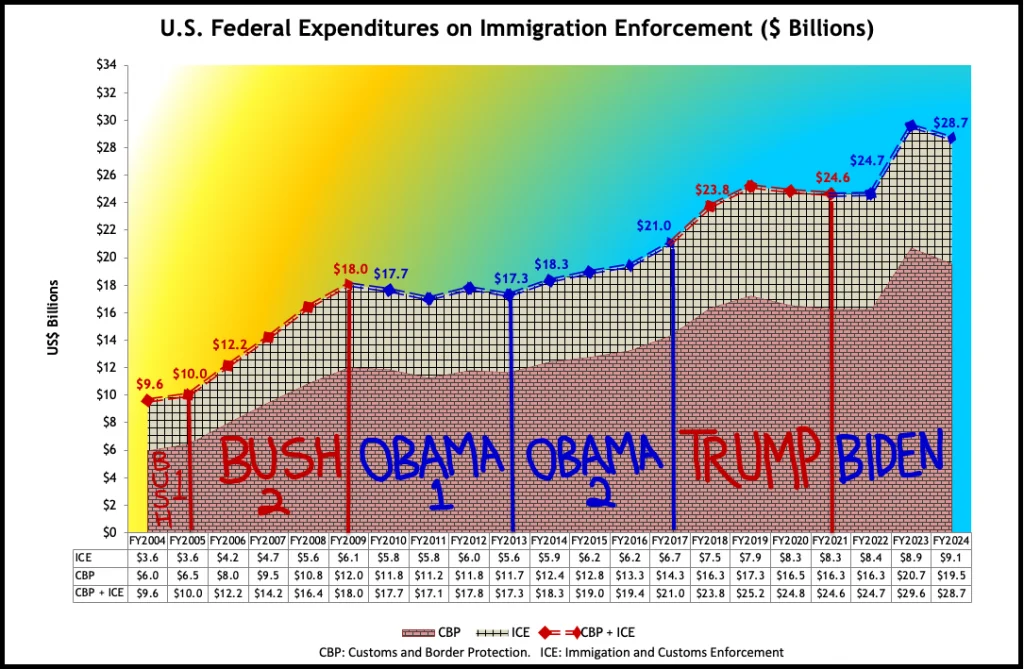
State borders, far from being natural geographical features, are complex constructs born from political conflict, nationalist narratives, and disparate economic systems, sustained by monumental public financial investment. Public policy and prevailing political discourse frequently normalize these divisions, often obscuring their arbitrary and sometimes violent origins. Beyond merely delineating territory post-conflict, borders perform crucial social functions, serving to maintain distinct political systems and to differentiate between "insiders" and "outsiders." Economically, they solidify disparities through the enforcement of unequal trade relations, national currencies, and divergent value regimes across sovereign states and regional blocs.
The Post-9/11 Securitization of the U.S. Border
The paradigm shift in U.S. border policy was dramatically accelerated in the aftermath of the September 11, 2001, terrorist attacks. This pivotal moment allowed state officials to seamlessly merge the discourse of anti-terrorism with that of border regulation, thereby initiating an unprecedented era of securitization, particularly along the U.S.-Mexico frontier. This strategic rhetorical alignment justified a massive reallocation of resources and a significant expansion of federal power dedicated to border control.
In response to the 9/11 attacks, President George W. Bush’s administration enacted the Homeland Security Act of 2002, fundamentally restructuring federal agencies responsible for national security. This landmark legislation led to the creation of the Department of Homeland Security (DHS), a colossal new cabinet department designed to unify various agencies under a single, overarching mission of protecting the nation. Within DHS, two key agencies emerged as central pillars of immigration enforcement: U.S. Customs and Border Protection (CBP) and U.S. Immigration and Customs Enforcement (ICE).
CBP, self-proclaimed as "one of the world’s largest law enforcement organizations" (CBP, 2020), explicitly states its primary mission is "to detect and prevent the illegal entry of individuals into the United States" and "maintain borders that work" (CBP, 2021). Its mandate encompasses securing land borders, ports of entry, and coastal areas. ICE, on the other hand, asserts its mission is "to protect America from the cross-border crime and illegal immigration that threaten national security and public safety" (ICE, 2022), focusing more on interior enforcement, detention, and deportation. The creation and expansion of these agencies marked a profound commitment to the physical and bureaucratic enforcement of national boundaries.
A Chronicle of Escalating Expenditure
The financial commitment to this securitization has been staggering and relentless. Over a 21-year period, from the inception of DHS in 2002 through fiscal year 2024, both Democratic and Republican administrations have collectively channeled an immense $409.4 billion of public funds into immigration enforcement and border security. This figure, unadjusted for inflation, underscores a bipartisan consensus on increasing border funding, despite significant rhetorical differences between the two major political parties.
A closer examination of the spending reveals the scale of this investment:
- Total Republican Spending: $178.9 billion, averaging $17.9 billion annually.
- Total Democratic Spending: $230.5 billion, averaging $21.0 billion annually.
This data strikingly illustrates that Democratic presidents have, on average, approved higher annual budgets for border enforcement than their Republican counterparts. This trend challenges the common perception that Democrats are inherently less inclined towards robust border security measures. Of the total expenditure, approximately $275 billion has been allocated to CBP, primarily for border patrol, surveillance technology, and infrastructure like border walls, while $134.4 billion has gone to ICE, funding interior enforcement, detentions, and deportations.
The growth in federal expenditures on immigration enforcement is dramatic. From $9.6 billion in Fiscal Year 2004, the budget surged to an estimated $28.7 billion for Fiscal Year 2024. While these figures are unadjusted for inflation, even when accounting for inflation to 2024 dollars, the increase remains substantial, rising from approximately $17.5 billion to $28.7 billion. This represents an almost tripling of real spending over two decades, signifying a sustained and escalating commitment to border securitization regardless of the party in power.
The Bipartisan Illusion: Rhetoric Versus Reality
The persistent growth in border enforcement budgets under both Republican and Democratic administrations casts a critical light on the political performativity often seen in partisan debates surrounding immigration. While Democratic presidents and their party platforms frequently articulate a more pro-immigrant stance, advocating for pathways to citizenship, humane treatment, and addressing root causes of migration, their budgetary actions tell a different story. Similarly, Republican rhetoric, often emphasizing "tough on crime" and "secure the border" narratives, aligns directly with their funding decisions.
The data reveals a practical convergence: despite divergent public messaging, both parties have consistently prioritized and expanded the border policing apparatus. This apparent contradiction is deeply rooted in the fundamental dynamics of bourgeois liberal democracy, where elected representatives, while ostensibly serving the will of the populace, often find themselves representing the interests of a ruling elite—encompassing economic, political, and racial power structures. The securitization of the border serves various interests, from defense contractors and technology firms benefiting from lucrative government contracts to political factions seeking to project an image of strength on national security.
For instance, former President Barack Obama, a Democrat, was often dubbed "deporter-in-chief" by immigrant rights advocates due to the high number of deportations during his tenure, even as his administration pursued comprehensive immigration reform proposals. More recently, President Joe Biden, another Democrat, despite campaigning on a promise to reverse some of his predecessor’s hardline policies, has continued and even expanded certain enforcement measures. In October 2023, the Biden administration controversially waived no fewer than 26 federal regulations—including the National Environmental Policy Act, the Clean Air Act, and the Safe Drinking Water Act—to construct additional segments of a border wall between the U.S. and Mexico in Texas. This move, echoing the actions of his Republican predecessor Donald Trump, ahead of the 2024 presidential election, underscored the powerful political pressures that often override stated ideological commitments. It suggests that in the absence of a robust, unified progressive ideological agenda within the Democratic Party, the default response to immigration challenges often defaults to increased enforcement and securitization, frequently manifesting as anti-immigrant violence and policy.
Broader Implications: Social, Economic, and Human Costs
The immense financial investment in border enforcement carries far-reaching social, economic, and humanitarian implications that extend beyond mere budgetary figures.
Economic Impacts:
- Opportunity Costs: The nearly half-trillion dollars spent on border enforcement represents funds that could have been directed towards other critical public services such as education, healthcare, infrastructure development, or poverty reduction programs.
- Economic Disruption: While proponents argue border enforcement protects national economies, restrictive border policies can also disrupt cross-border commerce, limit the availability of labor, and impact agricultural sectors reliant on migrant workers.
- The "Border Industrial Complex": The continuous demand for surveillance technology, detention facilities, and personnel has fueled a burgeoning "border industrial complex," with private corporations profiting significantly from government contracts related to enforcement. This creates powerful lobbying interests that often advocate for sustained or increased border funding, irrespective of actual security needs or humanitarian concerns.
Social and Humanitarian Consequences:
- Humanitarian Crisis: Increased border securitization has pushed migrants into more dangerous routes, leading to a tragic rise in deaths and injuries. Family separations, both at the border and through interior enforcement, inflict profound trauma on individuals and communities.
- Civil Liberties Concerns: The expansive powers granted to CBP and ICE, including surveillance capabilities and enforcement zones extending deep into the interior, raise significant concerns about civil liberties, particularly for residents of border communities and those perceived as foreign.
- Racial Profiling and Discrimination: Critics argue that heightened enforcement often leads to racial profiling and discrimination, disproportionately affecting Hispanic and other minority communities.
- Detention and Deportation: The vast network of detention centers, many operated by private companies, has been widely criticized for conditions, lack of due process, and human rights abuses. The high rates of detention and deportation fragment communities and create a climate of fear.
Political and Geopolitical Ramifications:
- Strained International Relations: Aggressive border policies can strain diplomatic relations with neighboring countries, particularly Mexico, impacting cooperation on trade, environmental issues, and security.
- Perpetuation of Nationalist Ideologies: The continuous emphasis on "securing the border" reinforces nationalist narratives that differentiate between "us" and "them," potentially fueling xenophobia and hindering efforts towards more inclusive societal models.
- Policy Inflexibility: The massive infrastructure and bureaucratic apparatus built around border enforcement can create policy inflexibility, making it difficult to pivot towards more comprehensive, humane, or economically rational immigration solutions.
Looking Ahead: The Enduring Challenge
The narrative presented by the data is clear: the United States has invested, and continues to invest, colossal sums in constructing and upholding its borders. This investment is not merely financial; it is an investment in a particular vision of national identity, security, and economic differentiation. The fact that this commitment transcends partisan divides suggests a deeply entrenched political and economic logic that prioritizes enforcement over alternative approaches.
The October 2023 decision by the Biden administration to waive environmental and other regulations for border wall construction serves as a stark reminder of this enduring consensus. It highlights how the political imperative to appear "tough on the border," particularly in the run-up to elections, often overrides environmental concerns, indigenous rights, and even prior policy commitments.
Substantive progress towards de-carcerating the United States and de-securitizing the U.S.-Mexico border would necessitate a fundamental re-evaluation of these priorities and a shift in political power dynamics. It would require progressives to exert greater influence in Congress and for Congress, in turn, to assert greater oversight and control over budgetary allocations and immigration enforcement agencies. In the current political landscape, however, where the "border crisis" remains a potent political wedge issue, the trajectory of escalating enforcement and expenditure appears set to continue, further entrenching the economic and political architecture that defines and reinforces national borders.