Layla Zulfa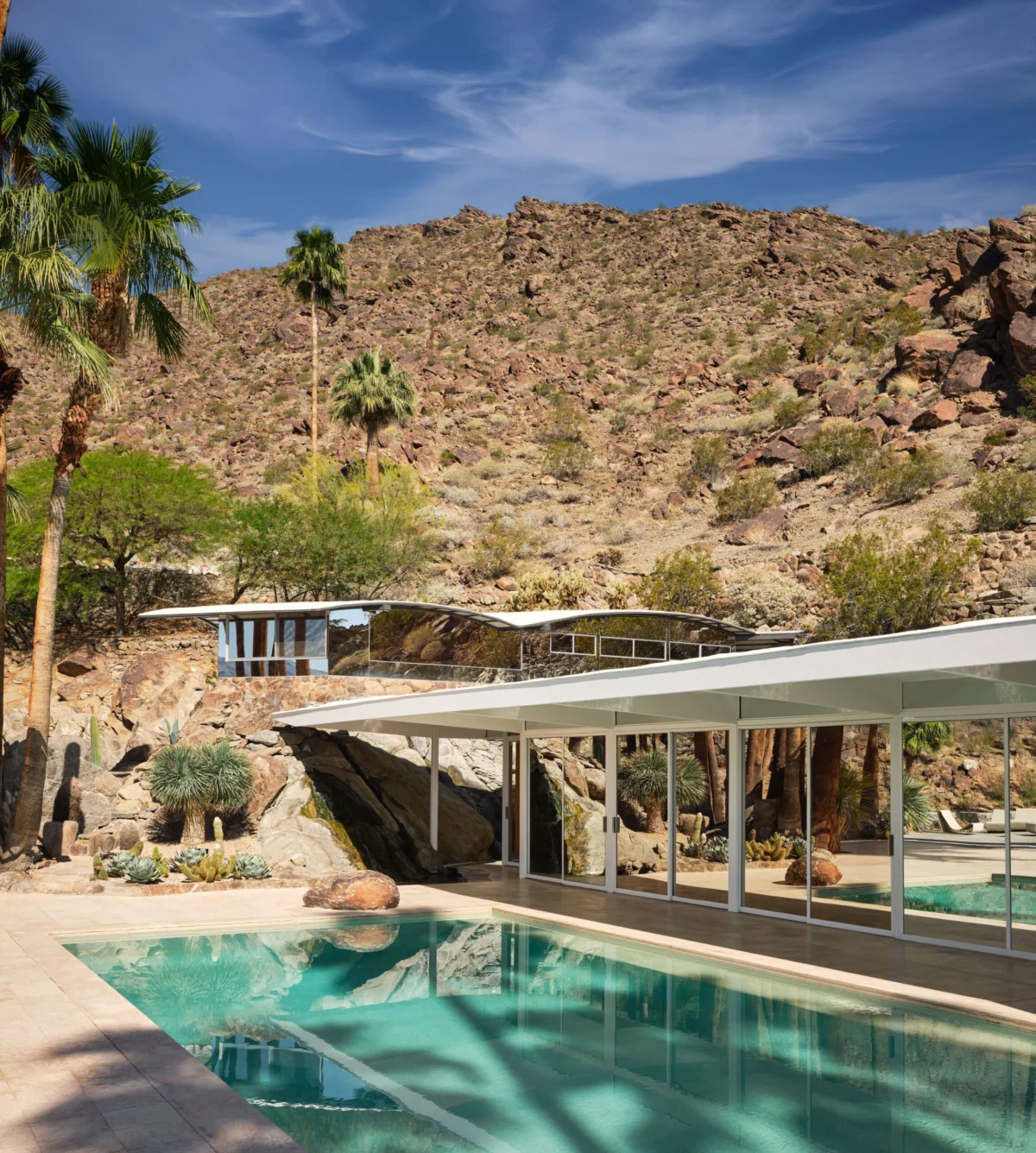
The Burgess House, a sprawling mountainside estate in Palm Springs, California, has long occupied a peculiar position within the canon of American midcentury modernism. While the Coachella Valley is celebrated globally for its concentration of desert modern masterpieces—most notably Richard Neutra’s Kaufmann Desert House, E. Stewart Williams’s Twin Palms estate for Frank Sinatra, and Albert Frey’s Frey House II—the Burgess House remained, until recently, a hidden gem obscured by both physical flora and a fragmented historical narrative. Today, under the meticulous stewardship of designer and art historian Ronnie Sassoon and documentary filmmaker James Crump, the property has undergone a rigorous restoration that clarifies its architectural lineage and re-establishes its significance as a collaborative triumph between two of the region’s most influential architects: Hugh Kaptur and Albert Frey.

The Architectural Genesis: From Cottage to Complex
The history of the Burgess House is a multi-decade saga of evolution and expansion. The property’s origins date back to 1957, a period of intense creative output in Palm Springs. At the time, Hugh Kaptur, who had not yet attained his architectural license, was commissioned to design a modest 1,200-square-foot residence. This original "kernel" of the house was a classic post-and-beam cottage characterized by the hallmarks of early desert modernism: a flat roofline, floor-to-ceiling glass curtain walls, and deep cantilevered eaves designed to mitigate the intense California sun.
Roughly ten years after the initial construction, the property entered a new phase of development under the direction of Albert Frey. Frey, a Swiss-born architect who had worked with Le Corbusier in Paris before moving to the United States, is widely considered the father of "Desert Modernism." His approach was defined by a profound sensitivity to the rugged topography of the Coachella Valley, often integrating natural rock formations directly into his structures.

From 1968 through the late 1980s, Frey expanded the Burgess House in several stages. He introduced a language of arched balustrades and vaulted shade structures that softened the rigid geometry of Kaptur’s original design. In 1968, Frey added a stone rampart that anchored the house to its steep, dynamited hillside location. By 1980, he had installed vaulted shade structures made of stretched canvas, and in 1989, he completed his final major addition: a guest pavilion that serves as a masterclass in architectural dematerialization.
Stewardship and the Preservation of Modernist Legacies
The restoration of the Burgess House was made possible by the arrival of Ronnie Sassoon and James Crump, two individuals with a proven track record of preserving significant modernist residences. Sassoon, an accomplished designer and widow of the legendary hairstylist and tastemaker Vidal Sassoon, previously oversaw the renovation of Neutra’s Singleton House in Los Angeles. Crump, a curator and filmmaker, has dedicated much of his career to documenting the lives of influential modernists, including Marcel Breuer and Robert Mapplethorpe.

Before acquiring the Burgess House, the couple resided in Neutra’s Levit House in Los Angeles and Breuer’s Stillman House II in Litchfield, Connecticut. Their decision to move to Palm Springs was prompted by a chance encounter with the Burgess House while touring the neighboring Frey House II. Struck by the home’s dramatic positioning—perched like a "modern domestic utopia" atop a medieval-style stone embankment—the couple monitored the property until it became available on the market following a Frey retrospective at the Palm Springs Art Museum.
The Restoration Process: A Philosophy of Distillation
Upon taking possession of the property, Sassoon initiated a renovation project that she describes as a "distillation." Over the decades, the house had been shrouded in dense banks of bougainvillea and cluttered with ornamental outdoor urns and defunct mechanical systems. The renovation, executed in collaboration with the design-build firm Studio Veren and the renowned architectural firm Marmol Radziner, sought to strip away these inapposite layers to reveal the structure’s "platonic ideal."

Key aspects of the restoration included:
- Vegetation Management: The removal of overgrown bougainvillea restored the visibility of the home’s sharp modernist forms. These were replaced with architectonic cacti, which require less water and better complement the desert landscape.
- Structural Refinement: Defunct rooftop equipment was removed, and the home’s exterior walkways were cleared to emphasize the "labyrinthine" nature of the site’s stone tunnels and paths.
- Interior Modernization: While the original floor plan remained largely intact, Sassoon designed a high-performance, stainless-steel kitchen. Executed by Marmol Radziner, the kitchen features a camouflaged door to the primary bedroom that blends seamlessly with the cabinetry and appliances.
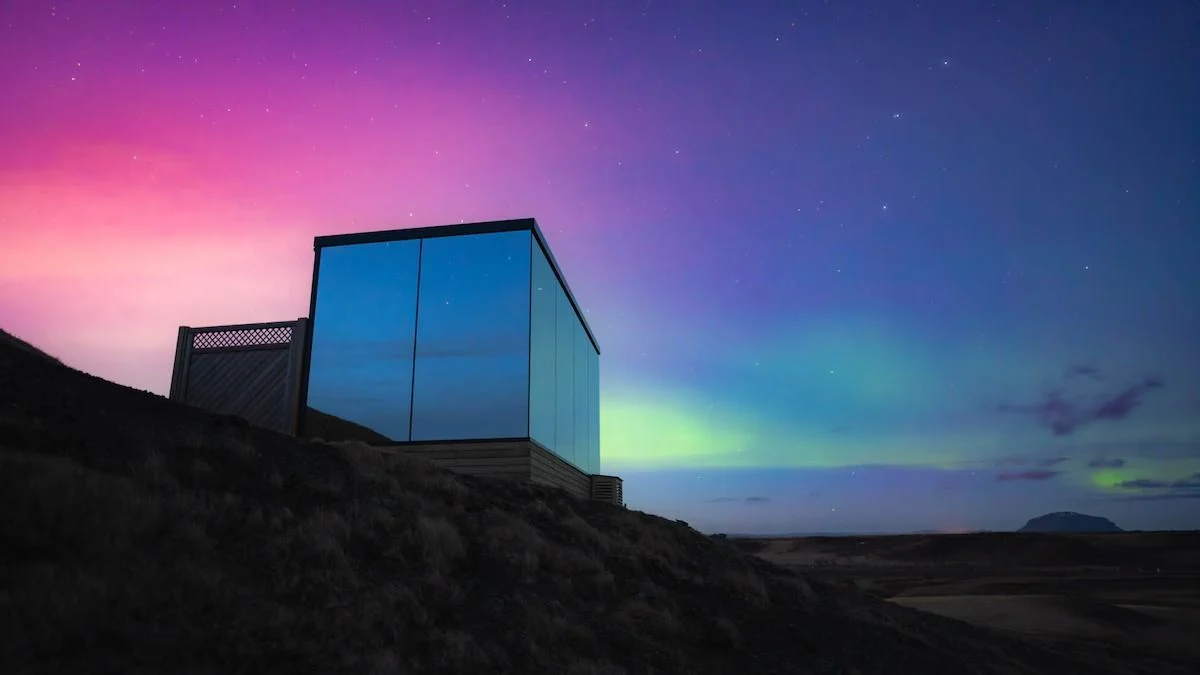
- The Guest Pavilion: The 1989 guest pavilion, with its barrel-vaulted roof and mirrored glass skin, was carefully preserved. The mirrored exterior reflects the surrounding mountains and palm trees, effectively making the building disappear into the environment.
Interior Design and the Integration of Fine Art
The interiors of the Burgess House serve as a gallery for Sassoon’s extensive collection of 20th-century art and design. The decor is governed by a principle of "weight and scale," necessitated by the massive boulders that Frey incorporated into the living areas. These natural formations, which Sassoon notes "channel the energy of the mountain," require substantial furnishings that do not appear "dainty" in comparison.

The living room features an ensemble of museum-quality pieces, including:
- Sculpture: An Alexander Calder mobile crowns the fireplace, complemented by an Étienne Hajdu cast-aluminum wall relief and a Lucio Fontana terracotta floor sculpture. A Pino Pascali steel wool sculpture hangs from the ceiling in the screening area.
- Furniture: The home is furnished with signature pieces by Jean Prouvé, Charlotte Perriand, and Alexandre Noll. Modern additions include a Marc Newson marble cocktail table, modular Mario Bellini seating, and Verner Panton "Flying Chair" prototypes.
- Text and Form: A Lawrence Weiner text piece is applied directly to a ceiling beam, while the primary bedroom features a painting by the Italian artist Dadamaino, reflecting Sassoon’s interest in the Zero group and the Arte Povera movement.
Chronology of the Burgess House
- 1957: Original 1,200-square-foot cottage designed by Hugh Kaptur.
- 1968: Albert Frey begins expansion; adds stone rampart and arched balustrade.
- 1980: Frey installs vaulted canvas shade structures.
- 1989: Completion of the mirrored guest pavilion and final Frey additions.
- 2020s: Acquisition by Ronnie Sassoon and James Crump; commencement of full-scale restoration.
- 2026: Completion of the project and publication in major architectural journals.
Broader Impact and the Economics of Desert Modernism
The successful restoration of the Burgess House highlights the growing importance of architectural tourism and preservation in the Coachella Valley. According to data from the Palm Springs Bureau of Tourism, events like Modernism Week contribute over $50 million annually to the local economy. The preservation of "secondary" modernist landmarks—those not initially as famous as the Kaufmann or Sinatra houses—is crucial for maintaining the city’s status as a living museum of 20th-century design.

Furthermore, the Burgess House restoration underscores the shifting values in the high-end real estate market. There is an increasing premium placed on "architectural provenance." Properties with documented links to figures like Frey, Neutra, or Kaptur often command prices 20% to 50% higher than non-architectural homes of similar size in the same neighborhood. By clarifying the attribution of the Burgess House to both Kaptur and Frey, Sassoon and Crump have not only preserved a piece of history but have also significantly enhanced the property’s cultural and financial value.
Conclusion: A Vision of Crystalline Light
For the current residents, the allure of the Burgess House is as much about the environment as it is about the architecture. James Crump describes the home’s visual experience in cinematic terms, noting the "wide-screen ratio" of the Coachella Valley views framed by Frey’s deep eaves. The interaction of "clean, crystalline desert light" with the mirrored surfaces of the guest pavilion and the rugged textures of the mountainside creates a living environment that is in constant flux.

Through their rigorous approach to restoration, Sassoon and Crump have ended the "fog of improper attribution" that once surrounded the Burgess House. It now stands as a clear, articulated example of how midcentury modernism can be adapted and expanded over decades without losing its core identity. As Palm Springs continues to grapple with the pressures of development and the effects of climate change, the Burgess House serves as a model for how the region’s architectural past can be thoughtfully carried into the future.