Kang Muslim
The formation of meaningful human relationships, once regarded as an intangible or "magical" aspect of the human experience, is increasingly being recognized by the global scientific community as a measurable, predictable, and highly complex process. Recent breakthroughs across the disciplines of neuroscience, sociology, and behavioral psychology have begun to map the specific mechanisms that draw individuals together. From the physical layout of a classroom to the synchronized firing of neurons in the prefrontal cortex, researchers are identifying a multi-layered architecture of connection that governs how we select, maintain, and benefit from our social circles. As modern society grapples with an escalating "loneliness epidemic"—which the World Health Organization and various national surgeon generals have identified as a major public health crisis—this research provides a critical framework for understanding how to foster more resilient social infrastructures.
The Geography of Connection: Proximity and Social Infrastructure
The foundational layer of friendship formation is often determined not by shared values or interests, but by the simple logistics of physical space. For decades, sociologists have pointed to the "mere exposure effect," a psychological phenomenon where individuals develop a preference for people or things simply because they are familiar. Recent empirical data has reinforced this theory, specifically within the context of developmental environments.
A landmark study published in the journal Frontiers in Psychology analyzed the social habits of 235 children across grades three through five. By cross-referencing teacher-assigned seating charts with friendship nominations over a fourteen-week period, researchers observed a direct correlation between physical distance and social bonding. When seating assignments were changed, the likelihood of a child forming a new friendship with their immediate neighbor increased exponentially. This suggests that for children, "forced proximity" serves as a primary catalyst for social discovery, lowering the barrier to entry for interaction.
This reliance on physical space does not dissipate with age; rather, it shifts into the realm of "social infrastructure." A scoping review in the Community Development Journal, which synthesized findings from 37 separate research papers, highlighted the role of community centers, parks, and local clubs in fostering adult relationships. The data indicates that structured environments provide "predictable prompts" for interaction. These spaces act as neutral ground where strangers can discover shared similarities in a low-stakes environment. Urban planners and sociologists argue that the decline of these "third places"—spaces outside of home and work—is a significant contributor to modern social fragmentation. The presence of physical community spaces allows for "passive sociability," where repeated, unplanned encounters eventually transition into intentional relationships.
The Personality Matrix: Similarity, Complementarity, and Social Positioning
While physical space brings people together, personality traits act as the filter that determines which acquaintanceships survive the test of time. A long-standing debate in social psychology—whether "birds of a feather flock together" or "opposites attract"—has been addressed through recent network analysis. Research involving 162 college students in China, published in the Journal of Behavioral Data Science, revealed a nuanced, U-shaped relationship between personality types and friendship.
The study utilized the "Big Five" personality framework—Openness, Conscientiousness, Extraversion, Agreeableness, and Neuroticism—to map social webs. The results showed that while people are indeed drawn to those with highly similar profiles (supporting the homophily principle), they are also drawn to those with starkly different profiles. This suggests that human connection thrives on both the comfort of shared perspectives and the functional benefits of complementary traits. For instance, a highly organized individual may find value in a friendship with a more spontaneous partner, provided there is a baseline of mutual respect.
Furthermore, specific traits dictate an individual’s "topography" within a social network. Research from Frontiers in Psychology involving 82 college sophomores found that individuals with high "interpersonal self-efficacy"—a belief in one’s own communicative competence—inevitably migrate toward the center of social webs. These individuals act as "hubs," connecting disparate groups. Conversely, a study of university students in the Netherlands, published in the Journal of Social and Personal Relationships, found that "agreeableness" did not always correlate with a high number of friends. In highly competitive academic environments, agreeable individuals were sometimes found to have fewer connections, potentially as a defense mechanism to avoid the social friction and conflict inherent in large, overlapping networks.
The Transition Crisis: The Effort Gap in Young Adulthood
One of the most significant challenges in the lifecycle of friendship occurs during the transition from structured environments, like high school, to the more fluid environments of university and professional life. A qualitative study from the Journal of Adolescence focused on 21 university students in the United Kingdom, revealing a profound "expectation-reality gap" regarding social life.
In secondary education, friendships are often the byproduct of shared schedules and mandatory proximity. However, the study found that many young adults enter university expecting this "automatic" friendship model to continue. When faced with the vast, decentralized nature of a university campus, students reported feelings of exhaustion and overwhelm. The data suggests that forming adult friendships requires a level of "active organization" and "social labor" that many are unprepared for. This phenomenon is exacerbated by social media, which often portrays an idealized, effortless version of college social life, leading those who struggle to feel uniquely isolated. This "effort gap" highlights the need for better social transition programs that teach young adults the practicalities of networking and community building.
Engineering Intimacy: Can Connection Be Taught?
Recognizing the difficulty many face in forming bonds, behavioral scientists have begun testing interventions designed to "fast-track" intimacy. One of the most successful models is the "Fast Friends" procedure, a psychological exercise involving escalating self-disclosure. A study in the Journal of Research on Adolescence applied this to 301 middle school students. By pairing students and having them answer increasingly personal questions, researchers were able to significantly increase feelings of interpersonal closeness in just three sessions.
Crucially, the study found that this method was effective regardless of the participants’ ethnic or socioeconomic backgrounds. This suggests that "guided vulnerability" can bridge cultural divides that might otherwise remain obstacles in a natural setting. Similar successes have been seen in programs for adults with learning disabilities. Research in the International Journal of Inclusive Education demonstrated that a twelve-session curriculum involving role-playing and video analysis helped participants identify "toxic" behaviors and gain the confidence to initiate conversations. These findings suggest that social skills are not merely innate talents but are competencies that can be refined through structured, experiential learning.
The Neurobiology of the "Social Brain"
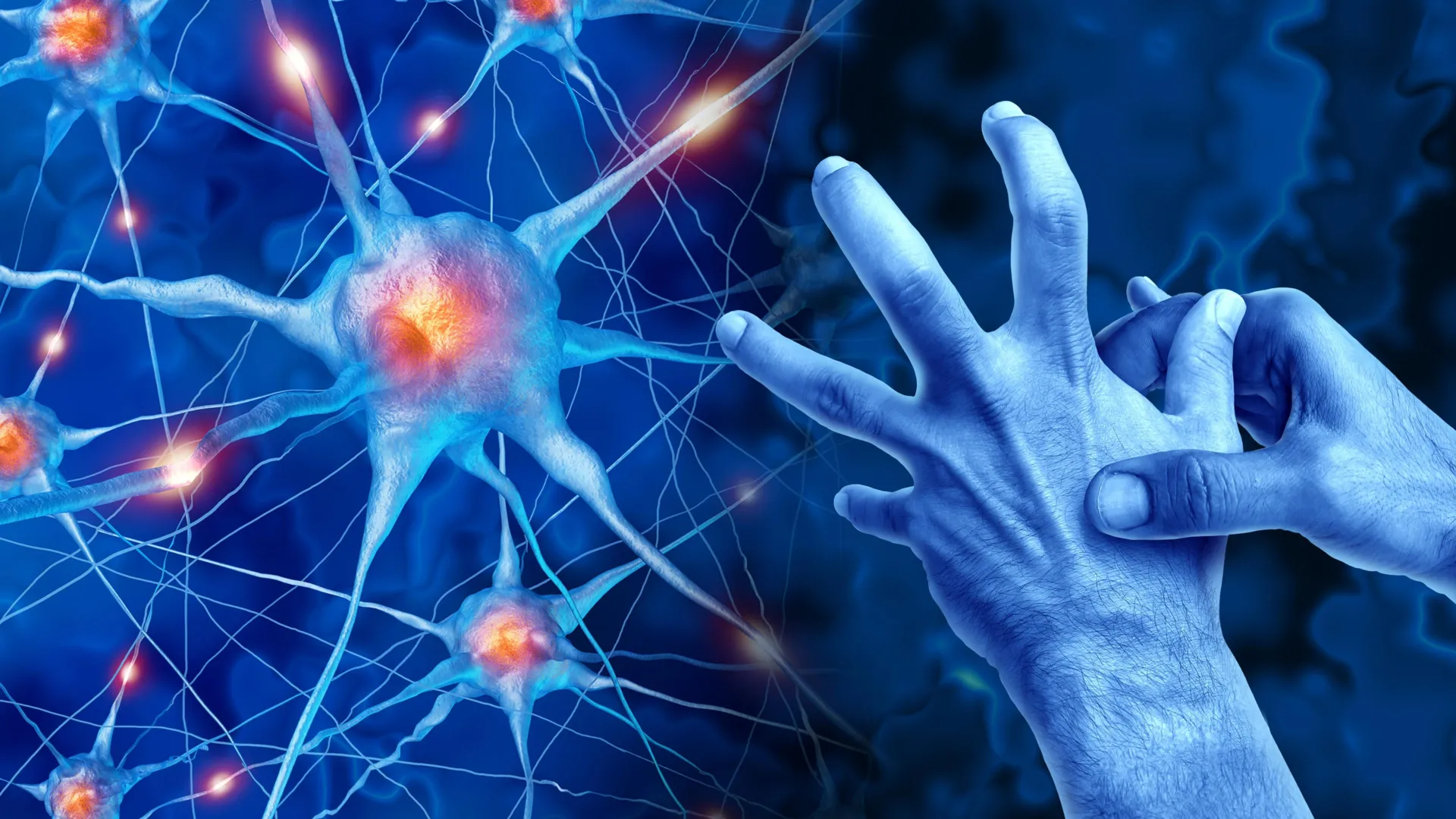
Perhaps the most groundbreaking area of research lies in the field of "neural homophily." Advances in functional magnetic resonance imaging (fMRI) have allowed scientists to see how the brain processes information in real-time, and the results are startling: close friends actually process the world in nearly identical ways.
A study in Social Cognitive and Affective Neuroscience examined 92 middle schoolers, finding that those who were friends showed synchronized brain activity in the ventromedial prefrontal cortex when viewing emotional stimuli. This region is responsible for assigning value and meaning to experiences. Essentially, friends do not just "agree" on what they see; their brains literally "see" and "feel" the world through a shared biological lens.
Even more provocative is the question of whether this synchronization is a result of the friendship or its cause. A study published in Nature Human Behaviour tracked 41 graduate students from the moment they arrived on campus. By scanning their brains before they had met one another, researchers were able to predict who would become friends months later. Those who showed similar neural responses to a series of video clips were significantly more likely to form deep, lasting bonds. This suggests that we are biologically "tuned" to seek out individuals whose neural processing styles mirror our own. When we meet someone and feel an immediate "click," it may be the result of our brains recognizing a compatible operating system.
Implications for Public Policy and Mental Health
The cumulative data from these studies suggests that friendship is a vital biological requirement, akin to sleep or nutrition. The implications for public policy are vast. If proximity and "social infrastructure" are primary drivers of connection, then urban planning must prioritize the creation of walkable, shared spaces to combat the rising tide of isolation. If social skills can be taught, then educational curricula should perhaps include "social literacy" alongside traditional subjects.
Furthermore, the discovery of neural homophily challenges our understanding of social diversity. If we are naturally inclined to bond with those who think exactly like us, it requires a conscious, structured effort to build "bridge" relationships between different social, political, and ethnic groups. Scientists argue that while our biology draws us toward similarity, our societal health depends on our ability to use structured environments—like the "Fast Friends" model—to connect across those biological boundaries.
As research continues to decode the architecture of human connection, the focus is shifting from "how friendships form" to "how we can protect them." In an era of digital disconnection and increasing physical isolation, understanding the science of friendship is no longer just an academic pursuit; it is a necessary strategy for the preservation of human well-being. The evidence is clear: while the heart may feel the connection, the brain and the environment have been laying the groundwork all along.