Reynand Wu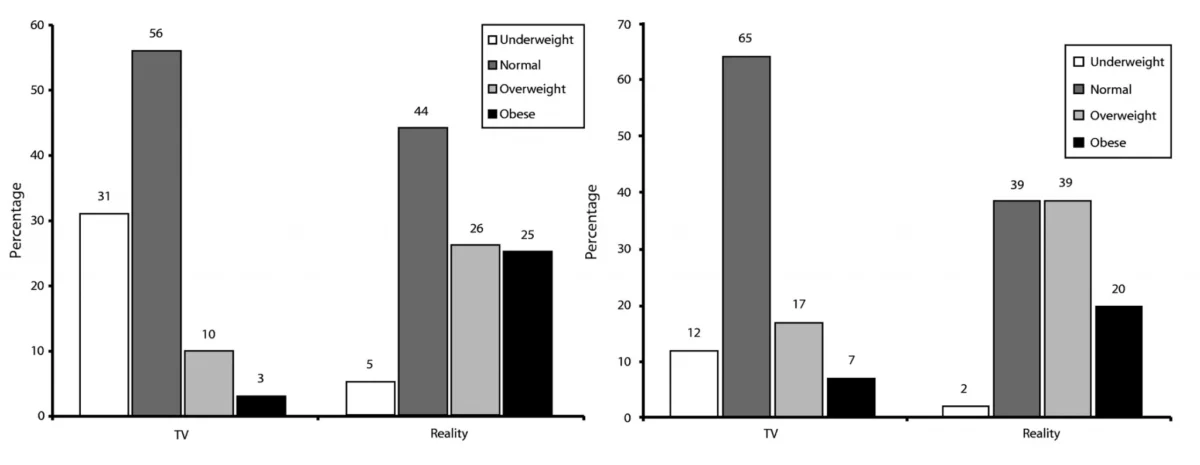
For decades, television has wielded immense power in shaping societal perceptions, but its portrayal of individuals with larger body types often reflects a troubling pattern of distortion, mockery, and marginalization. Rather than offering nuanced and authentic representations, fat characters are frequently reduced to one-dimensional caricatures, their stories and identities undeveloped and deemed secondary to their physical appearance. This trend is not merely anecdotal; rigorous academic research consistently illuminates the systemic bias embedded in media narratives. A seminal study by Tzoutzou et al., for instance, revealed a stark imbalance in appearance-based compliments delivered to female characters, noting that all 36 positive remarks recorded were directed towards thin women. Not a single positive message was extended to a woman of average or overweight body type. A similar pattern emerged for male characters, with only one overweight individual receiving a positive message, underscoring a deep-seated preference for the "thin ideal" within television’s aesthetic framework.
This pervasive narrative effectively communicates to audiences that external beauty is exclusively a domain of thinness, actively excluding anyone who deviates from this narrowly defined standard. The psychological ramifications for viewers are significant. Internalizing this "thin ideal" can profoundly impact an individual’s self-perception, making it exceedingly difficult for many to cultivate a positive body image, especially if their physical form does not align with these unrealistic media standards. The consistent exposure to negative or dismissive portrayals of larger bodies on screen can subtly, yet powerfully, influence how viewers perceive their own bodies, fostering dissatisfaction and potentially contributing to a range of self-esteem issues.
The Historical Arc of Body Image in Media
The "thin ideal" in media is not a recent phenomenon but rather a concept with roots stretching back decades, evolving alongside cultural shifts and the rise of mass media. From the glamorous Hollywood stars of the mid-20th century to the supermodel era of the 1990s, a slender physique has often been valorized as the epitome of beauty and success. Television, as a primary cultural conduit, has historically reinforced these norms, inadvertently — or sometimes overtly — contributing to body dissatisfaction among its audience. Early sitcoms and dramas rarely featured characters with diverse body types in leading or aspirational roles, often relegating them to comic relief or secondary figures. This historical inertia has made it challenging to pivot towards more inclusive representation, as creators often lean on established tropes and audience expectations. The slow emergence of body positivity and neutrality movements in recent years represents a critical counter-narrative, challenging the media to reflect the true diversity of the human population.
Underrepresentation and Stereotypical Roles
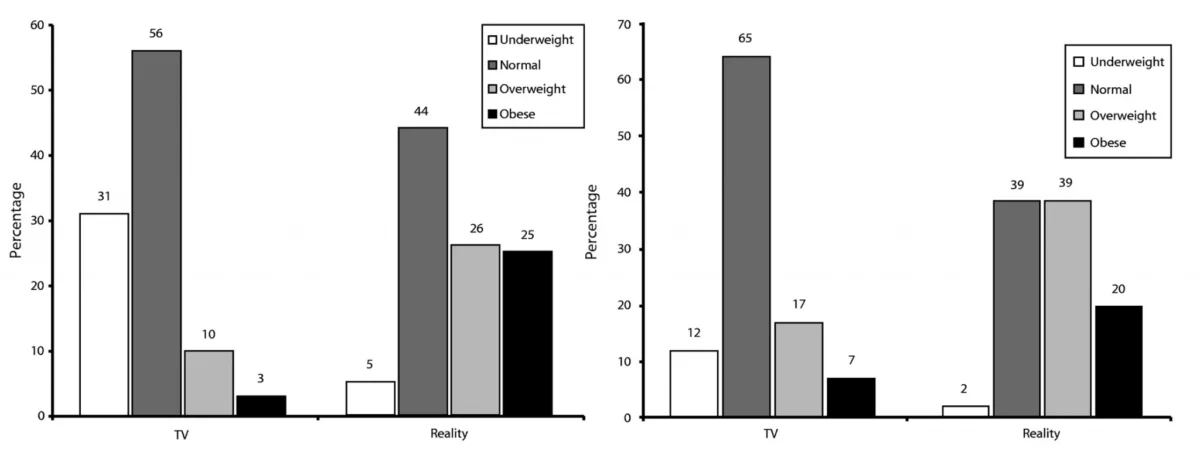
Beyond the overwhelmingly negative framing, individuals with larger body types are also significantly underrepresented on television screens. Data from studies like Brownell et al. (2003) vividly illustrate this disparity, comparing the prevalence of different body types on television with their actual prevalence in the general population during the late 1990s and early 2000s. The findings indicated a substantial gap, with larger bodies being far less visible in fictional narratives than in reality. For instance, while a significant portion of the female population might be categorized as average or overweight, their representation on TV was disproportionately skewed towards thinner archetypes. The same pattern was observed for male characters, creating a distorted mirror of society that largely erases a substantial segment of the population. While there have been incremental shifts in recent years, particularly with the rise of streaming platforms and a greater push for diversity, this fundamental gap persists.
When larger characters do appear, their roles are often circumscribed by limiting and demeaning stereotypes. This pattern of dehumanization is evident in the lack of developed character arcs and the frequent assignment of roles that serve primarily as narrative devices rather than fully fleshed-out individuals. Two prominent archetypes stand out: the comedic sidekick and the villain.
The Comic Relief: Laughing At Not With
In the realm of comedy, the treatment of larger women is particularly egregious. Studies indicate that overweight women are approximately twice as likely to be the target of a joke compared to their thinner counterparts. This isn’t comedy that invites the audience to laugh with a character’s wit or situational humor; it’s often humor derived from their physical size, clumsiness, or perceived unattractiveness. This reduces characters to mere punchlines, stripping them of agency and depth. Furthermore, these characters typically occupy smaller roles, are less likely to be involved in romantic relationships, and engage in fewer positive interactions than thin characters. This perpetuates a harmful message: that larger individuals are less desirable, less capable of genuine connection, and primarily exist for the amusement of others. The "fat friend" trope, for example, often serves to highlight the "normalcy" or attractiveness of thinner protagonists, effectively using the larger character as a foil rather than an individual with their own rich inner life and aspirations.
The Demonization of Size: Villains and Negative Traits
The portrayal of larger characters as villains is another deeply troubling and persistent trope. Research by Himes and Thompson (2007) examining popular children’s videos found that in a staggering 64% of cases, obesity was explicitly equated with negative traits such as evil, unattractiveness, and cruelty. Iconic examples abound in children’s media, from Ursula the sea witch in The Little Mermaid, whose imposing size and dark demeanor are intrinsically linked to her villainy, to the tyrannical Queen of Hearts in Alice in Wonderland. These characters, often drawn with exaggerated proportions, cement a subconscious association between physical largeness and moral failing in the minds of impressionable young viewers. This demonization goes beyond mere oversight; it actively constructs a narrative where fatness is not just ignored but explicitly condemned, preventing these characters from ever transcending their physical form to become complex, relatable beings with full stories. They exist to be feared or reviled, further solidifying negative stereotypes.
Profound Effects on the Audience’s Well-being
The constant barrage of negative and distorted portrayals of larger bodies on television has tangible and detrimental effects on audience members. This phenomenon extends beyond simple preference, leading to the internalization of harmful messages about weight and body image, with significant implications for mental and physical health.
One of the most concerning impacts is the speed with which these messages can be absorbed. A study by Fouts and Burggraf revealed that as little as 30 minutes of television viewing could negatively influence a young woman’s perception of her own body. This rapid internalization can trigger a cascade of internal and external struggles, from immediate self-doubt to long-term psychological distress. The research by Tzoutzou et al. further underscored this, with young girls readily admitting that media depictions fueled their desire for thinness and adherence to an unrealistic beauty standard. This often manifests in frequent dieting behaviors, a significant precursor to various eating disorders, many of which stem directly from the pursuit of an unattainable body ideal relentlessly transmitted by mass media.
Beyond low self-esteem and body dissatisfaction, these misrepresentations can instill a profound sense of anxiety about social interactions. Viewers, particularly young women, may come to believe that they will experience the same sexist and dismissive treatment they witness on screen if they do not conform to the prescribed body norm. This fear can lead to unhealthy coping mechanisms, social withdrawal, and a perpetual struggle to "fix" their bodies in an effort to avoid perceived societal judgment and discrimination. The cumulative effect of these distorted depictions is a pervasive sense of inadequacy, where a viewer’s self-worth becomes inextricably linked to an unattainable aesthetic standard, diminishing their overall well-being and sense of belonging.
Industry Reactions and Calls for Change
The growing body of research and increasing public awareness regarding media representation has not gone unnoticed by the entertainment industry, though progress remains slow and uneven. Advocacy groups, such as the National Association to Advance Fat Acceptance (NAAFA) and various body positivity organizations, have been vocal in their demands for more authentic and respectful portrayals. Psychologists and sociologists routinely publish studies highlighting the severe mental health consequences of weight stigma perpetuated by media, urging creators to adopt more responsible storytelling practices.
While some media executives might historically point to audience demographics or commercial viability as reasons for maintaining the status quo, there is a burgeoning recognition that diversity, including body diversity, is not just a moral imperative but also a sound business strategy. Shows that genuinely embrace diverse casts and narratives often resonate deeply with broader audiences, tapping into a previously underserved market. Actors and creators who have personally experienced weight bias are also increasingly using their platforms to challenge industry norms, calling for more nuanced roles and an end to harmful stereotypes. However, systemic change requires a concerted effort across all levels of production, from casting directors and writers to studio heads and advertisers. The push for diverse writers’ rooms, for example, is seen as crucial, as lived experiences can bring much-needed authenticity and depth to character development.
Broader Societal Implications and a Path Forward
The implications of television’s skewed portrayal of larger bodies extend far beyond individual self-esteem, contributing significantly to broader societal issues of weight bias and discrimination. Media narratives often mirror and amplify real-world prejudices, influencing how individuals are treated in employment, healthcare settings, and social circles. If television consistently depicts larger individuals as lazy, unintelligent, or undesirable, it reinforces these stereotypes in the collective consciousness, making it harder for people of size to navigate daily life without encountering prejudice. This cycle creates a paradoxical effect: demonizing fatness does not necessarily lead to healthier public health outcomes; instead, it often fosters shame and isolation, which can hinder individuals from seeking support or engaging in healthy behaviors.
Television, at its core, is a medium meant for enjoyment, connection, and reflection. Yet, for a substantial portion of the population, the viewing experience is marred by judgment, ridicule, and erasure. No viewer should feel alienated or shamed by the very entertainment they seek to enjoy. All bodies, in their myriad forms, deserve to see themselves authentically and positively represented on screen. This necessitates a conscious and sustained effort from content creators to move beyond superficial portrayals. It means developing characters whose identities and stories are rich and complex, independent of their body size. It means fostering romantic relationships for larger characters, showcasing their competence in professional settings, and allowing them to be protagonists rather than perpetual sidekicks or villains.
Ultimately, the call for inclusive media representation is a call for a more equitable and empathetic society. By diversifying the bodies and narratives presented on screen, television has the power to dismantle harmful stereotypes, promote body acceptance, and foster a healthier collective self-image for all its viewers. The shift will not be instantaneous, but by acknowledging the profound impact of media and actively committing to change, the entertainment industry can begin to truly serve and celebrate the full spectrum of humanity.