Nila Kartika Wati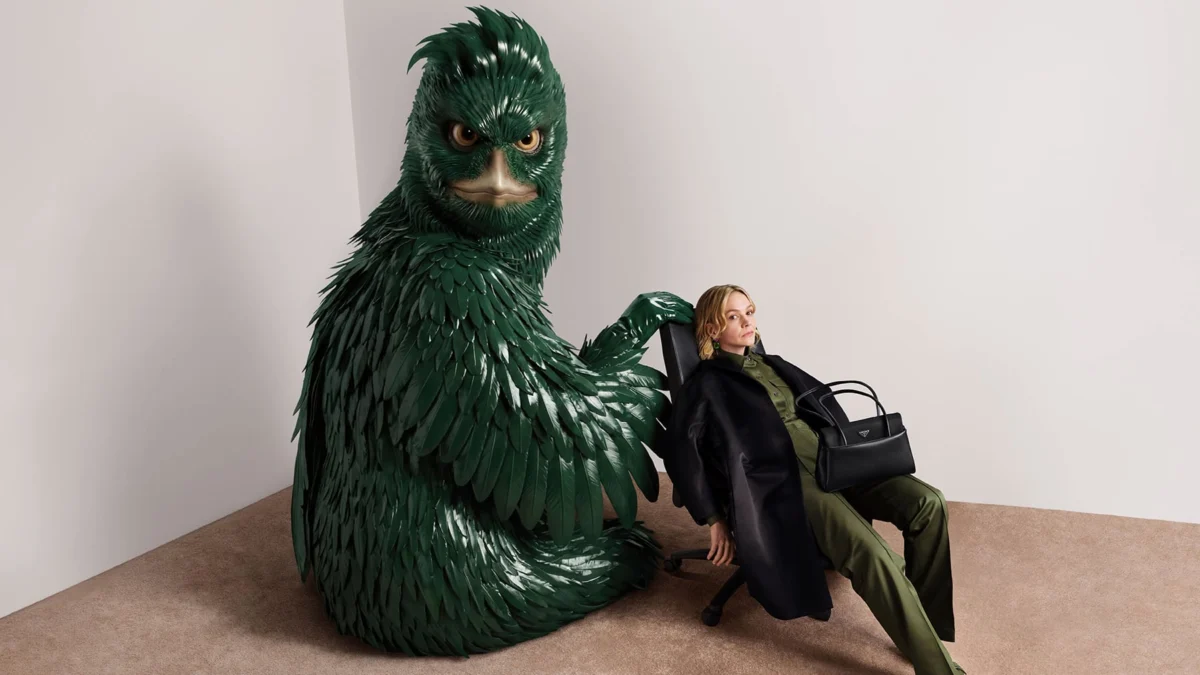
The fashion world is abuzz with Prada’s latest advertising campaign, "I, I, I, I, AM… PRADA," a visually arresting and psychologically charged series of images conceived in collaboration with the provocative American artist Jordan Wolfson. The campaign, which debuted this week and quickly went viral, has ignited a fervent debate not just about its artistic merit and unsettling aesthetic, but also about the nascent role of Artificial Intelligence (AI) in the realm of luxury fashion advertising. While Prada representatives clarified that AI was primarily employed in the post-production phase, the campaign’s existence and its profound impact highlight a burgeoning trend: the art world’s historical, and often fraught, relationship with technological innovation, now seemingly extending to AI.
The Genesis of a Provocative Vision
The "I, I, I, I, AM… PRADA" campaign features a series of striking and often disquieting visuals. These images, characterized by their surreal juxtapositions and intense psychological undertones, are a hallmark of Jordan Wolfson’s artistic oeuvre. Wolfson is renowned for his work that probes the complexities of human identity, desire, and the often-unseen undercurrents of contemporary life, frequently employing digital technologies and exploring themes of artificiality and the uncanny. His previous installations, such as "Real Violence" (2017) and "Leibesleid" (2006), have garnered international acclaim for their ability to provoke visceral reactions and encourage deep introspection, often through the unsettling manipulation of digital imagery and narrative.
The collaboration with Prada marks a significant moment, bringing Wolfson’s distinct artistic vision to a global luxury brand’s advertising platform. The campaign’s imagery, while not explicitly detailing its AI involvement in its initial public presentation, has prompted speculation and discussion about the tools and techniques employed. According to Prada’s representatives, the primary application of AI was in the post-production stages of image enhancement and manipulation. This subtle yet significant integration underscores a growing trend where AI is not necessarily the generative force behind the initial creative concept, but rather a sophisticated tool used to refine, augment, and transform existing artistic visions into their final, polished form.
A Historical Parallel: Art’s Uneasy Dance with Technology
The discourse surrounding AI in the Prada campaign echoes historical precedents within the art world. Throughout history, artists have grappled with and ultimately integrated new technologies that initially threatened to disrupt or even replace traditional artistic practices. The advent of photography, for instance, was met with skepticism and fear by painters who worried it would render their craft obsolete. However, photography evolved into its own distinct art form and, more importantly, influenced painting in profound ways, leading to movements like Impressionism and challenging conventional notions of representation. Similarly, the introduction of digital tools like Photoshop and 3D modeling software, once viewed with suspicion, are now standard components of many artists’ and designers’ toolkits.
Andy Warhol, a pioneer of Pop Art, famously embraced mechanical reproduction and mass media as integral to his artistic process, blurring the lines between art, commerce, and popular culture. His work, often created through screen printing, demonstrated an early understanding of how industrial processes could be leveraged for artistic expression. The current engagement with AI by artists and brands like Prada can be seen as a continuation of this lineage, where emerging technologies are not merely adopted but are actively interrogated and integrated to push creative boundaries. The "terrifying" tools of one era often become the transformative mediums of the next.
The Role of AI in Post-Production: A Subtle Revolution
Prada’s clarification that AI was primarily used in post-production is a crucial distinction. This suggests that the core artistic concept and direction originated from the human collaborators, namely Jordan Wolfson and the Prada creative team. AI, in this context, acts as an advanced digital brush or a sophisticated editing suite, capable of executing complex manipulations with unparalleled precision and speed. This could involve:
- Image Enhancement and Restoration: AI algorithms can be trained to intelligently upscale low-resolution images, remove noise, and correct color imbalances, achieving a level of fidelity that might be difficult or time-consuming with traditional methods.
- Stylistic Transfer and Augmentation: AI models can analyze the stylistic elements of existing images or artistic movements and apply them to new content. In the context of the Prada campaign, this could mean subtly enhancing the surreal or unsettling qualities of the images, or ensuring a consistent aesthetic across the entire collection.
- Facial and Object Recognition: AI can identify and isolate specific elements within an image, allowing for more precise adjustments to expressions, textures, or compositions.
- Generative Elements (Subtle Integration): While not the primary driver, AI could have been used to generate subtle background elements, textures, or even to subtly alter the appearance of models or objects in ways that enhance the intended mood or narrative. For instance, AI could have been used to generate hyper-realistic yet slightly unnatural textures or lighting effects.
The use of AI in post-production, while less overtly generative than AI art created from scratch, still represents a significant shift in creative workflows. It allows for a more iterative and experimental approach, where artists can explore a wider range of visual possibilities with greater efficiency.
Reactions and Interpretations: A Divided Response
The "I, I, I, I, AM… PRADA" campaign has elicited a spectrum of reactions, reflecting the polarizing nature of both Jordan Wolfson’s art and the increasing integration of AI in creative fields.
On one hand, many in the fashion and art communities have lauded the campaign for its bold artistic vision and its ability to push the boundaries of luxury advertising. They see it as a testament to Prada’s commitment to innovation and its willingness to engage with contemporary artistic discourse. Supporters highlight Wolfson’s masterful ability to create unsettling yet captivating imagery that resonates with the anxieties and complexities of modern life. They argue that the use of AI, when employed thoughtfully, can enhance artistic expression rather than diminish it.
On the other hand, the campaign has also faced criticism. Some viewers find the imagery to be disturbing or even grotesque, questioning its appropriateness for a fashion brand. Concerns have also been raised about the ethical implications of AI in advertising, particularly regarding its potential to create hyper-realistic but ultimately artificial representations that can be manipulative or deceptive. Critics might argue that relying on AI, even in post-production, risks sanitizing the raw, human element of artistic creation and can lead to a homogenization of visual culture. The debate is not simply about aesthetics but also about authenticity and the future of creative labor.
Broader Implications for the Fashion Industry
The Prada x Jordan Wolfson campaign, with its nuanced approach to AI, offers several key implications for the broader fashion industry:
- The Evolving Role of the Artist: The collaboration signifies a blurring of lines between traditional artistic practice and commercial creative work. Artists are increasingly sought after to bring their unique conceptual frameworks and aesthetic sensibilities to brands, transcending the traditional role of a commercial photographer or art director.
- AI as a Tool, Not a Replacement: Prada’s approach suggests a pragmatic integration of AI, viewing it as a powerful tool to augment human creativity rather than a replacement for it. This model is likely to be emulated by other brands seeking to leverage AI’s capabilities without alienating their audience or compromising their artistic integrity.
- The Rise of "Algorithmic Aesthetics": As AI becomes more sophisticated, it is beginning to inform and shape aesthetic trends. Campaigns that thoughtfully incorporate AI may begin to develop a distinct "algorithmic aesthetic," characterized by hyper-realism, uncanny details, or novel visual effects.
- Ethical Considerations and Transparency: The campaign’s viral nature and the subsequent clarification about AI usage underscore the growing importance of transparency and ethical considerations in the use of AI in advertising. Brands will need to navigate these complexities carefully, ensuring that their use of AI is both responsible and communicative.
- Redefining "Luxury" in the Digital Age: Luxury has always been associated with craftsmanship, exclusivity, and a certain intangible allure. As technology evolves, brands like Prada are exploring how to maintain and enhance these qualities in a digitally saturated world. The integration of advanced technology, when executed with artistic vision, can be seen as a new form of luxury – one that is cutting-edge, intellectually engaging, and visually arresting.
The "I, I, I, I, AM… PRADA" campaign is more than just a series of advertisements; it is a cultural moment that forces a re-evaluation of art, technology, and commerce. As AI continues its rapid advancement, its presence in creative fields, from art to fashion advertising, will only grow. The success and reception of this Prada campaign will undoubtedly serve as a case study, influencing how other brands and artists approach this powerful, and at times unsettling, new frontier. The conversation initiated by Jordan Wolfson and Prada suggests that the future of creative expression lies not in resisting technological change, but in thoughtfully and intentionally shaping its integration.