Ferry Irwandi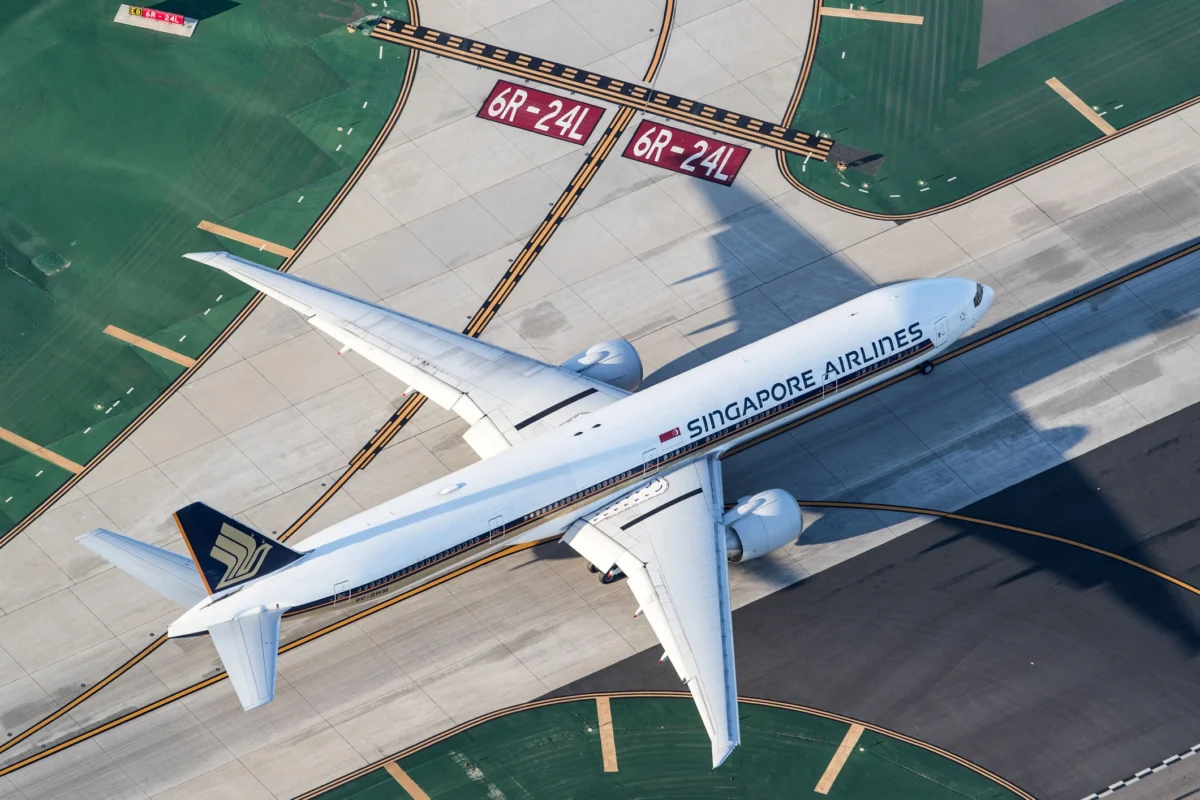
Singapore Airlines continues to define the frontier of ultra-long-haul aviation through its nonstop service between Singapore Changi Airport (SIN) and New York’s John F. Kennedy International Airport (JFK), a journey that currently stands as the longest commercial flight in the world. Spanning approximately 9,537 miles (15,348 kilometers) and lasting up to 19 hours, this route represents a pinnacle of aeronautical engineering and premium service design. The operation utilizes the Airbus A350-900ULR (Ultra Long Range), a specialized aircraft designed specifically to overcome the physiological and technical challenges of spending nearly a full day in the upper atmosphere. As global travel demand for point-to-point long-distance connectivity increases, an examination of the service standards, technical specifications, and passenger experience on this route provides insight into the future of international aviation.
Technical Specifications and the Airbus A350-900ULR
The feasibility of the Singapore-to-New York route is predicated on the capabilities of the Airbus A350-900ULR. Unlike the standard A350-900, the ULR variant features a modified fuel system that increases fuel carrying capacity by over 24,000 liters without the need for additional fuel tanks. This allows the aircraft to remain airborne for up to 20 hours. To optimize the weight-to-range ratio, Singapore Airlines configures these aircraft in a two-class layout—Business Class and Premium Economy—eschewing a standard Economy cabin entirely to reduce weight and cater to the high-yield corporate demographic that frequent this route.
The aircraft’s design also addresses passenger well-being through advanced environmental controls. The A350-900ULR features a carbon-fiber composite fuselage that allows for higher cabin humidity and a lower cabin altitude (approximately 6,000 feet compared to the 8,000 feet found on older aluminum aircraft). These factors are statistically linked to reduced jet lag and respiratory discomfort. Furthermore, the LED lighting system is programmed to simulate various stages of the day, assisting passengers in regulating their circadian rhythms across multiple time zones.
Pre-Flight Operations and Infrastructure
The passenger experience begins at Singapore Changi Airport, frequently cited by Skytrax as one of the world’s best aviation hubs. For Business Class travelers, the SilverKris Lounge in Terminal 3 serves as a critical staging area. The facility is designed to provide "pre-emptive self-care," offering nap rooms, shower facilities, and specialized workstations.

A key logistical feature of Singapore Airlines’ premium service is the "Book the Cook" program. This service allows passengers to pre-order gourmet meals up to 24 hours before departure, featuring dishes such as lobster thermidor and herb-crusted lamb chops. Data from airline catering studies suggest that pre-ordering systems significantly reduce food waste and increase passenger satisfaction by ensuring specific dietary preferences and high-quality standards are met. For those who miss the pre-ordering window, the on-board menu is designed to reflect both international "white-tablecloth" standards and regional Singaporean heritage, providing a sense of cultural continuity even at 35,000 feet.
Chronology of the 19-Hour Flight Experience
To manage the psychological demands of a 19-hour duration, the flight experience is typically segmented into three distinct phases, each designed to address specific physiological needs.
Phase I: Departure and Initial Rest (Hours 0–6)
Upon departure from Changi, the initial six hours are dedicated to "altitude adjustment." The Business Class cabin features a 1-2-1 seating configuration, ensuring direct aisle access for every passenger. The seats are constructed from hand-stitched leather and are designed to flip forward into a fully flat bed, complete with a hidden stowage area for pillows and linens.
The initial service period includes premium beverage offerings, such as vintage Piper-Heidsieck champagne, followed by the first major meal service. The airline’s strategy during this phase is to encourage immediate rest. Cabin attendants are trained to facilitate a quiet environment, often providing snacks and amenities proactively so that passengers can sleep through the formal lunch or dinner service if they choose.
Phase II: Mid-Flight Sustainability (Hours 6–12)
The middle segment of the flight is often considered the most challenging for passengers. During this period, the aircraft typically traverses the North Pacific, passing over significant geographical landmarks such as the Kuril Trench and the Empire Seamounts. This phase focuses on "ritual and reward," utilizing the airline’s "KrisWorld" entertainment system, which offers over 1,800 options, including live television news and sports.

Catering during this period is on-demand, a luxury that distinguishes ultra-long-haul Business Class from standard long-haul services. Passengers can request local Singaporean favorites, such as Yu Pian Mi Fen (thick vermicelli fish soup with pomfret), at any time. This flexibility is essential for mitigating the "no-man’s-land" feeling that occurs when passengers lose track of their home time zone.
Phase III: Arrival Preparation and Connectivity (Hours 12–19)
The final third of the journey focuses on re-acclimatization. Singapore Airlines provides unlimited Wi-Fi to Business Class passengers, a feature that has become a competitive necessity in the ultra-long-haul market. Industry analysis indicates that business travelers use this final stretch to synchronize with the destination time zone by checking emails and preparing for the workday ahead.
The final meal service often features robust, savory dishes—such as Singaporean carrot cake with prawns—designed to stimulate taste buds that have been dulled by prolonged exposure to dry cabin air. The crew’s role in this phase shifts toward personalized engagement, maintaining a high level of service consistency despite the grueling length of their shift.
Crew Management and Service Standards
The human element is a critical component of the SIN-JFK route. Singapore Airlines employs a larger-than-average crew for these flights to allow for mandatory rest periods in dedicated overhead crew rest compartments. The "Singapore Girl" and her male counterparts are trained in "anticipatory service," a philosophy that encourages staff to identify and fulfill passenger needs before they are explicitly voiced.
Official statements from the airline emphasize that the goal is to make the passenger feel "supported rather than burdened." This is exemplified by the crew’s ability to source specific off-menu items or accommodate unusual requests, such as locating specific snacks from the Premium Economy larder to satisfy a Business Class passenger’s nostalgic preference. Such interactions are vital for maintaining morale in a confined space for nearly 24 hours.

Market Impact and the Future of Ultra-Long-Haul Travel
The success of the Singapore-to-New York route has significant implications for the broader aviation industry. It proves the viability of the "point-to-point" model for extremely long distances, challenging the traditional "hub-and-spoke" model that requires passengers to transit through intermediate airports like London Heathrow or Dubai.
Economic and Environmental Considerations
While these flights are highly efficient for time-sensitive travelers, they face scrutiny regarding their environmental footprint. Ultra-long-haul flights require a significant amount of fuel just to carry the fuel needed for the latter half of the journey. In response, Singapore Airlines has committed to achieving net-zero carbon emissions by 2050 and is increasingly incorporating Sustainable Aviation Fuel (SAF) into its operations at Changi.
Competitive Landscape
The SIN-JFK route serves as a benchmark for other carriers. Qantas, for instance, is currently developing "Project Sunrise," which aims to connect Sydney with London and New York nonstop using Airbus A350-1000 aircraft. The lessons learned by Singapore Airlines—ranging from cabin humidity levels to on-demand catering structures—are being closely watched by competitors as they prepare for the next generation of 20-hour flights.
Conclusion
The nonstop flight from Singapore to New York is more than a feat of endurance; it is a sophisticated exercise in hospitality and engineering. By breaking the 19-hour journey into manageable phases, leveraging the technical advantages of the A350-900ULR, and maintaining a rigorous standard of personalized service, Singapore Airlines has successfully transformed a potentially grueling experience into a highly sought-after premium product. As technology continues to evolve, the "aluminum tube" once feared by travelers is becoming a mobile sanctuary of productivity and rest, setting the stage for a new era of global connectivity. Regardless of the cabin class, the success of this route underscores a fundamental shift in aviation: the world is getting smaller, not through speed, but through the endurance of the machines and the people who fly them.