Jono Maryono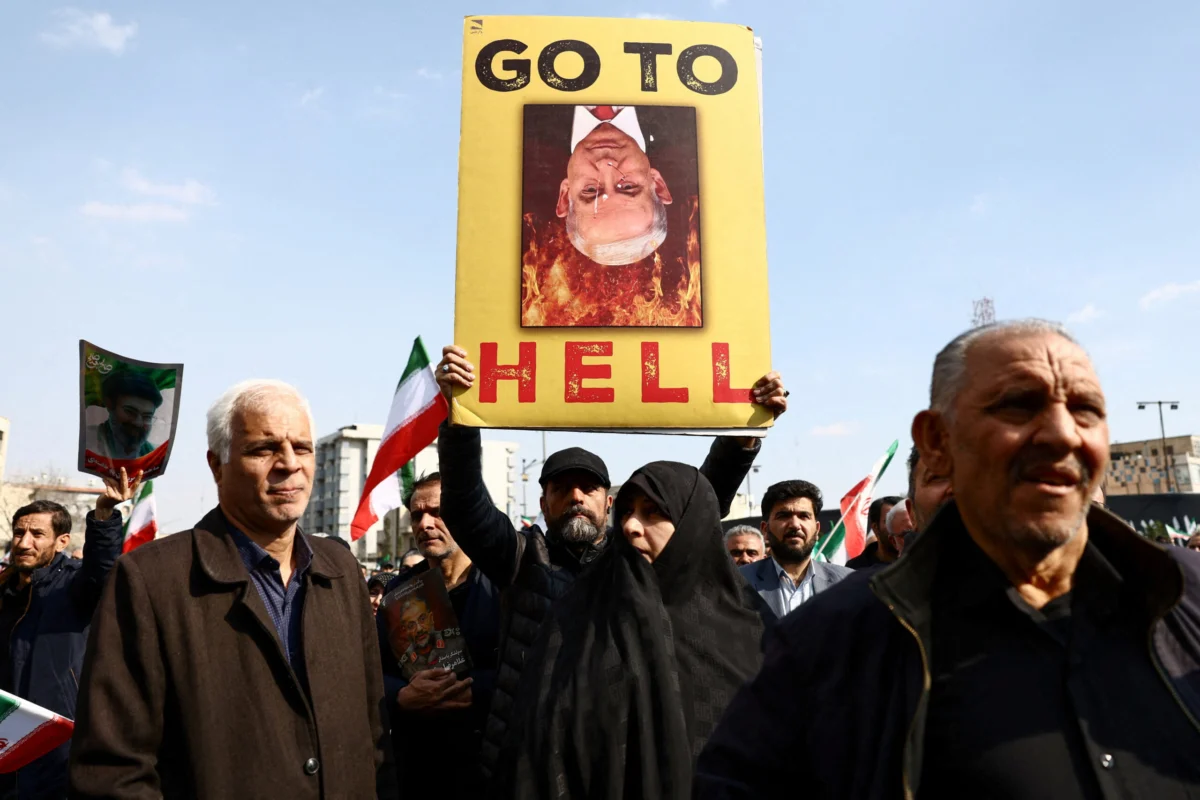
Iran has appointed Mohammad Bagher Zolghadr, a seasoned former commander of the Islamic Revolutionary Guard Corps (IRGC), to lead the nation’s Supreme National Security Council (SNSC). This significant transition follows the recent assassination of Ali Larijani, who held the position and was reportedly killed in a US-Israeli airstrike earlier this month. The announcement, made on Tuesday via X by President Masoud Pezeshkian’s deputy for communications, signals a strategic shift in Iran’s security apparatus and comes amidst a period of heightened regional tensions and global economic uncertainty.
The Supreme National Security Council: A Nexus of Power
The SNSC, formally chaired by President Pezeshkian, serves as the central coordinating body for Iran’s security and foreign policy directives. Its membership comprises a powerful cadre of top military officials, intelligence chiefs, government ministers, and crucially, representatives appointed by the Supreme Leader, Mojtaba Khamenei. The council’s decisions profoundly influence Iran’s strategic posture, its engagement with international affairs, and its domestic security initiatives. The appointment of a figure with Zolghadr’s extensive military background to lead this pivotal body underscores the current emphasis on a robust security-centric approach.
Mohammad Bagher Zolghadr: A Career Forged in Conflict and Influence
Mohammad Bagher Zolghadr’s career is deeply intertwined with the evolution of Iran’s military and political landscape. He served with distinction during the protracted Iran-Iraq War in the 1980s, a foundational conflict that shaped the nation’s defense strategies and solidified the IRGC’s prominence. Following the war, Zolghadr ascended through the ranks of the IRGC, holding the critical position of head of the joint staff for eight years. He further cemented his influence by serving as the deputy commander-in-chief of this elite military force for another eight years, a tenure that provided him with deep operational and strategic insights.
His transition into the political sphere was marked in 2005 when he was appointed deputy interior minister for security and police under then-President Mahmoud Ahmadinejad. This appointment was widely interpreted as a strategic move to bolster the IRGC’s influence within civilian government structures, a trend that has continued to shape Iranian politics. More recently, since 2023, Zolghadr has occupied the influential role of secretary of the Expediency Council. This powerful body functions as an advisory and mediating entity, playing a crucial role in harmonizing the interests of Iran’s various power centers, including governmental institutions, the judiciary, and the office of the Supreme Leader.
The Assassination of Ali Larijani and the Escalating Regional Conflict
The assassination of Ali Larijani last Tuesday marked a significant moment, occurring within a week characterized by the alarming escalation of regional conflicts. These escalating hostilities have had profound ripple effects, disrupting global energy markets and contributing to widespread economic instability. Larijani, recognized as one of the most prominent non-clerical figures in Iranian politics, was a key architect of the nation’s foreign policy and a significant voice in its strategic decision-making. His death removes a critical moderating influence and a seasoned negotiator from the Iranian political scene.
The broader regional context is one of increasing volatility. The ongoing conflict has intensified international concern over potential wider conflagrations. This heightened tension has naturally led to increased scrutiny of Iran’s strategic responses and its internal power dynamics.
Implications of Zolghadr’s Appointment: Consolidating IRGC Influence
The appointment of Mohammad Bagher Zolghadr to head the SNSC is being viewed by many analysts as a further consolidation of the IRGC’s growing influence within Iran’s political and security apparatus. This development occurs against a backdrop of palpable uncertainty regarding decision-making at the highest levels of the Iranian system. The recent succession of Mojtaba Khamenei to his assassinated father, Ayatollah Ali Khamenei, in early March, has introduced a new dynamic, and Mojtaba Khamenei’s public visibility has been notably limited since then.
Zolghadr’s background as a former IRGC commander and his subsequent roles in key governmental and advisory bodies position him as a figure deeply embedded within the security establishment. His leadership of the SNSC is likely to reinforce a security-first approach to foreign policy and national defense, potentially signaling a more assertive stance in regional affairs.
The Shifting Geopolitical Landscape and International Reactions
The geopolitical ramifications of these developments are substantial. The region is at a critical juncture, with the potential for further escalation of existing conflicts. International actors are closely monitoring Iran’s response and its strategic calculus.
Adding to the complex international dynamics, US President Donald Trump made a notable statement on Tuesday, claiming to be in communication with an unidentified "top person" and extending a deadline for potential action against Iran’s power plants by five days. This assertion has injected further uncertainty into the situation, raising concerns about potential direct or indirect confrontations.
In response to Trump’s remarks, Iran’s Parliament Speaker, Mohammad Bagher Ghalibaf, stated emphatically that "no negotiations" were underway. Ghalibaf accused Trump of attempting to "manipulate the financial and oil markets" through his pronouncements, suggesting that the US administration might be employing a strategy of psychological warfare and market disruption. Ghalibaf’s strong denial and accusation highlight Iran’s perception of external interference and its commitment to resisting what it views as economic coercion.
A Timeline of Key Events Leading to the Appointment
To understand the context of Zolghadr’s appointment, a chronological overview of recent significant events is crucial:
- Early March: Ayatollah Ali Khamenei, the Supreme Leader of Iran, passes away. His son, Mojtaba Khamenei, is officially named as his successor. This marks a significant moment in the transfer of supreme leadership.
- Mid-March: Ali Larijani, the then-head of the Supreme National Security Council, is reportedly killed in a targeted US-Israeli airstrike. The precise details and circumstances surrounding the strike remain subjects of international discussion and Iranian official statements.
- Late March (specifically, the Tuesday preceding the article’s publication): President Masoud Pezeshkian’s deputy for communications officially announces Mohammad Bagher Zolghadr’s appointment as the new head of the SNSC via the social media platform X.
- The same Tuesday: US President Donald Trump makes a public statement regarding communication with an unnamed "top person" and extends a deadline related to Iran’s power plants, adding a layer of external pressure and diplomatic ambiguity.
- The same Tuesday: Iran’s Parliament Speaker, Mohammad Bagher Ghalibaf, publicly refutes the notion of ongoing negotiations with the US and accuses Trump of market manipulation.
Broader Impact and Analysis
The appointment of Mohammad Bagher Zolghadr to lead the SNSC signifies a potential hardening of Iran’s strategic posture, particularly in the realm of security and foreign policy. His extensive background within the IRGC suggests a deep understanding of military operations and a likely emphasis on deterrence and assertive defense. This move could be interpreted as a response to the escalating regional tensions and a desire to project strength and control in a volatile environment.
The timing of this appointment, immediately following Larijani’s assassination and amidst heightened international pressure, is significant. It suggests a swift decision-making process aimed at ensuring continuity and stability within Iran’s highest security decision-making body. The consolidation of IRGC influence, as evidenced by Zolghadr’s appointment, is a recurring theme in Iranian politics, reflecting the strategic importance placed on the corps in maintaining national security and projecting power.
Furthermore, the ongoing regional conflict and its impact on global energy markets underscore the critical role of the SNSC. Zolghadr’s leadership will be tested by his ability to navigate these complex challenges, manage Iran’s regional relationships, and respond to external pressures, such as those articulated by President Trump. The delicate balance between maintaining domestic stability, projecting regional influence, and managing international relations will be central to his tenure. The world will be watching closely to observe how this new leadership shapes Iran’s trajectory in the coming months and years.