Ana Megawati
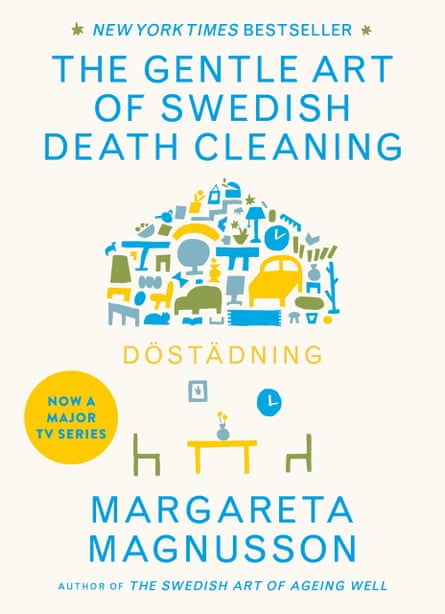
Margareta Magnusson, the Swedish author and artist who introduced the world to the concept of "döstädning" – a mindful and practical approach to decluttering one’s possessions in preparation for death – has passed away at the age of 92. Her seminal work, The Gentle Art of Swedish Death Cleaning, published in 2017 when she was in her eighties, sparked a global movement and redefined societal conversations around aging, mortality, and the legacy we leave behind. Magnusson’s philosophy advocated for a proactive, compassionate approach to personal organization, ensuring that loved ones inherit cherished memories rather than the daunting task of sifting through a lifetime of accumulated belongings.
The Genesis of a Global Phenomenon: Döstädning Defined
Magnusson’s book, translated into "death cleaning" for its English release, rapidly transcended cultural boundaries to become an international bestseller, captivating readers in 32 countries. At its core, döstädning (from the Swedish "dö," meaning death, and "städning," meaning cleaning) is more than mere tidying; it is a profound process of self-reflection and considerate preparation. "It is a term that means removing unnecessary things and making your home nice and orderly when you think the time is coming closer for you to leave the planet," Magnusson explained in her debut work. She framed it not as a morbid exercise, but as an essential and even joyful way to spend one’s later years, offering peace of mind to the individual and alleviating potential distress for their family.
The book’s impact was swift and far-reaching. By 2019, the term "death cleaning" had gained such widespread recognition that the prestigious Collins Dictionary began tracking its usage, a testament to its penetration into the global lexicon. Further solidifying its cultural footprint, a US television series bearing the book’s title was launched in 2023, bringing Magnusson’s gentle wisdom to an even broader audience and embedding the practice deeper into mainstream consciousness.
A Life Lived and Lessons Learned: Magnusson’s Personal Journey
Born in Gothenburg, Sweden, Margareta Magnusson’s life experiences deeply informed her practical and empathetic philosophy. Her early years were marked by the second World War, during which she was evacuated with her sister to a farm in the Swedish countryside. She recalled this period fondly, telling The Times in 2023, "I spent my childhood climbing trees. I had a wonderful time." The daughter of Nils Bothén, a gynaecologist, and Karin Bothén (née Lindquist), a nurse, Magnusson initially harbored dreams of becoming a doctor. However, financial constraints led her to pursue her artistic inclinations, culminating in her graduation from Beckmans College of Design in Stockholm in 1956.
A year later, she married Lars Magnusson, and the couple welcomed the first of their five children the following year. Her artistic career flourished, with her first solo exhibition held in Gothenburg in 1979, followed by international showings. Magnusson often credited her artistic practice, particularly the act of selling her creations, with teaching her the valuable lesson of letting go. This intrinsic understanding of detachment was further honed through a series of five international moves for Lars’s career in the industrial firm ESAB, taking the family to diverse locations including the US, Singapore, and Hong Kong. These experiences, she noted, provided a natural framework for rationalizing her possessions and embracing a more minimalist lifestyle out of necessity.

Magnusson’s firsthand encounters with the emotional and logistical burdens of clearing estates began early in her adult life. She undertook her first significant "death cleaning" in 1969 following the death of her mother. This was repeated after the passing of her mother-in-law, and most poignantly, in 2005, after 48 years of marriage, upon the death of her husband, Lars. These profound personal experiences cemented her conviction that preparing one’s affairs was an act of love and responsibility. In her book, she highlighted that historically, this often fell disproportionately to women, observing that many women found themselves repeatedly undertaking this intimate and often difficult task for parents and partners. Her call to action, delivered with a characteristic no-nonsense yet gentle tone, resonated deeply: "Why would your family and friends want to take time out of their busy lives to clean up your mess when you clearly could have taken care of it yourself?"
After Lars’s death, Magnusson downsized from her spacious marital home to a smaller two-bedroom apartment in Stockholm. This transition further intensified her personal practice of döstädning, as she continually sorted, sold, shredded, and gave away her own belongings. She later recognized that this ongoing process, while she had popularized the term, was a common, albeit often unarticulated, activity among older Swedish women.
Beyond Decluttering: The Philosophy of Mindful Living and Dying
Magnusson’s work arrived at a propitious moment, building upon the global surge of interest in decluttering movements, most notably popularized by Japanese organizing consultant Marie Kondo. While Kondo’s method emphasized "sparking joy," Magnusson introduced a parallel, yet distinct, motivation: easing the burden on future generations. Her approach transcended mere aesthetic organization, delving into the psychological and emotional benefits of confronting one’s mortality through the lens of one’s material possessions.
The concept of döstädning found fertile ground in societies increasingly grappling with aging populations, evolving family structures, and the sheer volume of consumer goods. For many, the prospect of clearing out a deceased loved one’s home is a daunting and emotionally draining ordeal, often prolonging grief and creating familial tension. Magnusson offered a practical antidote, transforming a potential source of conflict into an opportunity for reflection and connection. The act of going through belongings, remembering their worth, and then thoughtfully deciding their fate allows for a personal review of one’s life story, a final curation of a life well-lived.
Moreover, Magnusson argued that döstädning is not a one-time event but an ongoing process, intertwined with the very act of living. "You are never ready with your death cleaning because you don’t know when you’re going to die, so it goes on and on," she explained in a 2018 YouTube interview with her daughter, the journalist and filmmaker Jane Magnusson. This continuous engagement with one’s possessions encourages a more mindful consumerism and a deeper appreciation for what truly matters, echoing broader minimalist and sustainable living trends.
The Global Impact and Cultural Resonance
The idea for The Gentle Art of Swedish Death Cleaning emerged from a casual lunch conversation in New York. A friend of Jane Magnusson lamented the time and emotional toll required to sort through his parents’ belongings. Jane, highlighting her mother’s consistent practice of "döstädning," sparked the interest of her friend, who happened to work in publishing. This serendipitous encounter led to Margareta Magnusson, then in her eighties, penning her debut book in just three months.
The book’s phenomenal success highlighted a universal yearning for control and order in the face of life’s ultimate uncertainty. It tapped into a shared human experience: the desire to leave a positive legacy and to protect loved ones from unnecessary hardship. Its message resonated across diverse cultures, demonstrating that the challenge of accumulated possessions and the desire for a dignified end-of-life process are not confined by geography.
The popularity of döstädning also reflects a wider cultural fascination with Swedish lifestyle concepts, often characterized by pragmatism, moderation, and an appreciation for simplicity. Terms like "lagom" (just enough, in moderation) and "fika" (a social coffee break) have similarly gained international traction, pointing to a global interest in finding balance and wellbeing. Döstädning, in this context, fits seamlessly as a practical extension of a philosophy that values order, preparedness, and consideration for others.
An Enduring Legacy of Practical Wisdom
Even in her later years, Margareta Magnusson remained remarkably productive and intellectually vibrant. Her second book, The Swedish Art of Ageing Well: Life Wisdom from Someone Who Will (Probably) Die Before You, was published in 2023 when she was 89. This work further elaborated on her holistic approach to life, offering practical tips for joyful aging, including indulging in a little chocolate, embracing bright colors and stripes (for which she was known), and learning to appreciate "kärt besvär" – cherished burdens such as daily chores and routines. Magnusson herself illustrated both of her books, showcasing her continued artistic talent.
Despite suffering from mobility issues in her nineties, Magnusson was actively working on a third book, tentatively titled Death Cleaning from the Afterlife, at the time of her passing. Her dedication to her philosophy was evident in her own life. Following her death, her daughter Jane informed the Swedish broadcaster SVT that, as fans would expect, her mother had left very little for her to do. "I don’t need to lift a finger. Mum had nothing in the attic, nothing in the cellar," Jane recounted, adding, "But she still had a very cosy home." This anecdote serves as the ultimate testament to Magnusson’s unwavering commitment to her own teachings, proving that a life of thoughtful decluttering does not equate to a sparse existence, but rather an organized and comfortable one, free from unnecessary clutter and emotional weight.
Margareta Magnusson’s legacy extends far beyond a bestselling book; it is a movement that encourages a fundamental shift in how individuals approach their material world and their inevitable end. She offered a profound act of kindness, both to oneself and to one’s loved ones, transforming a potentially grim task into an empowering journey of reflection and responsible preparation. She is survived by her two daughters, Jane and Ann, three sons, Jan, Tomas, and Johan, and seven grandchildren, who will undoubtedly carry forward the gentle art she so eloquently taught the world. Her work will continue to inspire countless individuals to live more thoughtfully, declutter with purpose, and ultimately, face the future with greater peace of mind.