Kang Muslim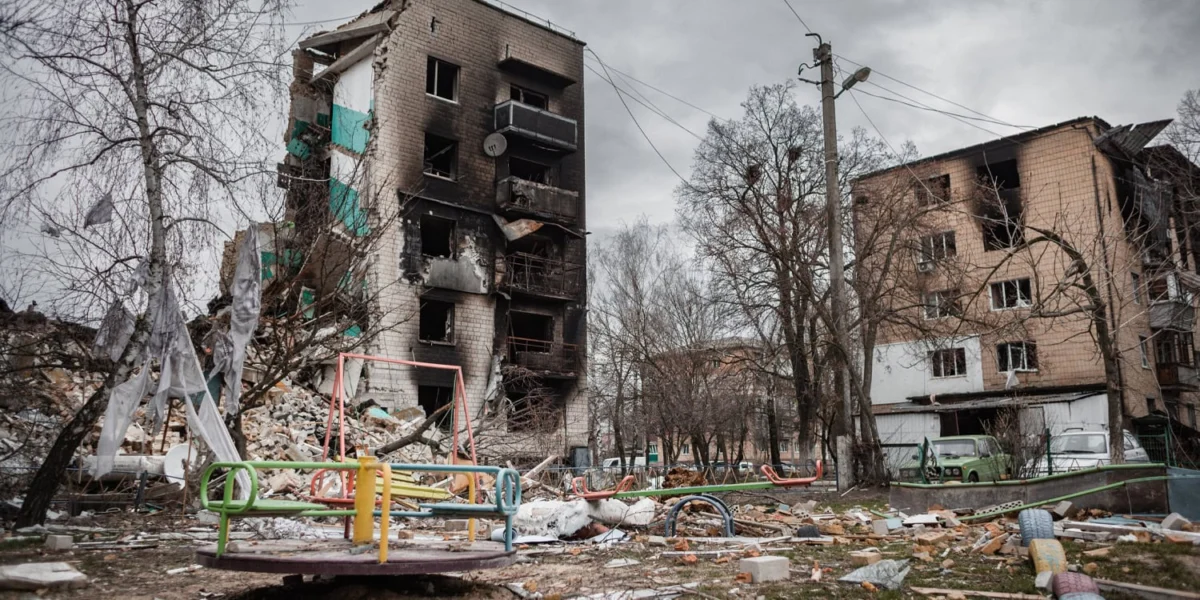
The psychological divide between liberal and conservative ideologies extends far beyond domestic policy, fundamentally shaping how individuals perceive the ethics of modern warfare and the value of human life in combat zones. A comprehensive research project recently published in the European Journal of Social Psychology has identified a consistent pattern: individuals who identify with right-leaning or conservative political views demonstrate a significantly higher tolerance for unintended civilian deaths—often termed "collateral damage"—compared to their left-leaning or liberal counterparts. This ideological gap persists regardless of whether the conflict involves long-standing historical adversaries, strategic international partners, or entirely hypothetical nations, suggesting that the divide is rooted in deep-seated moral frameworks rather than specific geopolitical biases.
Public opinion serves as a critical pillar in the governance of international relations, influencing everything from the allocation of military aid to the strategic constraints placed on battlefield commanders. As global conflicts in the Middle East and Eastern Europe continue to dominate the international discourse, understanding the psychological drivers behind public tolerance for civilian casualties has become a priority for sociologists and political scientists alike. The research, led by Julia Elad-Strenger of Bar-Ilan University, along with Daniel Statman of the University of Haifa and Thomas Kessler of Friedrich Schiller University Jena, sought to determine if these political differences were merely reactions to specific news cycles or if they represented a fundamental divergence in human moral reasoning.
The Psychological Framework: Moral Foundations Theory
To investigate the root of these ideological differences, the research team utilized Moral Foundations Theory (MFT), a psychological framework originally proposed by Jonathan Haidt and his colleagues. MFT suggests that human morality is composed of several distinct "foundations" that vary in importance across different cultures and political identities. These foundations are generally categorized into two groups: individualizing foundations and binding foundations.
Individualizing foundations—comprising Care (protection from harm) and Fairness (justice and rights)—focus on the welfare and rights of individuals regardless of their group membership. According to the study, these foundations are the primary drivers for left-leaning individuals. The emphasis on the universal right to safety makes the death of any civilian, even if unintended and occurring within a "justified" war, difficult to reconcile with their moral compass.
In contrast, binding foundations—including Loyalty (ingroup favoritism), Authority (respect for hierarchy), and Purity (sanctity)—emphasize the cohesion and survival of the collective group. Right-leaning individuals typically score higher on these foundations, which prioritize the security and interests of the "ingroup" over the "outgroup." However, the researchers discovered a nuanced reality: while conservatives do value group loyalty more highly, the ideological gap in casualty tolerance was driven more significantly by the liberal’s intense focus on the individualizing foundation of harm avoidance than by the conservative’s focus on group binding.
Methodology and Experimental Design
The research was conducted through a series of six distinct studies involving thousands of participants from both Israel and the United States. This cross-national approach allowed the researchers to observe how different political cultures process the same ethical dilemmas. A common problem in previous public opinion polling is the "confounding variable" of war justification; often, people support civilian casualties simply because they support the war itself. To eliminate this bias, the researchers designed every scenario as a clear-cut "war of self-defense." By holding the initial justification for the conflict constant, the team could isolate the participants’ views on the specific actions taken during combat.
In the primary experimental model, participants were presented with a scenario where a nation, having been attacked, prepares to strike an enemy’s military headquarters. The headquarters is strategically located in a densely populated civilian area, making unintended casualties a mathematical certainty. To ensure the data reflected pure ethical judgments rather than tactical disagreements, the researchers also asked participants to estimate how many deaths they believed were "unavoidable" to achieve the military objective.
The experiments varied the identities of the combatants to test for regional and historical biases:
- Israeli Participants: Scenarios involved real-world adversaries such as Iran or Palestinian groups, as well as "strategic partners" like Egypt.
- American Participants: Scenarios featured North Korea as a primary antagonist and Iraq as a strategic partner.
- Fictional Scenarios: To remove all preexisting biases, some studies used entirely made-up countries (e.g., "Country A" vs. "Country B").
- Perspective Shifting: In some iterations, participants were asked to imagine themselves as citizens of the attacking nation; in others, they were cast as neutral international observers.
Consistent Findings Across Diverse Contexts
The results revealed a remarkable consistency across all six studies. Regardless of the adversary’s identity or the participant’s proximity to the conflict, right-leaning individuals consistently reported a higher threshold for "morally acceptable" civilian deaths. This was not a marginal difference; the gap was statistically significant and remained stable even when the participants were acting as neutral observers of fictional wars.
This finding challenges the notion that higher tolerance for casualties on the political right is purely a product of nationalism or "ingroup" favoritism. Because the gap persisted when evaluating fictional nations where the participant had no "ingroup" stake, the researchers concluded that the difference is a manifestation of a broader moral philosophy regarding the trade-offs between military goals and individual lives.
The data indicated that for left-leaning individuals, the "harm" foundation acts as a powerful brake on military acceptance. For these individuals, the moral cost of a single civilian life is weighted so heavily that it often outweighs the perceived utility of a military strike. For right-leaning individuals, while the harm is acknowledged, it is more frequently viewed through a lens of "proportionality" and "necessity," where the survival and success of the military objective are given greater relative weight.
Real-World Application: The 2023 Israel-Hamas War
One of the most compelling components of the research occurred in late 2023, following the outbreak of the Israel-Hamas war. This provided a rare opportunity to test the researchers’ hypotheses during an active, high-stakes national crisis. During times of war, national solidarity often increases, and political divisions can sometimes blur in the face of a common threat.
However, even in the midst of active conflict and heightened national trauma, the ideological divide remained stark. Right-leaning Israelis continued to report a higher acceptance of collateral civilian casualties in Gaza than left-leaning Israelis. This real-time data reinforced the study’s central thesis: these views are not temporary political postures but are deeply embedded in an individual’s moral identity. The researchers found that even when accounting for the perceived threat to the nation, the individualizing moral values of the participants were the strongest predictors of their ethical judgments.
The Limits of Social Influence and Political Norms
The final phase of the research sought to determine if these views were merely the result of "partisan signaling"—the tendency for individuals to adopt the views of their political leaders to fit in with their social group. The researchers conducted an experiment where they manipulated the perceived norms of the participants’ political parties. They showed participants fabricated data suggesting that their fellow partisans (either Liberals or Conservatives) either overwhelmingly accepted or overwhelmingly rejected civilian casualties.
While this manipulation did succeed in changing what participants thought their peers believed, it failed to significantly alter their personal moral judgments. This suggests that when it comes to the life-and-death ethics of warfare, individuals are guided by their internal moral compass rather than a desire for partisan conformity. This finding has significant implications for political communication, suggesting that simple "party line" messaging may be less effective at shifting public opinion on war ethics than previously thought.
Legal and Ethical Implications: Proportionality and Discrimination
The study’s findings intersect with the long-standing legal principles of "Just War Theory" and International Humanitarian Law (IHL), specifically the principles of "discrimination" and "proportionality." Under the Geneva Conventions, military forces are required to distinguish between combatants and civilians (discrimination) and ensure that the harm caused to civilians is not excessive in relation to the concrete and direct military advantage anticipated (proportionality).
The research suggests that the legal term "excessive" is subject to intense psychological interpretation. What a conservative observer deems a "proportional" response to a security threat may be viewed as a "disproportionate" moral catastrophe by a liberal observer. This suggests that the public debate over war crimes and international law is not just a disagreement over facts, but a fundamental disagreement over the moral weights assigned to military success versus individual protection.
Analysis of Broader Implications and Future Research
The implications of this study are far-reaching, particularly for democratic governments that must maintain public support for military interventions. If a significant portion of the population possesses a fundamentally lower threshold for civilian casualties, governments may find it increasingly difficult to sustain long-term military engagements in the age of 24-hour news cycles and social media, where collateral damage is instantly visible to the public.
Furthermore, the study highlights a potential "empathy gap" in international diplomacy. If policymakers on the left and right are operating from different moral foundations, reaching a domestic consensus on foreign policy—such as providing weapons to allies or intervening in humanitarian crises—becomes a task of reconciling two different moral languages rather than just two different political strategies.
However, the researchers noted certain limitations. The real-world scenarios primarily involved "non-democratic" adversaries (e.g., North Korea, Iran), which might inherently increase the perceived justification for military action among all participants. Future studies could explore if these patterns hold when the adversary is a "sister democracy," or how the results might change if the casualties were inflicted upon the participants’ own nation.
Additionally, the researchers suggest that future longitudinal studies could track how these moral judgments evolve over a lifetime. Does exposure to the realities of war or a change in one’s personal security situation alter these foundational moral weights? As political polarization continues to intensify in the West, understanding these deep-seated psychological drivers remains essential for navigating the complex ethical landscape of 21st-century conflict.