Jono Maryono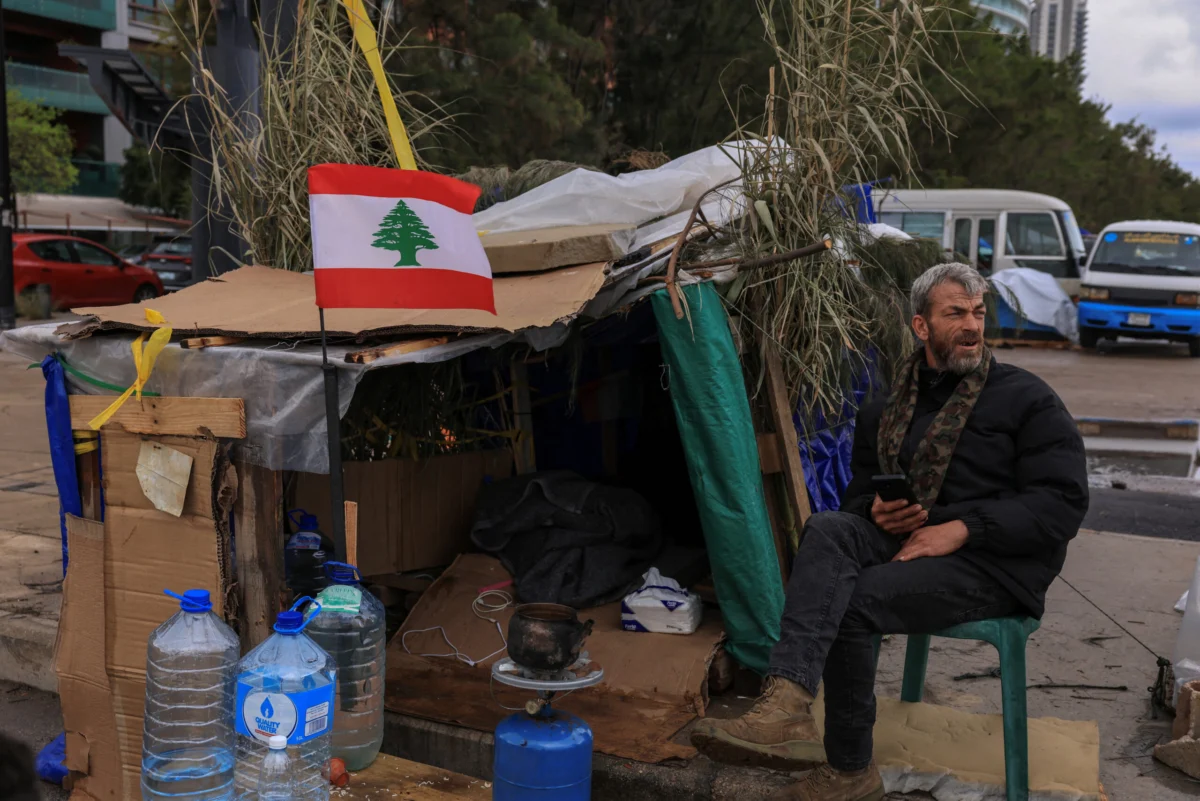
Beirut, Lebanon – Four weeks into the escalating conflict described by some as a United States-Israeli war on Iran, Lebanon is confronting a profound humanitarian crisis, grappling with the aftermath of a second large-scale Israeli attack on its territory in less than two years. The relentless violence has triggered a mass displacement, pushing a significant portion of the Lebanese population to the brink and exacerbating pre-existing vulnerabilities. Approximately a quarter of Lebanon’s population has been forced to flee their homes following extensive Israeli evacuation orders from the country’s southern regions and the densely populated southern suburbs of Beirut, known as Dahiyeh. This forced displacement has left millions facing extreme hardship, fatigue, and uncertainty about the future.
The current offensive, which intensified on March 2nd, follows a retaliatory strike by Hezbollah, a close ally of Iran, in response to Israeli attacks. Hezbollah claimed its action was a direct consequence of the assassination of Iranian Supreme Leader Ayatollah Ali Khamenei two days prior. While a ceasefire between Israel and Hezbollah had ostensibly been in effect since November 27, 2024, the United Nations had documented over 10,000 Israeli ceasefire violations during this period, accompanied by hundreds of Lebanese casualties. The resumption of hostilities has plunged the nation into a dire humanitarian situation, characterized by widespread suffering and a deepening sense of despair.
Escalation and Displacement: A Stark Reality
The current conflict marks a significant escalation in the protracted tensions between Israel and Hezbollah. Following Hezbollah’s response, Israel not only intensified its attacks on southern Lebanon but also declared its intention to occupy the region, establishing a so-called security zone and continuing its campaign to destroy villages along the southern border. Compounding the crisis, Israel issued mass evacuation orders for vast swathes of southern Lebanon, Beirut’s southern suburbs, and several villages in the eastern Bekaa Valley. According to the Lebanese government, these orders have resulted in a staggering displacement of at least 1.2 million people, creating a humanitarian emergency of unprecedented scale.
For residents like Samiha, a Palestinian teacher who had previously lived near Tyre in southern Lebanon before relocating to Beirut, the experience has been deeply distressing. "It’s not good at all," she stated, reflecting on the ongoing displacement. However, having endured a previous Israeli campaign in Lebanon not long ago, her family was somewhat more prepared for this round of violence. "It’s not the first time for us. Now we know more about where to go," she explained, highlighting a grim adaptation to recurring conflict. Yet, the underlying anxiety remains palpable: "we don’t know how long this will last and if there is a solution." Her words encapsulate the pervasive sense of helplessness and the desperate search for stability amidst perpetual conflict.
Vulnerable Populations Bear the Brunt
The humanitarian catastrophe unfolding in Lebanon is disproportionately affecting the country’s most vulnerable populations. Aid workers on the ground report that migrant workers, Syrian refugees, and other foreign nationals are among those facing the most dire circumstances. Rena Ayoubi, a volunteer organizing aid near Beirut’s waterfront, described witnessing the plight of these groups firsthand. "The most vulnerable cases that we’re coming upon are happening, either migrant workers, either Syrians, foreign bodies, basically," she told Al Jazeera, underscoring the intersection of conflict, displacement, and pre-existing marginalization.
Beyond these groups, individuals with chronic illnesses, cancer patients requiring dialysis, and those dependent on insulin are facing life-threatening challenges. Displaced individuals, often lacking access to basic amenities like refrigeration, are struggling to store essential medications, leading to potentially fatal consequences. The lack of consistent access to healthcare, compounded by the destruction of infrastructure and the disruption of supply chains, has created a critical gap in essential medical care for many of Lebanon’s most fragile citizens.
A Crisis of Unprecedented Scale and Speed
Aid organizations and United Nations officials characterize the current humanitarian situation as distinct from previous crises, not only in its severity but also in its pace and scope. Anandita Philipose, the UN sexual and reproductive health agency (UNFPA) representative in Lebanon, emphasized the unprecedented nature of the current events. "Now is significantly different in the scale and speed and number of people impacted," she stated. "The mass evacuation orders are new. The scale of displacement is new. The fact that civilian infrastructure was targeted is new."
The impact on women and children has been particularly devastating. Women have been displaced not only from their homes but also from their established healthcare networks, including crucial prenatal and postnatal support systems. "Pregnant women do not stop giving birth in the middle of conflict, and women don’t stop having periods in the middle of conflicts," Philipose pointed out, highlighting the continuous and often unaddressed needs of women in crisis zones.
Official figures from Lebanon’s Ministry of Public Health paint a grim picture: in just over three weeks of the current offensive, 1,094 people have been killed and 3,119 wounded. Among the fatalities are 81 women and 121 children, stark evidence of the devastating human cost of the conflict. Heidi Diedrich, national director of World Vision in Lebanon, expressed deep concern for the youngest victims. "Children have yet again been caught up in this escalation," she told Al Jazeera. "Children are deeply affected by the violence regardless of their protected status as civilians under international humanitarian law, and regardless of their rights as children. We are deeply concerned that this escalation will continue to impact children in Lebanon for weeks or even months to come." The long-term psychological and developmental consequences for these children are a significant concern for humanitarian organizations.
The Unending Trauma: A Nation’s Mental Health in Crisis
Beyond the immediate physical toll, the relentless cycle of violence and instability has inflicted deep psychological wounds on the Lebanese population, pushing many to their mental breaking point. The National Lifeline in Lebanon (1564) for Emotional Support and Suicide Prevention Hotline, a joint initiative between the National Mental Health Programme and the non-profit Embrace, has seen a significant surge in calls from individuals seeking urgent psychological assistance. Volunteers at the Beirut-based center, supported by clinical psychologists, are on the front lines, offering a lifeline to those experiencing extreme distress.
Jad Chamoun, operations manager at the Lifeline center, described the pervasive state of psychological distress. "We’ve been in the worst situation for the past two years," he remarked. "Even when there was a ceasefire, people were still living under the conditions, they were still displaced." This statement underscores the chronic nature of the trauma, extending beyond active hostilities.
Even prior to the current escalation, Lebanon was grappling with a severe mental health crisis. According to the International Organization for Migration, over 64,000 people were already displaced before March 2nd. A March 2025 report from Lebanon’s National Mental Health Programme revealed that three in five people in the country screened positive for depression, anxiety, or PTSD – a figure that predates the current intensification of violence. Chamoun characterized the ongoing living conditions as "continuous trauma, because it’s never ending." This statement reflects the cumulative impact of a series of catastrophic events, including one of the world’s worst economic crises in 2019, the COVID-19 pandemic, the devastating Beirut port explosion in 2020, mass emigration, and now two major Israeli military campaigns in quick succession.
The number of calls to the Lifeline has increased substantially, rising from approximately 30 per day during the Israeli attacks in 2024 to nearly 50 per day currently. However, Chamoun cautioned that the peak demand for psychological support often occurs several months after the cessation of a conflict or crisis, as individuals transition from immediate survival mode to processing their experiences. In the current environment, many are still in a state of acute crisis management.
The cascading series of disasters and what is widely described as brutal Israeli aggression has pushed many in Lebanon to their limits. The efforts of volunteers and professionals at initiatives like the National Lifeline are crucial in reaching those who are "falling through the cracks." Chamoun concluded with a poignant reflection on their work: "We try to sit with them in the darkness, which is what’s heavy around us. We try to share with them this pain. And this is what’s been the heaviest nowadays." Their dedication offers a glimmer of hope amidst the profound darkness engulfing the nation.
Background and Chronology of Escalation
The current conflict did not emerge in a vacuum but is rooted in a long-standing and complex geopolitical landscape. The assassination of Ayatollah Ali Khamenei, the paramount leader of Iran, on March 1, 2026, served as the immediate catalyst for the latest round of violence. Iran, a key regional power and a significant supporter of Hezbollah, viewed the assassination as an act of war, prompting retaliatory actions from its allies.
Key events leading to the current crisis:
- November 27, 2024: A ceasefire between Israel and Hezbollah is ostensibly put in place. However, the United Nations reports over 10,000 Israeli ceasefire violations in the subsequent months, with hundreds of Lebanese casualties.
- February 28, 2026: Iranian Supreme Leader Ayatollah Ali Khamenei is assassinated.
- March 1, 2026: Hezbollah launches a retaliatory attack against Israeli targets, citing the assassination of Ayatollah Khamenei.
- March 2, 2026: Israel intensifies its military operations in Lebanon, declaring its intention to occupy southern Lebanon and establish a security zone. Mass evacuation orders are issued for southern Lebanon, Beirut’s southern suburbs, and parts of the Bekaa Valley.
- March 2, 2026 – Present: Four weeks into the intensified offensive, Lebanon faces a severe humanitarian crisis with widespread displacement, civilian casualties, and escalating needs for aid.
The declaration of intent to occupy southern Lebanon represents a significant shift in Israeli military objectives, potentially leading to a prolonged and more destructive conflict. The establishment of a "security zone" has historically been a contentious issue, raising concerns about international law and the sovereignty of Lebanon.
Broader Implications and International Reactions (Inferred)
The intensification of the conflict in Lebanon has significant regional and international implications. The involvement of the United States, as described in the initial context, suggests a broader geopolitical dimension to the conflict, potentially drawing in other international actors. While direct official statements from the US regarding a "war on Iran" in this context were not available in the provided text, the description implies a coordinated effort.
The humanitarian crisis in Lebanon, with its massive displacement and strain on already fragile infrastructure, demands urgent international attention and humanitarian assistance. Neighboring countries and international organizations are likely to face increased pressure to provide aid and support to Lebanon. The protracted instability in Lebanon also poses risks to regional security, potentially fueling further tensions and radicalization.
The targeting of civilian infrastructure, as highlighted by UNFPA representative Anandita Philipose, is a grave concern that violates international humanitarian law and exacerbates the suffering of the civilian population. The international community faces the challenge of holding parties accountable for such actions while simultaneously working to de-escalate the conflict and provide much-needed humanitarian relief. The long-term implications for Lebanon’s economic recovery, social fabric, and mental well-being are profound, underscoring the urgent need for a sustainable resolution to the ongoing violence.