Ronny Sianturi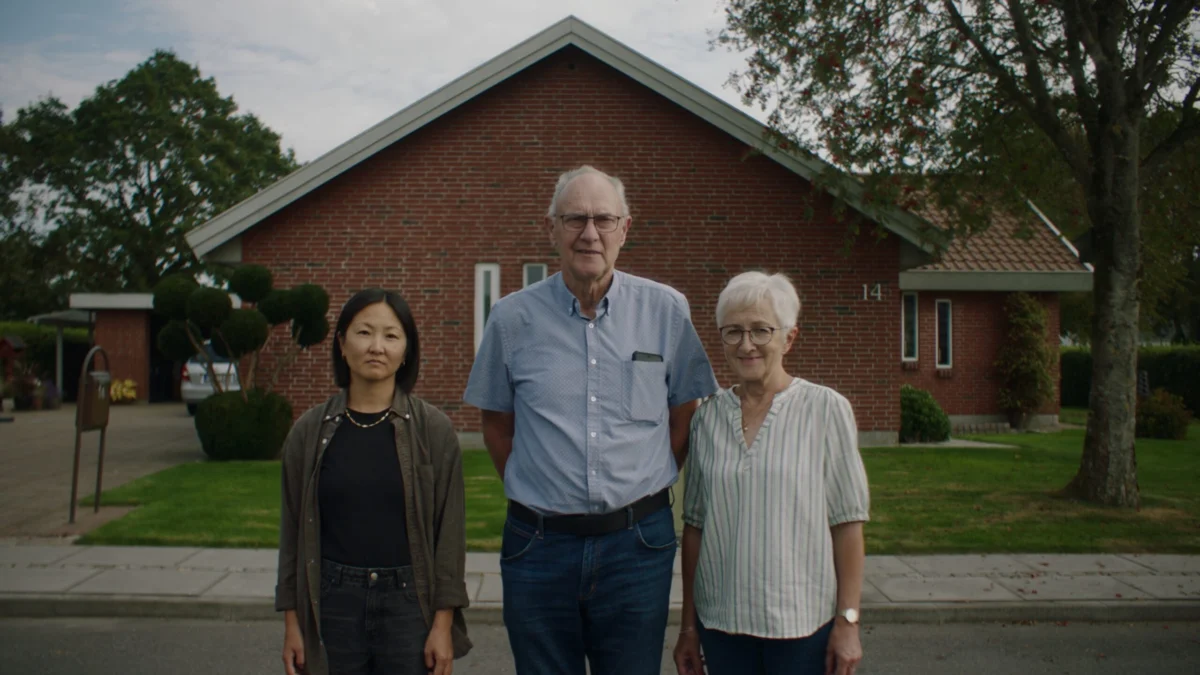
Taekyung Tanja Inwol’s second feature documentary, Homesick (Hjemsøgt), emerges as a profound and unflinching exploration of identity, belonging, and the complex realities of transnational adoption. The film, which world-premiered in the NORDIC:DOX competition at the 23rd edition of CPH:DOX, the Copenhagen International Documentary Film Festival, delves into deeply personal questions about what constitutes family, home, and belonging, and who ultimately holds the authority to define these fundamental aspects of human experience. The documentary is not merely a personal narrative but a "raw family chronicle" that traverses the geographical and emotional landscapes between Western Denmark and South Korea, charting the filmmaker’s own journey of being adopted.
Unearthing a Troubled Past: The Korean Truth and Reconciliation Commission’s Findings
A pivotal revelation underpinning Homesick is the finding by the Korean Truth and Reconciliation Commission in June 2025. The commission identified Inwol’s adoption case as one of 56 instances where human rights violations occurred. Crucially, the investigation concluded that her documentation had been deliberately falsified to portray her as a foundling, a tactic employed to expedite the adoption process and facilitate profit. Despite these significant findings, Inwol has encountered a stark lack of tangible progress. Neither the Korean nor the Danish state has provided her with access to genuine information about her birth parents or offered any concrete actions to address the injustices uncovered. This bureaucratic inertia underscores a systemic failure to provide closure and truth to individuals impacted by past adoption practices.
A Facade of Perfection and the Cracks Within
The synopsis for Homesick paints a stark picture of the adoptive family environment, stating: "In Taekyung’s family in Denmark, everything was meant to look perfect on the surface, but behind the façade, there was domestic violence, breakups, divorce, suicide attempts, death, loneliness, and much more." This domestic turmoil raises a critical question that resonates throughout the film: "When one’s origins have been erased in Korea, where does one turn when the family one has been placed in begins to crack?" The documentary confronts these painful truths, illustrating the profound impact of a fractured home environment on an individual whose sense of origin has already been significantly altered.
The Art of Assembly: Weaving Personal Memory with Political Realities
Inwol employs a rich tapestry of cinematic techniques to assemble her experience. Interviews, intimate photographs, evocative landscapes, and introspective voice-overs converge to illuminate her unique position as the sole adoptee within a Danish family and as "someone who has been erased from Korea her entire life." The press notes for the film articulate its ambitious scope: "The film weaves together personal memories and imagination with the political realities of a transnational adoption system that long ago lost its shine." This approach allows Homesick to transcend a simple recounting of events, instead creating a visceral and intellectually stimulating engagement with the complexities of identity formation under duress.
The Genesis of a Necessary Chronicle
Director Taekyung Tanja Inwol articulated her profound motivation for creating Homesick in a statement that lays bare the deeply personal roots of the project. "I have, as a child, had more families than most, belonged to many and nowhere at all – but the premise for them all was that someone had the power to decide where and to whom I was allowed to belong." This statement highlights the inherent power imbalance in adoption, where the child’s agency is often superseded by the decisions of others.

Inwol further probes the arbitrary nature of familial assignment: "By what parameters can one even determine whether one family is better than another? The childless couple in the West Danish town of Varde had more right to a child than the single mother in the Korean port city of Incheon. Not just any child – but the child she had given birth to. In this way, a child born in Korea grew up in Denmark. Isn’t it strange that the child grows up in a random family on the other side of the world – and no one talks about it." Her observation that "Silence, after all, can be more painful than harmful words" speaks to a pervasive societal tendency to avoid uncomfortable truths, particularly concerning the emotional fallout of international adoption.
The impetus to begin filming was deeply connected to personal loss. "You know this whole thing about rest in peace?" Inwol shared with The Hollywood Reporter. "People have this idea: let’s not speak ill of the dead. But I was like: ‘No, now’s the time to talk about all the stuff that we couldn’t talk about before.’ It was too difficult when they were alive. Nobody seemed to really agree with me, but I just had all these questions." This desire to break the silence surrounding difficult family dynamics, particularly after the passing of her adoptive parents, became the catalyst for Homesick.
Initially, Inwol’s intention was not to place herself at the center of the narrative. "The idea was to make a film about all the things that we don’t talk about in the family," she explained. "I wanted to create a visual language for the things for which a language doesn’t exist. Interestingly, when I started interviewing the family, I realized that I was part of the secrets. So, I thought, okay, well, I guess it will have to be a film about me, or at least from my position in the family, as being one who we don’t talk about." This realization marked a significant shift, transforming a film about unspoken family truths into a deeply personal journey of self-discovery and healing. "I just felt an urge to try and heal myself in some way, which then turned into this huge project, which wasn’t the original intention."
This thematic exploration of familial relationships and the search for healing is not new for Inwol. Her first feature documentary, A Colombian Family, focused on a mother and daughter in Colombia striving to mend their relationship. "You can see a trend here," Inwol quipped, acknowledging the recurring motifs in her work. "I realized that the reason why I made that film was so that I could mirror myself in their relationship."
Navigating the Dual Role: Director and Subject
The challenge of being both director and subject in Homesick presented a unique set of considerations for Inwol. "It was never my wish to be a protagonist in my own film," she confided. "So, when I started out making it, it was so important for me to have control over how I was presented and what people were allowed to see." The dual role afforded her complete control over the narrative, but it necessitated the establishment of rigorous self-imposed rules for her presentation and the framing of her perspective. "Being the filmmaker and the protagonist gives me all the control, but I needed to make a whole bunch of rules for myself and how I wanted to be seen. How do I keep control of the narrative, and how do I present the world through my gaze?"
One of the significant hurdles Inwol anticipated was the inherent lack of language to articulate experiences of difference. "There is just no language for difference, and so I had to [think about] how to give myself that language," she recalled. Furthermore, she was acutely aware of the audience’s potential positioning as outsiders to her experience. "And I am also very aware that the audience is not necessarily on my side, because I’m the minority in the story. So, how do I turn the gaze around? It means I had to make up a gaze. They have never seen my gaze on them." This conscious effort to construct a unique visual language and perspective is central to the film’s artistic and emotional power.

Visualizing Absence and Belonging
A recurring visual motif in Homesick features Inwol standing beside other individuals, whose identities are not immediately revealed, in compositions reminiscent of traditional family photographs. Inwol refers to these as "moving portraits," explaining, "Because it’s as if you take a portrait, but then just keep it going. This is the first moment that you get to meet these people, because these people are both family, but also somebody who I want to invite the viewer to look at." By placing herself alongside these figures, the ambiguity of their relationship to her in these shots underscores the "randomness of it all," highlighting the chance nature of her placement within these familial units. "So, by introducing them in that way next to me, it gives you the idea of the randomness of my being there." This subtle yet powerful technique invites viewers to contemplate the arbitrary nature of belonging and the constructedness of family.
Reclaiming Identity in a Korean Landscape
The film also incorporates performative scenes set in Korea, where Inwol and her friends don traditional hanboks. These scenes are imbued with significant meaning: "The other three women that I walk with are also adopted from Korea to Denmark," Inwol revealed. "And the idea for me was to show that I’m not alone, although the core feeling in the film is loneliness and not being seen or recognized." The shared experience of these women, united in traditional Korean attire, creates a palpable "sense of community." The hanbok itself serves as a potent symbol of resilience and resistance, even within the context of a nation that Inwol describes as "a nation suffering." These moments offer a counterpoint to the isolation experienced elsewhere in the film, suggesting that connection and shared heritage can offer solace and strength.
A Continual Exploration of Divided Families
Looking ahead, Inwol sees a consistent thread running through her filmmaking endeavors. "There’s a red thread through my films, and that is the theme of family divided by conflict or war or diaspora experiences," she stated. Her next project is in the early stages of development: a film exploring a Korean community in Mexico, one of the oldest established Korean communities abroad. This new venture aligns with her established thematic interests, allowing her to delve into familiar territories while exploring new cultural contexts. "I’m in really early development on a film about a Korean community in Mexico. It is one of the oldest communities of Koreans. For me, it would be nice because it touches on themes I know. I constantly ask myself, ‘What films can I make? What films are for me?’" This ongoing commitment to exploring the intricacies of family, displacement, and identity positions Taekyung Tanja Inwol as a vital voice in contemporary documentary filmmaking.
Production Credits:
- Producers: Rikke Tambo Andersen, Sona Jo, Virpi Suutari
- Cinematographers: Catherine Pattinama Coleman, Mathias Dücker
- Editor: Matilda Henningsson
- Sales: Impronta Film
- Production Company: Tambo Film