Ferry Irwandi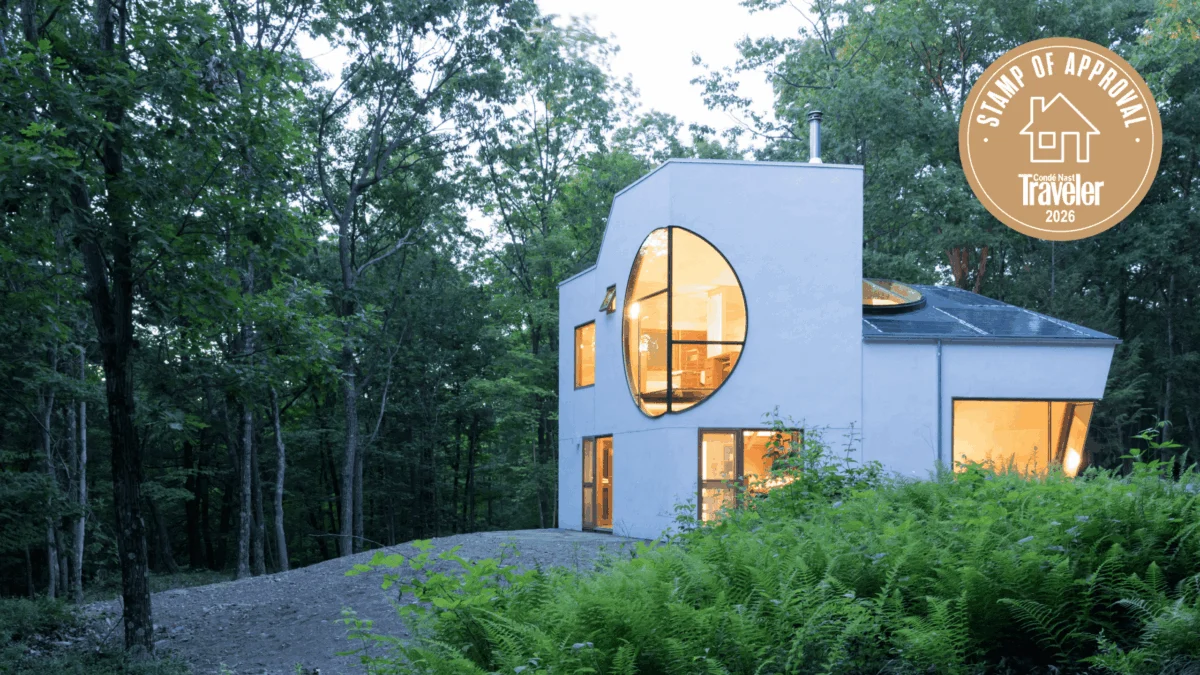
The Hudson Valley has long served as a sanctuary for architectural experimentation, but few structures embody the intersection of theoretical research and residential utility as precisely as the Ex of In House. Located in Rhinebeck, New York, this 918-square-foot structure represents a radical departure from traditional domestic architecture. Completed in 2016 by Steven Holl Architects, the project serves as a physical manifestation of Holl’s "Explorations of IN," a research initiative that challenges the conventional focus of architecture on the external "object" and redirects it toward the internal "spatial energy." By preserving 28 acres of land originally slated for suburban subdivision, the project highlights a shift toward ecological conservation and the compression of the human footprint in sensitive forest environments.
The Genesis of Explorations of IN
The Ex of In House did not begin as a residential commission but as an academic and philosophical inquiry. Steven Holl, a practitioner known for his phenomenological approach to architecture—emphasizing human sensory experience—launched the "Explorations of IN" project to counter the "clichés of modern architectural language." The manifesto behind the project consists of seven points, including the assertions that "the space of IN is a space of NEGATIVITY" and "the IN is a subjective space."
Historically, residential development in the Hudson Valley has leaned toward the sprawling and the traditional. When the 28-acre site was purchased, it was zoned for five separate suburban house plots. Holl’s decision to consolidate these lots into a single protected landscape was a deliberate act of environmental activism. The resulting house is not an imposition on the land but a "void" within it. Rather than expanding outward into the forest, the house utilizes a design logic of compression and overlapping spheres, creating a complex internal volume that belies its small physical footprint.
Structural Composition and Materiality
The technical execution of the Ex of In House relies on a "raw" material palette that aligns with the Arte Povera movement—an artistic style that emphasizes the use of common, unglamorous materials to create high-impact works. The interior is characterized by the absence of drywall, a standard feature in almost all modern American homes. Instead, the structure utilizes cross-laminated timber and birch plywood, providing a warm, tactile finish that functions as both the aesthetic surface and the structural core.
Mahogany frames the windows and doors, while thin, curved layers of wood define the intersecting geometries of the interior. The construction was designed to be almost entirely carbon-neutral in its material selection, minimizing the use of steel and utilizing super-insulated plywood. This choice reflects a broader trend in sustainable architecture toward "mass timber" and bio-based materials, which sequester carbon rather than emitting it during production.
The geometry of the house is governed by a series of intersecting spheres and cubes. These "voids" create a sense of verticality and openness, allowing light to penetrate the structure from multiple angles. This is the essence of "luminist architecture," a term often applied to Holl’s work, where sunlight is treated as a primary building material. The placement of windows is calculated to track the movement of the sun, ensuring that the interior atmosphere shifts throughout the day, from the golden hues of dawn to the sharp, angular shadows of the afternoon.

Sustainability and Geothermal Integration
Beyond its aesthetic and philosophical contributions, the Ex of In House is a model of off-grid capability and environmental efficiency. The property is powered entirely by solar energy, with thin-film solar cells integrated into the site. Heating and cooling are managed through a sophisticated geothermal system. By tapping into the constant temperature of the earth, the house maintains a comfortable interior climate through radiant floor heating, eliminating the need for invasive HVAC ductwork and noisy external compressors.
The reliance on geothermal energy is particularly significant in the climate of Upstate New York, where winters are harsh and summers can be humid. The thermal mass of the wood-lined interior helps to regulate temperature fluctuations, while the high-performance insulation ensures minimal energy loss. This technical rigor allows the house to exist as a "closed-loop" system, largely independent of the municipal power grid and fossil fuel consumption.
The Interior Experience: A Reimagining of Domestic Life
The interior of the Ex of In House rejects the standard nomenclature of "bedroom," "living room," and "kitchen." Instead, the house is a continuous, fluid space. The main living area features a wood-burning fireplace and an open-concept kitchen equipped with high-end appliances, including a professional-grade espresso machine. However, the boundaries between these functional zones are blurred by the house’s geometric complexity.
Sleeping arrangements are unconventional. A lofted queen bed serves as the primary sleeping area, while a "hive-like" wooden sphere provides a secondary lounge or sleeping space, accessible via a climbable structure that resembles a jungle gym. This layout suggests that the house is optimized for a maximum of two adults, or perhaps a small family, prioritizing shared spatial experience over private, walled-off chambers.
The absence of window treatments is a deliberate design choice. In most residential settings, curtains or blinds are used to mediate between the "in" and the "out." At the Ex of In House, the forest is meant to be a constant presence. The large, shadeless windows invite the landscape into the living space, a design feature that requires inhabitants to synchronize their circadian rhythms with the natural light cycle.
Chronology of Development
The timeline of the Ex of In House reflects a meticulous design and build process:
- 2014: Commencement of the "Explorations of IN" research project.
- 2015: Finalization of the design and site selection in Rhinebeck. The decision was made to preserve the 28-acre "T2 Reserve" instead of developing suburban housing.
- 2016: Completion of construction. The house began serving as a guest house for the "T Space" gallery, a nearby non-profit art and architecture forest founded by Holl.
- 2017–Present: The house has become a destination for architectural tourism, listed on platforms like Airbnb to allow the public to experience the theoretical research firsthand.
Regional Context and Economic Impact
The Ex of In House is situated just 15 minutes from the village of Rhinebeck, a historic hub in the Hudson Valley. Rhinebeck’s economy is heavily driven by boutique tourism and its proximity to New York City. The village is home to the Beekman Arms, established in 1766 and recognized as the oldest continuously operating inn in the United States.

The presence of the Ex of In House contributes to a growing "architectural tourism" sector in the region. Visitors are drawn not only to the natural beauty of the Catskills and the Hudson River but also to the concentration of modernist and contemporary landmarks, such as the Fisher Center at Bard College (designed by Frank Gehry) and the Dia Beacon art foundation. This influx of high-net-worth architectural enthusiasts provides a significant boost to local businesses, from historic diners like Pete’s Famous to upscale culinary destinations like Stissing House in Pine Plains.
Stissing House, led by acclaimed chef Clare de Boer, represents the culinary equivalent of Holl’s architecture—focusing on raw, high-quality ingredients and the preservation of historic integrity. The synergy between these high-concept architectural and culinary offerings has solidified the Hudson Valley’s reputation as a premier cultural destination.
Broader Implications for Modern Architecture
The Ex of In House serves as a case study for several pressing issues in contemporary architecture. First, it addresses the "tiny house" movement from a high-design perspective, proving that small-scale living does not have to sacrifice spatial complexity or aesthetic ambition. Second, it demonstrates the viability of carbon-neutral, off-grid residential design in challenging climates.
Perhaps most importantly, the project challenges the commodification of residential space. In a standard real estate market, value is determined by the number of bedrooms and bathrooms. The Ex of In House ignores these metrics, instead offering value through "spatial energy" and a deep connection to the environment.
Industry analysts suggest that the success of projects like the Ex of In House indicates a shift in consumer demand. Travelers and homeowners are increasingly seeking "experience-based" environments that provide a "total reset" from digital noise. The house’s lack of television and its emphasis on natural soundscapes—such as the rhythm of rain on wood and glass—position it as a sanctuary for "mindfulness," a quality that is becoming increasingly rare in modern residential development.
In conclusion, the Ex of In House is more than a quirky rental or a forest retreat; it is a profound critique of suburban sprawl and a masterclass in luminist design. By prioritizing the "internal experience" and the preservation of the landscape, Steven Holl has created a structure that demands presence and rewards the inhabitant with a rare clarity of space. As the architectural world continues to grapple with the twin challenges of the climate crisis and urban congestion, the lessons of the Ex of In House—compression, materiality, and the power of the void—will likely remain relevant for decades to come.