Layla Zulfa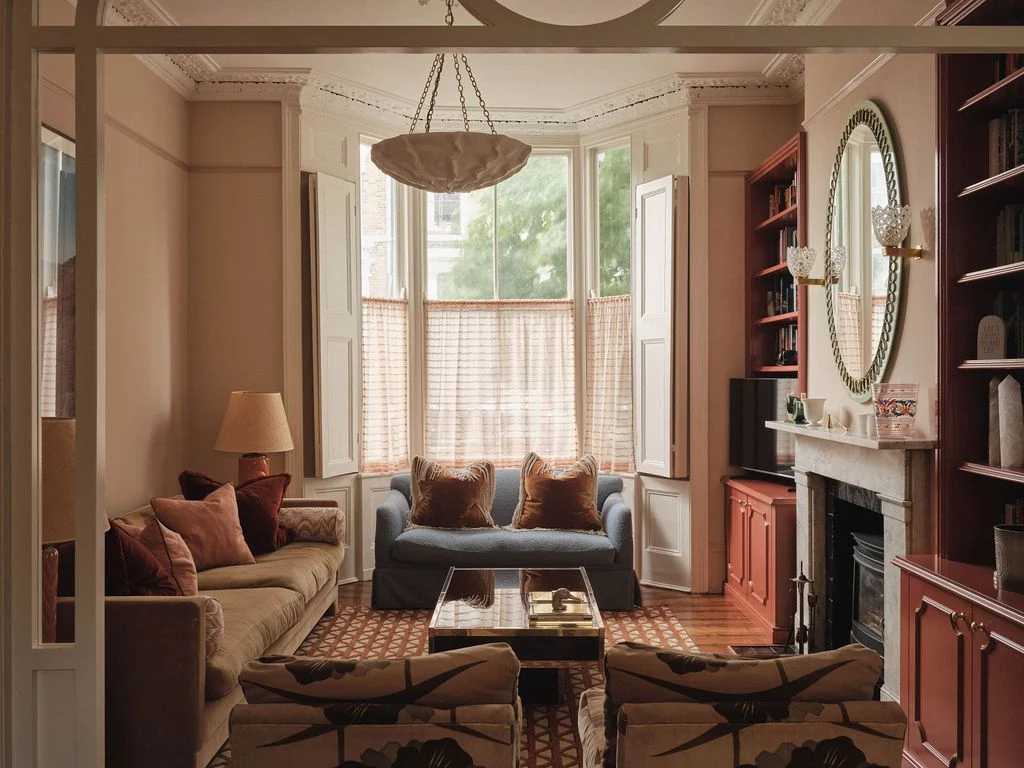
The architectural landscape of East London is defined by its rows of Victorian terraces, structures that are as historically significant as they are notoriously difficult to modernize. Once characterized by dark corridors and a surplus of small, partitioned rooms designed for a bygone era of domestic service, these homes often present a claustrophobic challenge to contemporary families. However, a recent project on Lauriston Road has set a new benchmark for the sympathetic restoration of these historic assets. Led by the design duo Rose Hanson and Charlotte Tilbury of the firm Penrose Tilbury, the renovation of this Victorian house has successfully reconciled the gravitas of 19th-century architecture with the practical demands of 21st-century family life.

The project’s success lies in its rejection of the "museum-piece" approach to restoration. Instead, Hanson and Tilbury focused on creating a space that is both aesthetically elevated and resilient. "It’s a place where children can play and you don’t have to worry about them breaking something," Hanson noted during the project’s unveiling. By blending high-end antique sourcing with durable, high-quality textiles and a strategic reconfiguration of the floor plan, Penrose Tilbury has demonstrated how historical preservation can coexist with the chaotic reality of a household with young children.
The Architectural Challenge of the Victorian Terrace
Victorian domestic architecture, while celebrated for its ornate facades and high ceilings, was originally designed around a strict social hierarchy. This resulted in a floor plan divided into many small, specialized rooms—separate spaces for cooking, dining, receiving guests, and sleeping—which often blocked the flow of natural light. In the Lauriston Road property, this legacy manifested as a deep, narrow structure that felt disconnected and somber.

To combat this, the design team introduced structural curves and archways. These architectural interventions were designed to soften the rigid lines of the original hallways and create a sense of visual expansion. The inclusion of large-scale mirrors, many sourced by Hanson from Paris, further amplified this effect, bouncing light into the previously shadowed recesses of the ground floor. This approach reflects a broader trend in London’s luxury renovation market, where homeowners are increasingly moving away from stark, open-plan "white boxes" in favor of "broken-plan" layouts that use architectural details to define spaces without sacrificing light or flow.
The Kitchen: A Fusion of Art Deco and Modern Functionality
Central to the home’s transformation is the kitchen, which was reimagined not merely as a utility space but as the "vibrant heart" of the residence. The design team intentionally moved away from the clinical aesthetic of traditional modern kitchens. Instead, they utilized a palette of cream tones, Rosso Alicante marble, and glossy black accents. The latter were specifically chosen to evoke the sophisticated caps of luxury perfume bottles, adding a layer of glamour to a high-traffic area.

Functionality was integrated through custom built-in cabinetry designed to house the detritus of family life. Charlotte Tilbury emphasized the importance of this strategic storage: "We tell families with children that it’s essential to provide storage space for all their toys, so that their craft supplies and things don’t detract from the beauty of the space."
The kitchen also functions as a hybrid space—part library and part breakfast nook—anchored by a significant skylight that spans the length of the room. This architectural feature ensures that the children can read or play in natural light while parents prepare meals. The material choices here are particularly noteworthy: a custom bench is upholstered in Dedar’s Jamu Jungle velvet jacquard and Marci mohair from Sister by Studio Ashby, while the walls are finished in Farrow & Ball’s Dimity, a shade that provides a warm, muted backdrop for the more dramatic marble and hardware.

Materiality and the Art of Sourcing
A defining characteristic of Penrose Tilbury’s work is the integration of unique, high-quality pieces that provide a sense of history and "place." This is facilitated by Rose Hanson’s background in antique sourcing. For the Lauriston Road project, the duo leaned heavily on French antiques and mid-century modern classics to create a curated, lived-in feel.
In the dining room, which adjoins the kitchen in a fluid, convivial layout, a mid-century-inspired solid marble table from Four Quarters Home is paired with chrome chairs by Milo Baughman. These chairs, sourced via the luxury marketplace 1stDibs, were reupholstered in Hymne velvet jacquard by Casamance, illustrating the firm’s commitment to breathing new life into vintage frames. The walls are adorned with a burgundy velvet hanging from the 1930s and an Italian mirrored console table from Lia Briamonte’s Anemone Interiors gallery, creating a space that feels more like a curated gallery than a standard dining area.

The Private Quarters: From "Cabin" Themes to French Elegance
The upper floors of the house continue the theme of sophisticated comfort. The principal bedroom was updated with a focus on texture and soft lighting. A custom bed featuring a mohair velvet headboard by Rose Uniacke is flanked by Rachel Donath mirrors and illuminated by a plaster pendant light created by the Penrose Tilbury studio itself. The walls, painted in Edward Bulmer’s Cinnamon, provide a grounding, earthy tone that contrasts with the more vibrant ground-floor spaces.
The bathrooms represent a departure from standard British design, looking instead to French hotel sensibilities. The principal bathroom features a wide-basin, double pedestal sink sourced in France—a fixture Hanson notes is common in Paris but rare in the UK. The flooring is a custom marble checkerboard of Rosso Alicante, white Carrara, and black marble, while the ceiling features a hand-painted fresco by artist Emma Stevenson.

Stevenson’s work is a recurring motif throughout the home’s private spaces. In the children’s rooms, her artistry adds a whimsical yet refined touch. The girl’s bedroom features delicate horse motifs painted onto the armoire, complementing Imogen Heath’s Abigail-Summer wallpaper. In contrast, the boy’s bedroom was designed with a nautical "cabin" theme, featuring built-in bed structures and walls in Edward Bulmer’s Fair Blue, a color choice that reflects the growing trend of using "heritage" blues in interior design.
Supporting Data: The Value of Design in the London Market
The renovation of historic properties like the Lauriston Road house is more than an aesthetic exercise; it is a significant economic driver in the London real estate market. According to recent data from Savills and Knight Frank, well-renovated Victorian homes in East London, particularly in areas like Hackney and Victoria Park, have seen a steady appreciation in value, often outperforming modern builds.

Key data points regarding the impact of high-end renovations include:
- Premium for Restoration: Homes that retain original Victorian features while integrating modern infrastructure (such as the skylights and high-efficiency heating used in this project) can command a price premium of 15% to 20% over non-renovated counterparts.
- Design Trends: The use of "decorative painting" and custom murals, as seen with Emma Stevenson’s work in this house, is cited by Architectural Digest as a top design trend for 2025, marking a shift away from minimalism.
- Sourcing Sustainability: By utilizing antique furniture and vintage lighting (such as the Ercole Barovier pieces in the bathroom), Penrose Tilbury reduces the carbon footprint of the renovation, a factor increasingly prioritized by high-net-worth homeowners.
Chronology of the Renovation
The transformation of the Lauriston Road property followed a meticulous timeline typical of high-end London restorations:

- Phase I: Structural Reconfiguration (Months 1–6): Removal of internal partitions, installation of the kitchen skylight, and the creation of the archways to improve flow.
- Phase II: Infrastructure and Systems (Months 7–9): Updating plumbing and electrical systems to accommodate luxury fixtures, including the French pedestal sinks and vintage chandeliers.
- Phase III: Bespoke Carpentry and Finishes (Months 10–12): Installation of custom kitchen cabinetry, built-in wardrobes, and the application of specialized paint finishes (e.g., Farrow & Ball, Edward Bulmer).
- Phase IV: Curation and Decoration (Months 13–15): The final layer of antique sourcing, custom upholstery, and the execution of hand-painted murals and frescoes.
Broader Impact and Implications for Interior Design
The Penrose Tilbury project on Lauriston Road serves as a case study for the "New Victorian" movement—a design philosophy that respects the past without being beholden to it. By using bold materials like Rosso Alicante marble and black lacquer alongside muted tones and vintage textiles, the designers have created a template for modern family living that does not sacrifice elegance for utility.
The project also highlights the importance of collaboration between designers and artisans. The inclusion of hand-painted details by Emma Stevenson and the sourcing of unique pieces from independent galleries suggest a move back toward the "Arts and Crafts" ethos that originally influenced Victorian design. This shift toward bespoke, artisan-led interiors is expected to dominate the luxury market through the latter half of the decade.

Ultimately, the Lauriston Road house stands as a testament to the idea that a home can be a "machine for living"—robust enough to handle the rigors of childhood—while remaining a curated sanctuary of art, history, and style. As East London continues to evolve, projects like this ensure that its architectural heritage remains relevant and cherished by a new generation of residents.